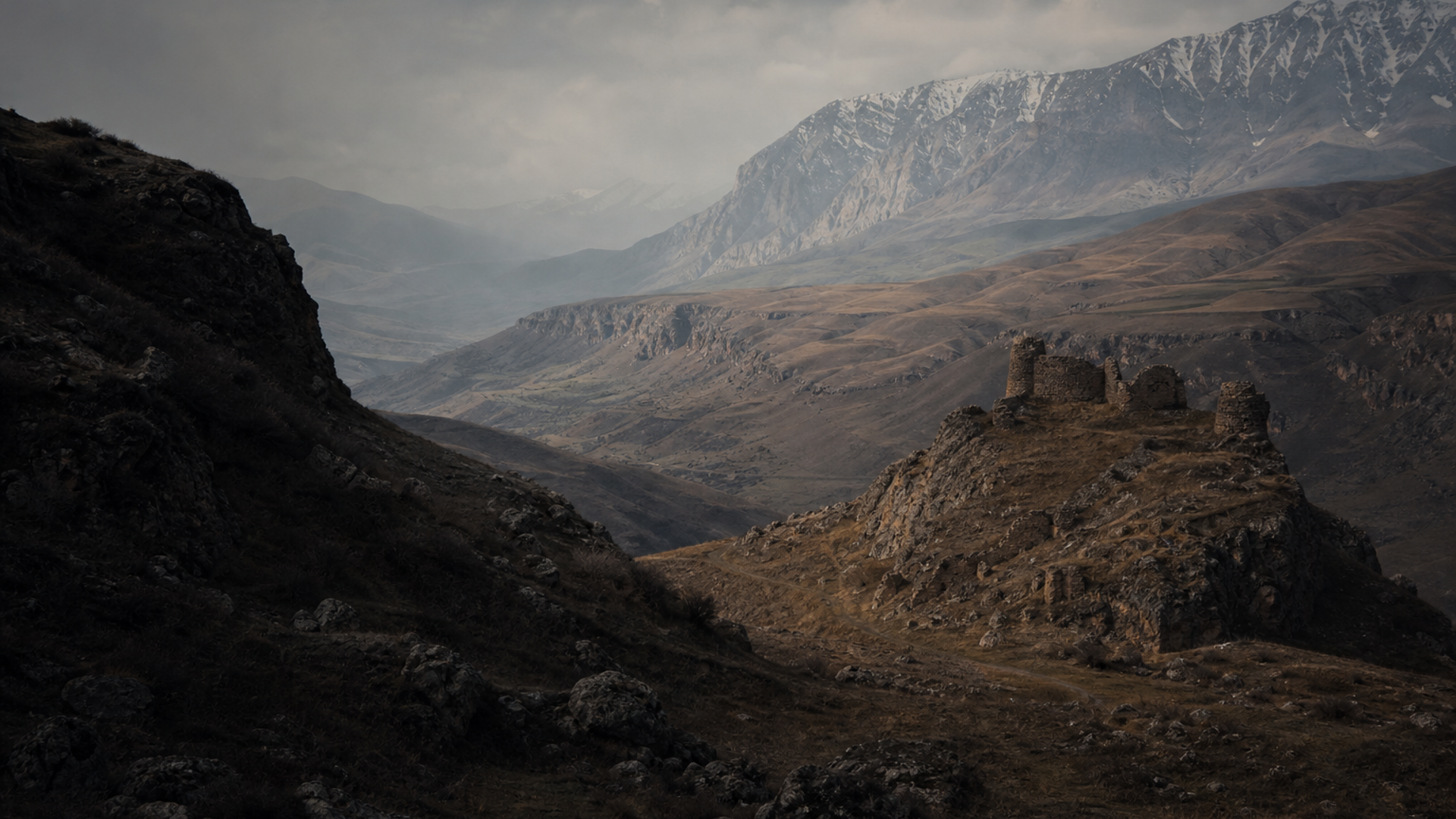
The genetic dataset for Armenia_LIA comprises seven individuals recovered from Harjis cemetery and Sarukhan, dated to 680–8 BCE. Mitochondrial haplogroups detected include H5, H (unspecified subclades), H2a, U, and T1—maternal lineages widely distributed across West Eurasia from the Neolithic through historic periods. These mtDNA types are broadly associated with European and Near Eastern maternal ancestry and are common in both ancient and modern populations of the Caucasus and adjacent regions.
Notably, no clear consensus Y-DNA signal is available from the provided summary, so paternal-line continuity or turnover cannot be assessed here. With fewer than 10 samples, any population-level inference is preliminary: observed mtDNA diversity may reflect local maternal heterogeneity, long-standing regional continuity, or limited admixture with neighboring groups. Archaeogenetic comparisons typically integrate autosomal data, which can better resolve ancestry components and admixture timing; such genome-wide analyses would be needed to test hypotheses of continuity with earlier Bronze Age groups or connections to later populations. For now, the mitochondrial evidence points to West Eurasian maternal affinities consistent with archaeological expectations for the Armenian highlands, but further sampling is essential to move from suggestive patterns to robust models.