Menu
Store
Blog
Armenia — Lori Berd, Bardzryal, Bragdzor, Karnut, Keti, Karmir Blur (Teishebaini), Noratus

Iron Age Armenia — Voices from the Highlands

Archaeology and ancient DNA from Armenian burial grounds (1124–197 BCE)

1124 CE - 197 BCE
Scroll to begin
Chapter I

The Story

Understanding the Iron Age Armenia — Voices from the Highlands culture

Archaeological and genetic evidence from eight Armenian sites (1124–197 BCE) reveals a complex Iron Age landscape. Eleven samples show diverse maternal lineages and hint at regional continuity mixed with wider Caucasus and steppe connections.

Time Period

1124–197 BCE (Iron Age Armenia)

Region

Armenia — Lori Berd, Bardzryal, Bragdzor, Karnut, Keti, Karmir Blur (Teishebaini), Noratus

Common Y-DNA

Undetermined / limited reporting (insufficient Y-chromosome data)

Common mtDNA

T2e, N, HV1, H2a, R (each observed; small sample set)

Chapter II

Timeline

Key moments in the history of this culture

750 BCE

Karmir Blur (Teishebaini) as an Urartian stronghold

Late 8th century BCE activity at Karmir Blur marks its role as a fortified administrative center within the Urartian sphere.

Chapter III

Origins & Emergence

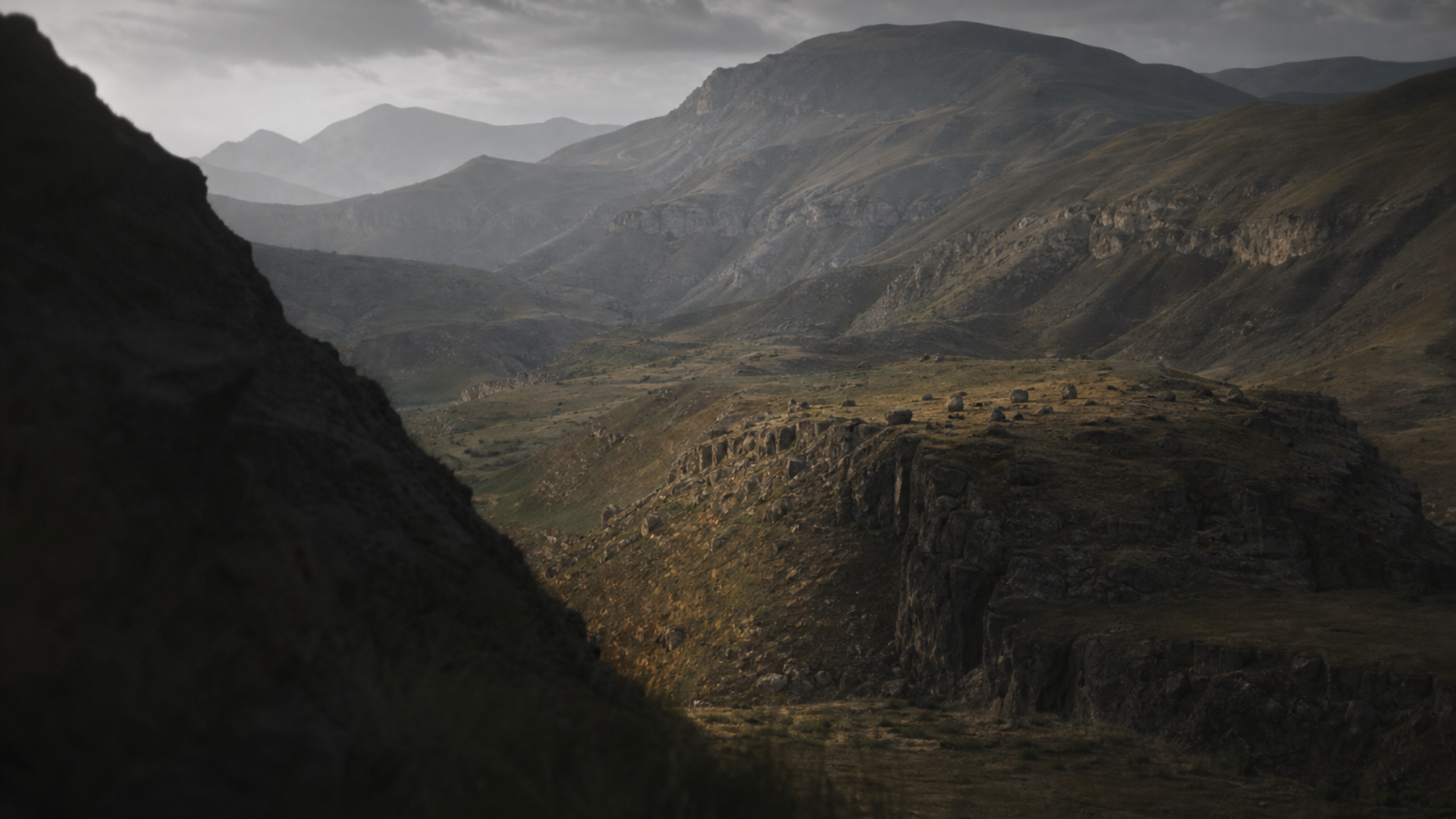
In the cool, terraced highlands of the Armenian plateau, local communities reorganized after the Bronze Age into new political and cultural forms that archaeologists group under Iron Age Armenia. Sites in this dataset — including the hilltop fortress of Karmir Blur (Teishebaini), cemetery complexes at Lori Berd and Bragdzor, and multi-phase loci such as the Bardzryal and Karnut complexes — record a landscape of fortified centers, village settlements and ritual burial grounds. Archaeological data indicates strong regional traditions in ceramic styles, metallurgy and monumental architecture, while material culture also bears traces of interaction with Urartian state institutions and wider Caucasus networks.

Limited evidence suggests that these communities were neither culturally monolithic nor isolated: trade, warfare, and diplomacy linked Armenian highland settlements to neighboring polities across the Near East. The archaeological record can be cinematic — burnished bronze weapons, stone-built fortifications, and carefully arranged graves — but interpretation requires care. Chronologies derived from stratigraphy and typology place these particular burials and contexts between 1124 and 197 BCE, a period of political shifts as Urartu declined and local polities and emerging Armenian identities took shape. Where genetic evidence exists, it adds another dimension: it helps distinguish long-term local continuity from incoming ancestries, but with only eleven ancient genomes in this set, conclusions remain provisional.

  • Sites span hillforts and cemeteries across Armenia (1124–197 BCE)
  • Material culture shows local traditions with regional interactions
  • Genetic data can test continuity vs. incoming influence, but is limited
Chapter IV

Daily Life & Society

Daily life in Iron Age Armenian communities combined pastoralism, agriculture, craft specialization and participation in regional exchange networks. Archaeobotanical and zooarchaeological analyses from similar sites in the Armenian highlands (though not always from every site listed here) indicate mixed farming — cereals and legumes cultivated alongside managed herds of sheep, goats and cattle. Fortified settlements like Karmir Blur functioned as administrative and craft centers: excavations at Teishebaini have recovered workshops, storage rooms and evidence for organized metalworking. Cemeteries at Lori Berd, Bragdzor and Noratus preserve funerary variability — single inhumations, grave goods, and occasionally richer tombs that imply social differentiation.

Everyday objects — pottery, spindle whorls, metal tools, and personal ornaments — speak of households anchored to the land but connected by long-distance exchange. Stone architecture and defensive works suggest periods of conflict or elite competition. Ritual life likely combined local traditions with state-era cult practices; at Teishebaini, architecture and inscriptions from contemporaneous levels elsewhere indicate formalized cultic spaces, though direct ritual evidence at each cemetery varies.

Archaeological data indicates social complexity: ranked households, craft specialists, and mobile pastoral groups interacting across valleys. Yet the picture is patchy — preservation bias and uneven excavation mean many aspects of daily life remain only partially visible.

  • Mixed farming and animal herding supported village and fortress economies
  • Fortified sites show craft production and administrative roles
Chapter V

Genetic Profile

Eleven ancient individuals from Armenian Iron Age contexts provide an initial genetic window into highland populations between 1124 and 197 BCE. Maternally, the dataset records diverse mitochondrial lineages — T2e, N, HV1, H2a and R — indicating a heterogeneous set of maternal ancestries within the sampled communities. This diversity is consistent with long-term regional heterogeneity observed across the Caucasus, where local Neolithic and Bronze Age lineages persisted alongside new inputs over millennia.

Y-chromosome data are either sparse or not consistently reported for this set, so we cannot assert dominant paternal lineages for these sites. That absence is important: without robust Y-DNA sampling, interpretations of male-mediated migration or elite ancestry remain speculative. More broadly, published archaeogenetic work in nearby regions often finds mixtures of local Caucasus/Near Eastern ancestry with varying amounts of Steppe-related ancestry at different times; this pattern offers a comparative frame but should not be over-applied here.


Because the sample count is small (11 individuals) and spatially clustered, any genetic inference must be framed as preliminary. These genomes hint at continuity of local maternal lineages combined with interaction across the broader Caucasus and Near East, but further sampling across more sites and explicit Y-chromosome reporting are required to resolve population movements, social structure, and the relationship between genetic change and cultural transformations in Iron Age Armenia.

  • Mitochondrial diversity: T2e, N, HV1, H2a, R observed among 11 samples
  • Y-chromosome evidence is limited or not consistently reported — interpretations are preliminary
Chapter VI

Legacy & Modern Connections

The archaeological and genetic traces from Iron Age Armenia form part of a long story that informs local identities and scholarly reconstructions of the past. Sites such as Karmir Blur (Teishebaini) embody the material legacy of a landscape of fortresses and administrative centers that shaped later political horizons. Linguistically and culturally, the Iron Age is the formative backdrop for the emergence of Armenian cultural traditions, though direct lines of descent are complex and layered.

Genetic continuity in parts of the Caucasus has been reported in broader studies, but attributing modern Armenian ancestry to any single Iron Age population is premature given the limited sample size here. What the present data do offer is a textured image of a population that was regionally rooted yet open to exchange: a human tapestry woven from local maternal lineages and wider connections across the Near East and steppe corridors. Future, larger-scale ancient DNA sampling and integration with archaeology will clarify how these Iron Age peoples contributed to the genetic and cultural heritage of the Armenian highlands.

  • Material legacy visible in fortresses and cemetery landscapes like Teishebaini
  • Genetic hints of continuity exist, but modern connections remain provisional
AI Powered

AI Assistant

Ask questions about the Iron Age Armenia — Voices from the Highlands culture

AI Assistant by DNAGENICS

Unlock this feature
Ask questions about the Iron Age Armenia — Voices from the Highlands culture. Our AI assistant can explain genetic findings, historical context, archaeological evidence, and modern connections.
Sample AI Analysis

The Iron Age Armenia — Voices from the Highlands culture represents a fascinating chapter in human history...

Genetic analysis reveals connections to earlier populations while showing evidence of unique adaptations and cultural innovations. The ancient DNA samples provide insights into migration patterns, social structures, and the biological relationships between ancient populations.

This is a preview of the AI analysis. Unlock the full AI Assistant to explore detailed insights about:

  • Genetic composition and ancestry
  • Migration patterns and origins
  • Daily life and cultural practices
  • Modern genetic legacy
Use code for 40% off Expires Feb 26