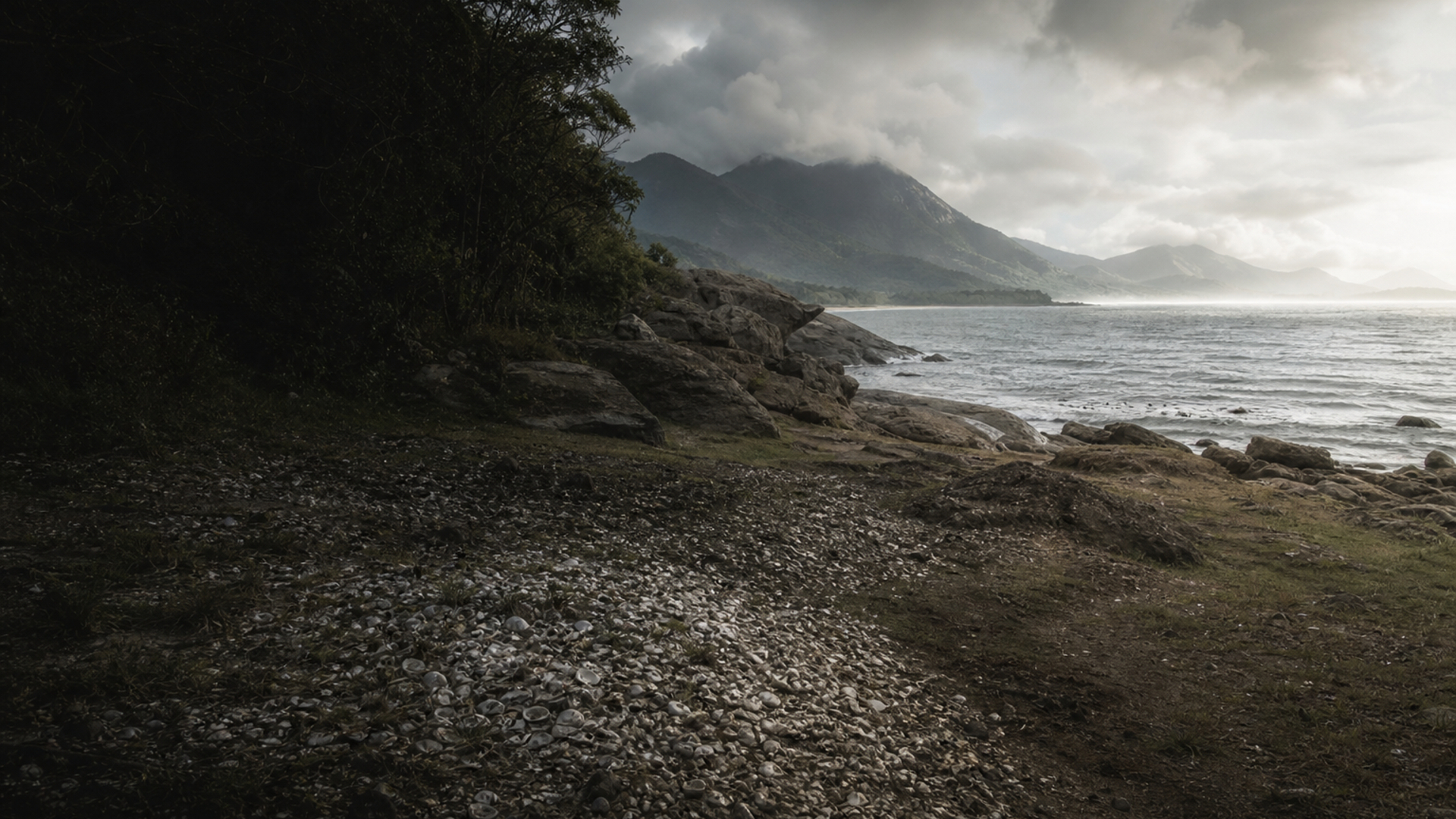
Imagine a shoreline punctuated by low mounds of shell, charcoal lines from hearths and the steady rhythm of fishing and shellfish gathering—the daily life at Jabuticabeira II was woven from salt, tide and estuary. Archaeological excavations reveal dense concentrations of mollusc shells, abundant fish remains, and occasional terrestrial fauna, indicating a diet centered on marine resources but supplemented by hunting and foraging.
Households likely organized activities around seasonal fisheries, shell-processing areas, and communal hearths. The presence of human remains within midden contexts suggests integrated mortuary practices where the living and the dead occupied the same palimpsest of deposit and memory. Material culture—stone tools for cutting and grinding, bone implements, and ornaments fashioned from shell—reflects craftsmanship adapted to a coastal economy.
Social organization is inferred from spatial patterning: discrete burial clusters, variation in midden thickness, and artifact distributions point to household-level groups with broader community ties. However, direct evidence for social hierarchies or political centralization is limited; interpretations remain cautious and benefit from interdisciplinary study combining zooarchaeology, stratigraphy and ancient DNA.