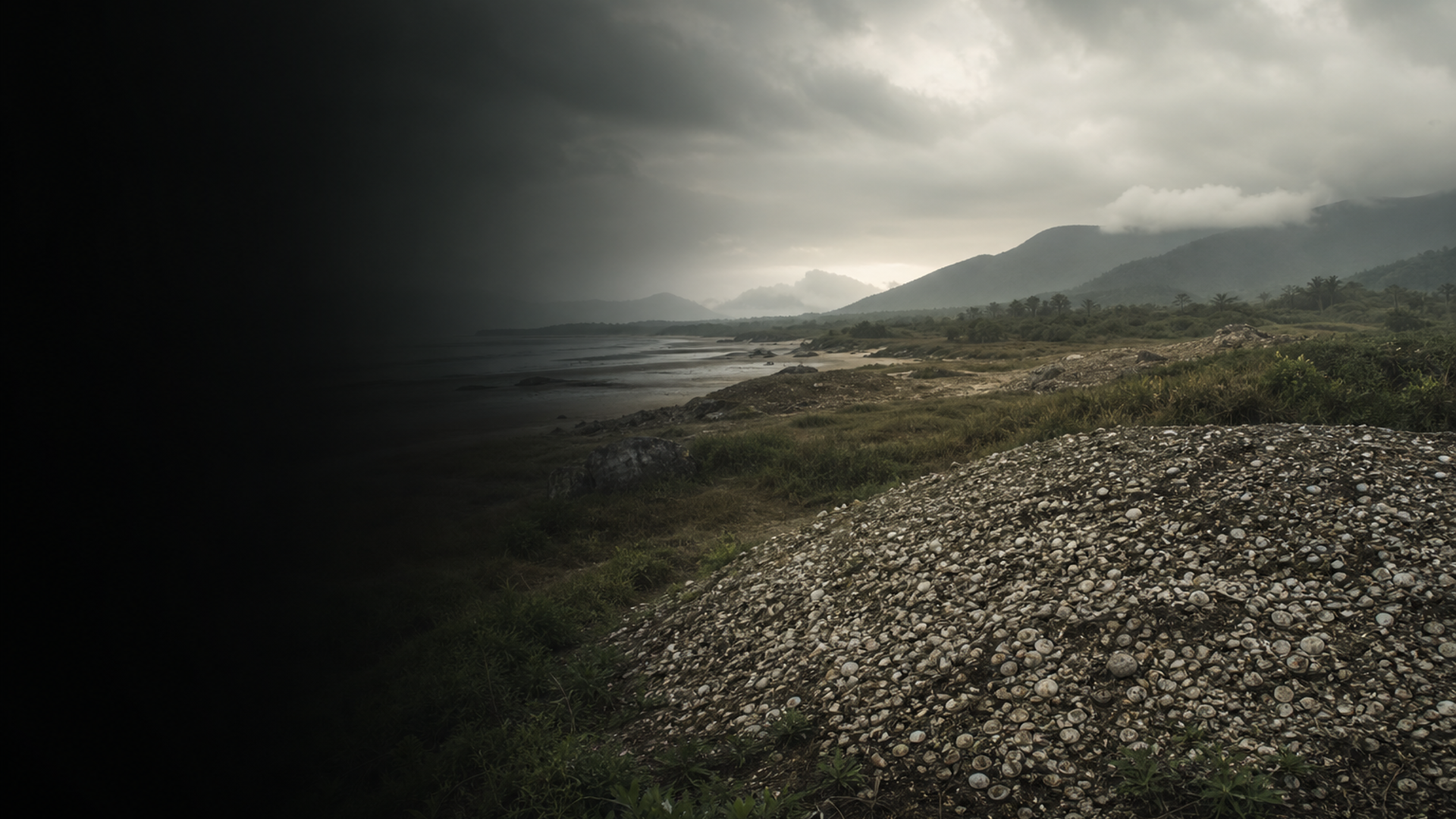
Life at Jabuticabeira II would have been dominated by the sea’s seasonal pulse: harvesting shellfish, fishing in sheltered lagoons and nearshore waters, hunting coastal birds, and processing marine resources on the shore. Archaeological strata show concentrated hearths and workspace areas within the mound, where food was cooked and tool manufacture occurred. Bone and shell artifacts testify to specialized craft; adzes, fishhooks, and perforated shells suggest both practical economy and ornamentation.
The physical structure of the midden — layered deposits with occasional burial pits — implies a community that repeatedly returned to the same place, investing labor in piling shell and earth. Mortuary practices observed at the site, with human remains interred within shell lenses or beneath mound layers, indicate that the dead remained part of the living landscape. Demographic inferences from skeletal material are tentative: preservation biases and sample size limit precise reconstructions of age structure or health, though signs of dietary reliance on marine protein are consistent with stable isotope expectations for coastal diets.
Social life likely combined kin networks with broader coastal ties: trade or exchange of stone, shell ornaments, and possibly pottery shards appear sporadically. The site’s long duration suggests cultural continuity punctuated by adaptation to shifting sea levels, resource availability, and external contacts.