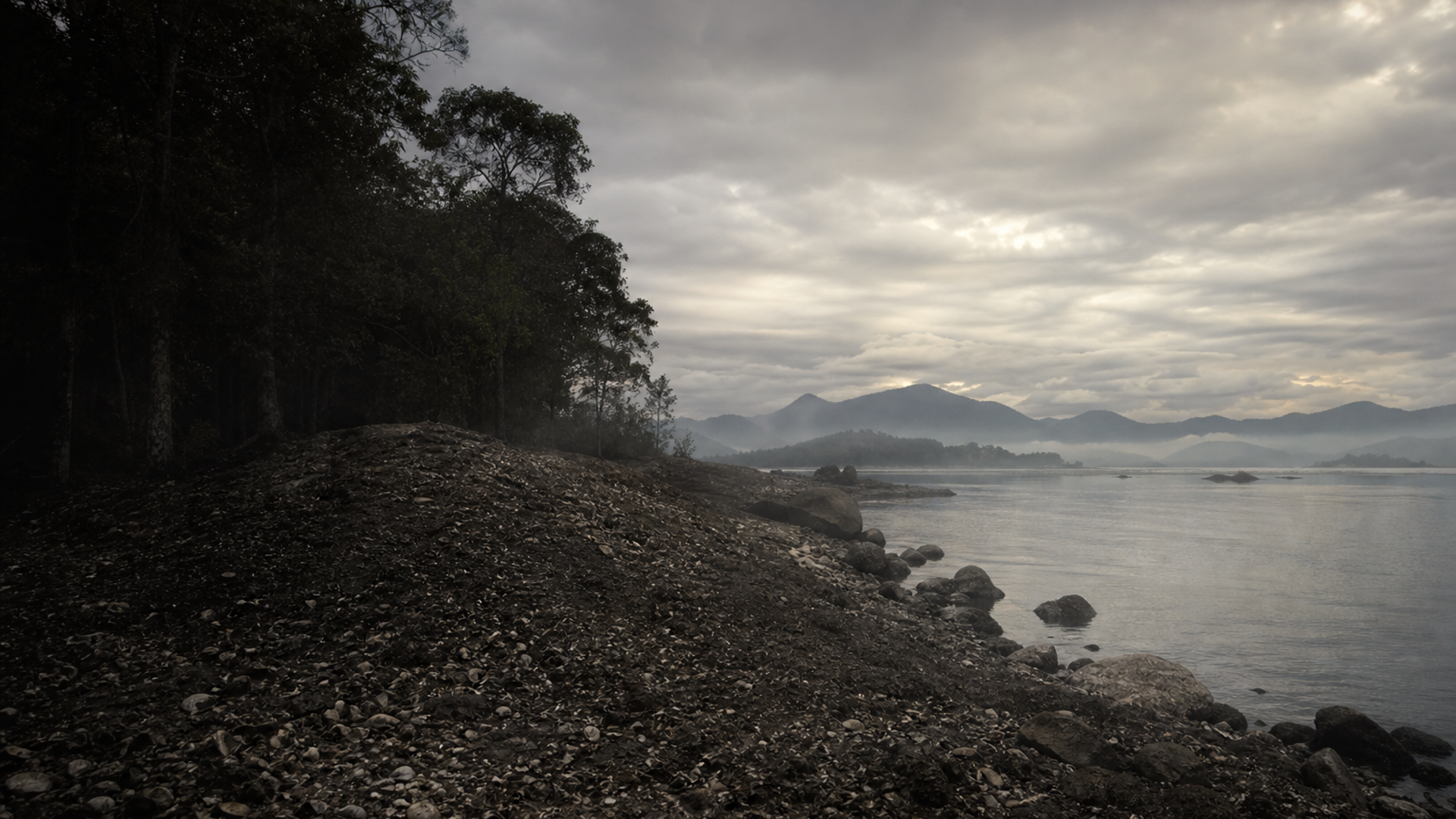
Imagine a shore where the tide and people collaborated: fish and shellfish provided the backbone of diet, while lagoons and estuaries offered seasonal abundance. Excavations at Jabuticabeira II reveal thick midden layers of shells and bones, hearths, and human interments, suggesting repeated habitation and structured use of place.
Artifacts are often modest — bone points, shell tools, and occasional ground stone — yet they speak to skilled craft traditions tuned to marine lifeways. Burials in sambaquis sometimes incorporate grave goods and layered deposits, indicating social complexity and ritualized treatment of the dead. The size and form of mounds imply collective labor and long-term place attachment: generations returned to the same promontories to eat, work, and bury their dead.
Archaeological evidence points to flexible mobility. People exploited nearshore zones intensively but likely maintained ties to inland resources and social networks. Seasonal scheduling, craft specialization, and inter-site exchange would have structured daily existence along the shorelines.