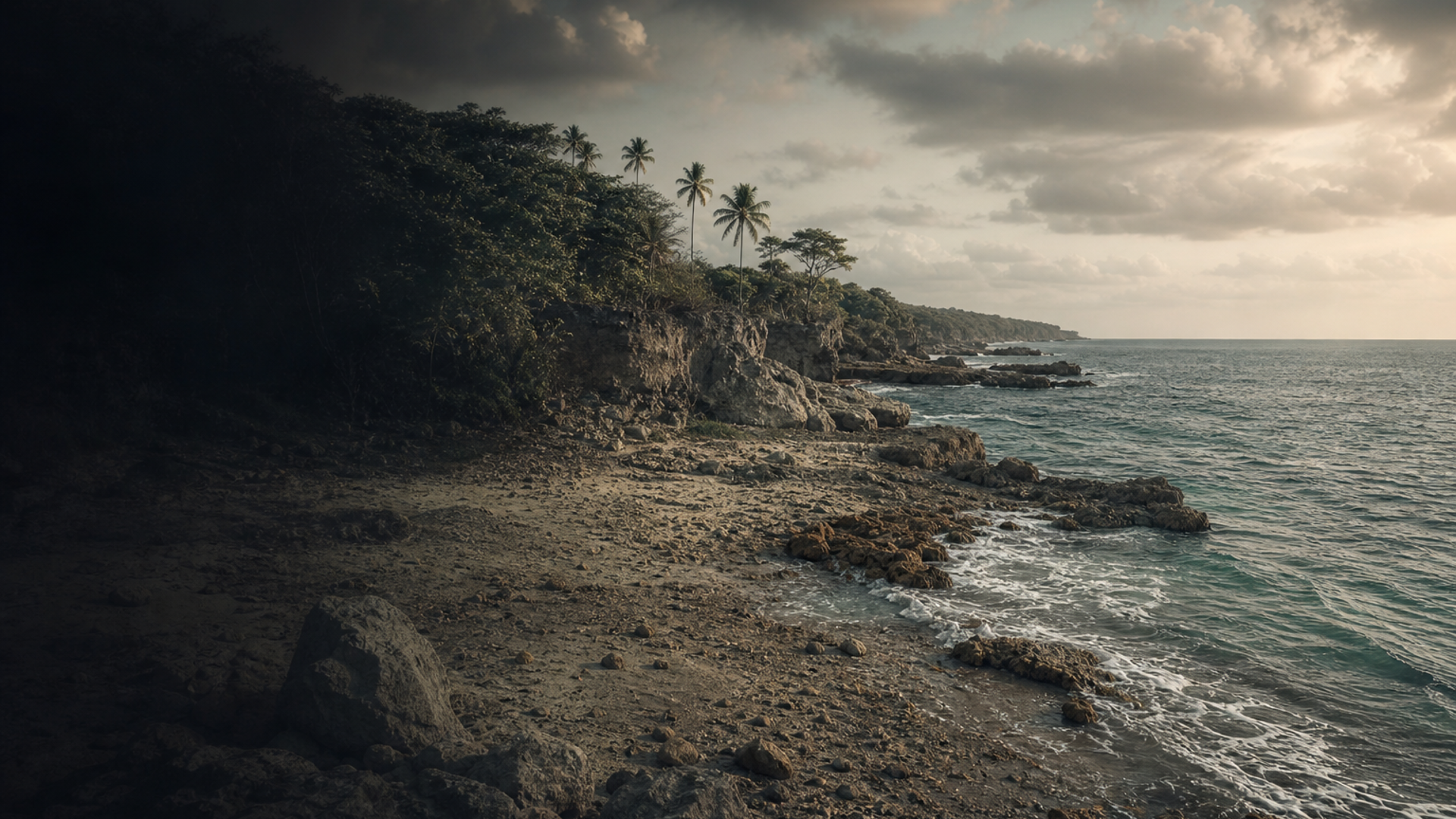
Ancient DNA from Juan Dolio provides a remarkable, if preliminary, molecular window into the people who occupied the coastal Ceramic sites. The dataset comprises eight samples dated within the archaeological range 1200–1650 CE. Four of eight male-line (Y-chromosome) samples belong to haplogroup Q, a lineage widely associated with Indigenous populations across the Americas. On the maternal side, mitochondrial DNA is dominated by haplogroup A (five samples), with specific sublineages recorded as A2 (1), C1b (1), and a rare A2z (1) variant. These maternal haplogroups are canonical Native American lineages, consistent with long-standing maternal continuity in the region.
Taken together, the genetic profile aligns closely with expectations for Indigenous Caribbean populations deriving from mainland migrations, most plausibly connected to northern South American source populations associated with Arawak-speaking expansions. However, important caveats apply: the sample count is small (n=8), limiting statistical power and the ability to resolve finer-scale population structure or detect low-frequency ancestries. Preservation biases, differential burial practices, and sampling location within Juan Dolio can also skew the genetic picture.
In short, the aDNA evidence supports strong Indigenous continuity in Juan Dolio during the Ceramic period and complements archaeological signals of mainland–island connections, but conclusions must remain cautious until larger, spatially diverse datasets are available.