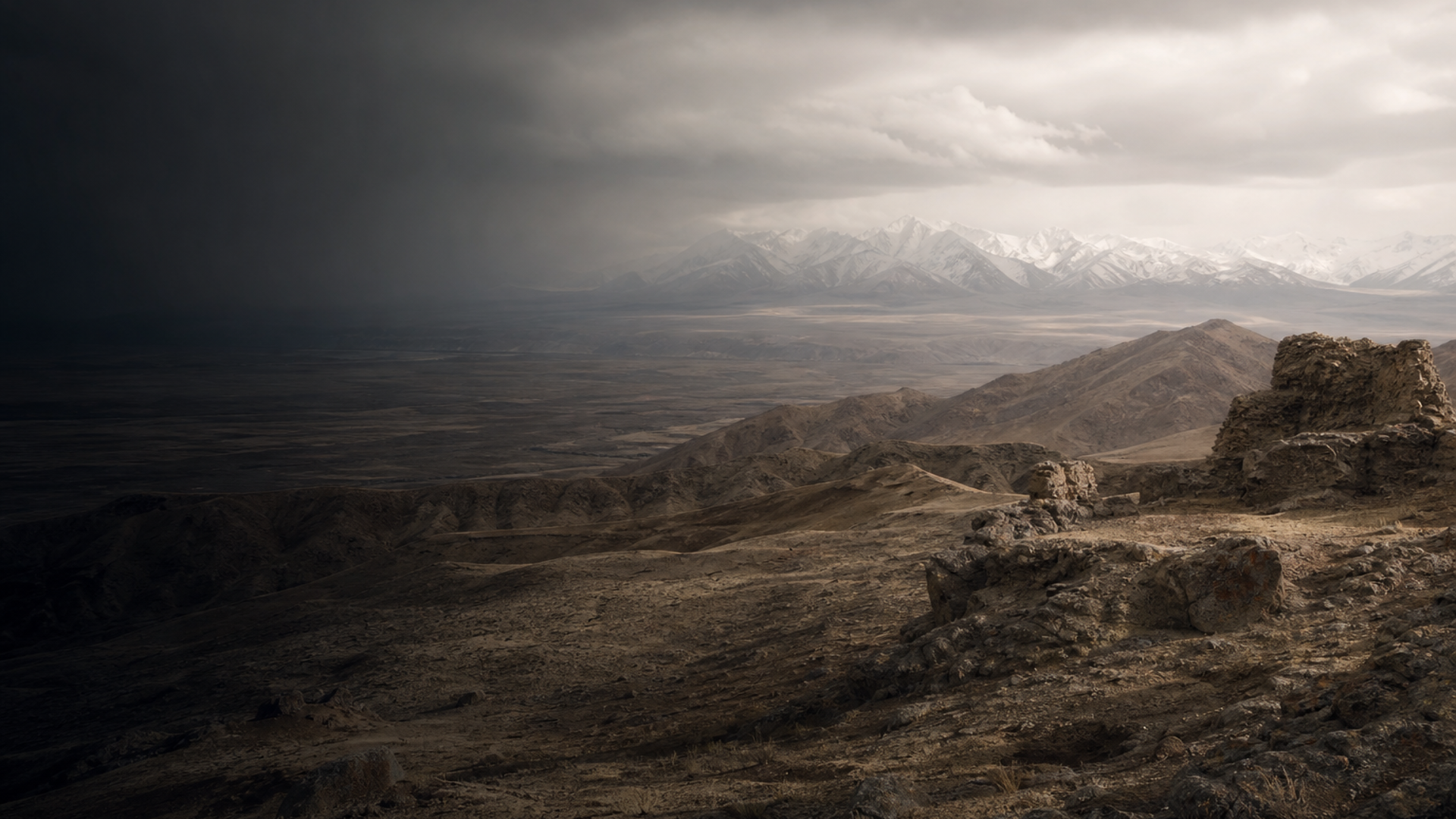
The material traces from Kara‑Djigach suggest lives lived at the margins of great currents. In the medieval Chüy Valley, pastoralism remained a dominant economic strategy; herding cycles, seasonal camps, and control of pastureland shaped social rhythms. Yet the discovery of a Christian cemetery hints at a community with ritual practices that differ from strictly animistic or traditional Turkic funerary customs, implying either conversion, settlement of migrant groups, or integration of diverse belief systems along caravan corridors.
Archaeological indicators — grave goods, burial construction, and the cemetery’s placement in the landscape — point to small, perhaps kin‑based burial groups rather than a large urban population. Caravan traffic along routes linking Kashgar, Samarkand, and the steppe hinterlands could have introduced objects, ideas, and people; traders and clerics often formed transient nodes that left religious and genetic signatures in local cemeteries.
However, the funerary record at Kara‑Djigach is fragmentary. There is no clear economic assemblage that would allow full reconstruction of daily diets, crafts, or household organization. The presence of isolated Christian burials amid a largely pastoral landscape underscores how individual life stories at the edge of empire can preserve traces of wider connectivity — if more excavations and biomolecular analyses are undertaken.