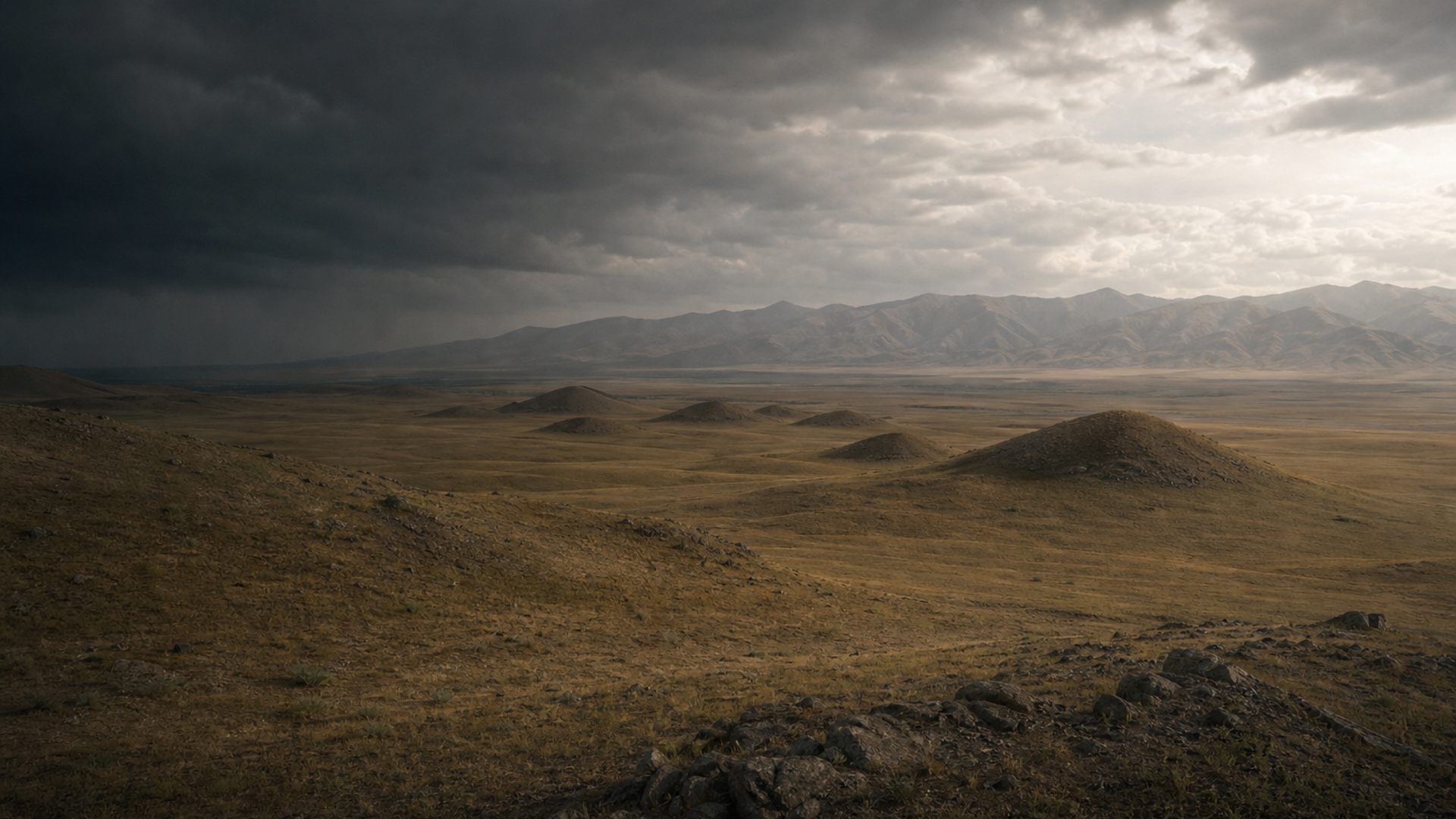
Archaeological data indicates a society organized around mobile herding, horse mastery, and seasonal exploitation of steppe resources. The Kaspan mounds represent ritualized treatment of the dead, often associated elsewhere with attached grave goods that display social rank and long-distance connections — for example, weapons, bridles, and adornments.
Ethnographic analogy and regional archaeology suggest households were semi-nomadic, moving animals between lowland pastures and upland summer grazing. Trade and raiding tied steppe communities into vast exchange networks: metalwork styles and raw materials at many Saka sites show links from the Altai to the Black Sea. The Kaspan Valley, a corridor in the foothills of southeastern Kazakhstan, would have been a seasonal node where mobility met riverine resources.
Osteological remains from such contexts can show wear patterns consistent with horseback riding and repetitive tasks, but the Kaspan skeletal series is small. Archaeological data thus highlights a life of mobility, social differentiation visible in burials, and cultural connectivity — while reminding us that local variation could be great.