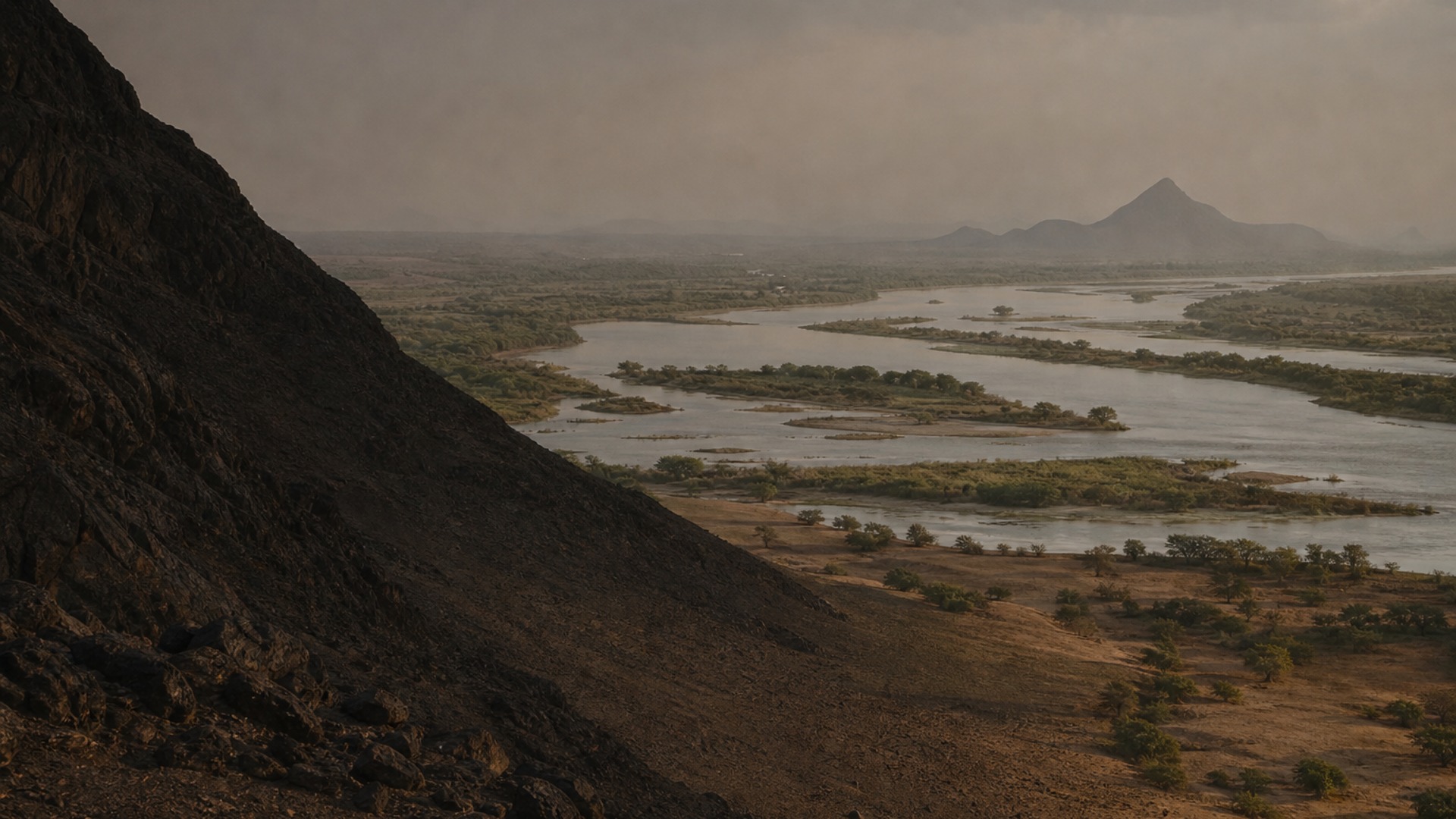
The urban fabric of Khartoum in 2000 CE is textured by river commerce, marketplaces, and a living mixture of ethnic and linguistic communities. Archaeological indicators—household refuse, modern ceramics, cemetery stratigraphy and built infrastructure—map onto ethnographic accounts of a bustling capital where trade and kinship intersect. Material traces from the late twentieth and early twenty-first centuries frequently include imported consumer goods, local crafts, and architectural elements that reflect both regional traditions and global connections.
Cinematically, one can imagine river boats sliding past concrete embankments, sellers calling in the shade of acacia trees, and neighborhoods where families of varying backgrounds co-reside. Archaeological data indicates that modern cemeteries and urban construction disturb older deposits, complicating the retrieval of discrete archaeological horizons. For the three individuals sampled in 2000 CE, context likely reflects this dense urban tangle: recent burial or recovery in settings shaped by rapid urban growth, displacement, and infrastructure projects.
Interpreting social identity from material remains in a modern city requires caution. The archaeology complements genetic data by anchoring individuals in place and time; combined, these lines of evidence can illuminate patterns of mobility, trade, and everyday life—but only when larger, systematically-collected datasets are available.