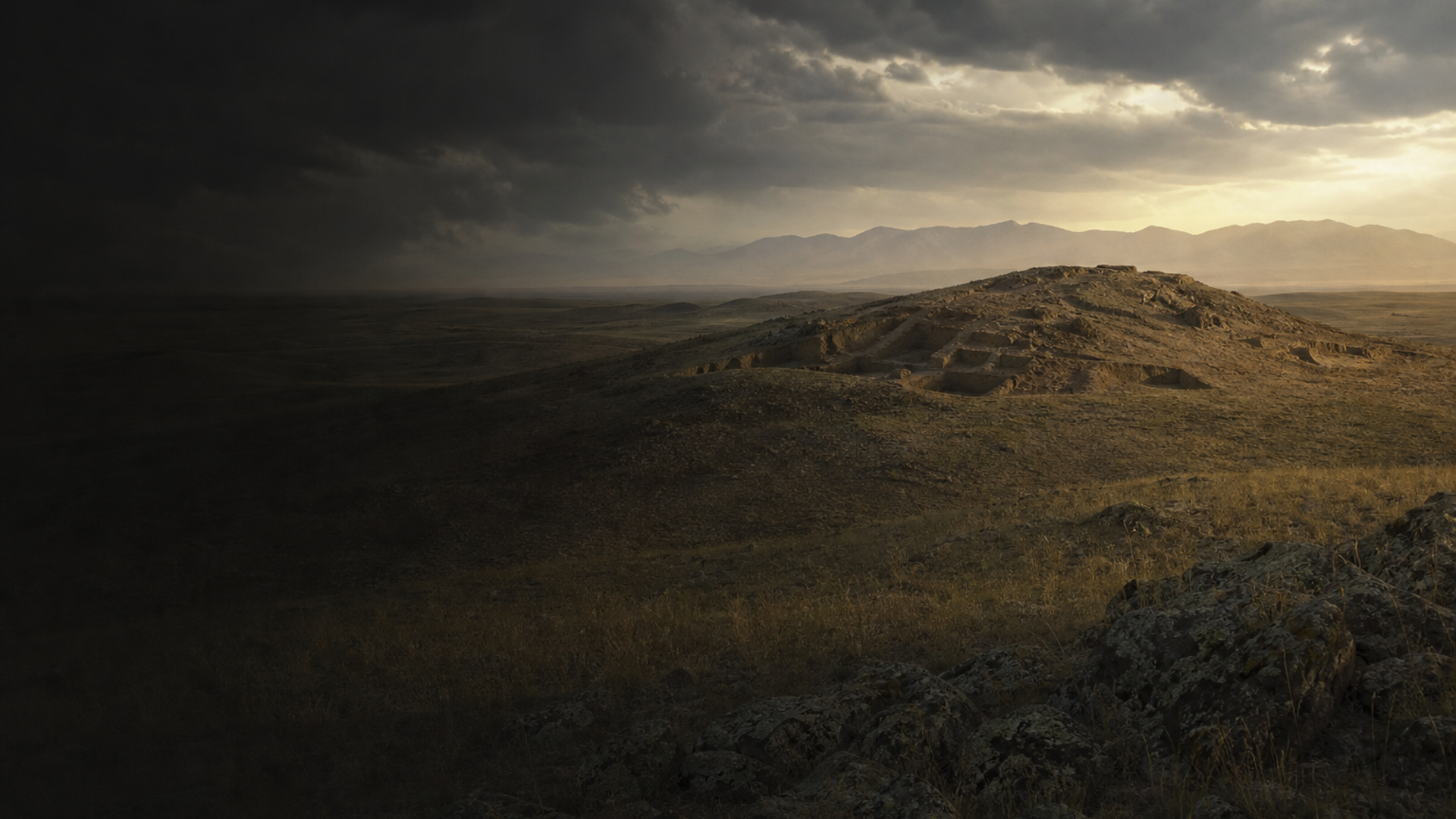
Archaeological data from Kumsay provide only a partial silhouette of everyday life, yet the material and environmental context allows informed inference. The Early Bronze Age steppe was a mosaic of seasonal pastures and riverine corridors; communities here balanced mobility with localized use of burial grounds like Kyirik Oba. Funerary deposits suggest attention to the dead and social distinctions encoded in burial placement, though grave goods and architectural detail are sparsely documented for this site.
Subsistence strategies in contemporaneous steppe groups combined herding of domesticated animals with hunting and gathering resources across variable terrain. High winds, cold winters, and shifting grassland productivity would have shaped seasonal rounds—camp relocation, aggregation at strategic waterpoints, and exchange networks for raw materials. Social life likely centered on kin groups with flexible alliances; craft production and long-distance exchange (obsidian, copper, ornaments) are known from other Bronze Age steppe sites and could have parallels at Kumsay.
The human remains themselves, now analyzed genetically, are among the most direct witnesses to daily life: they carry traces of diet, mobility, and biological ancestry. Isotopic and aDNA studies, when available alongside careful excavation records, transform bones into narratives of migration, marriage, and adaptation.