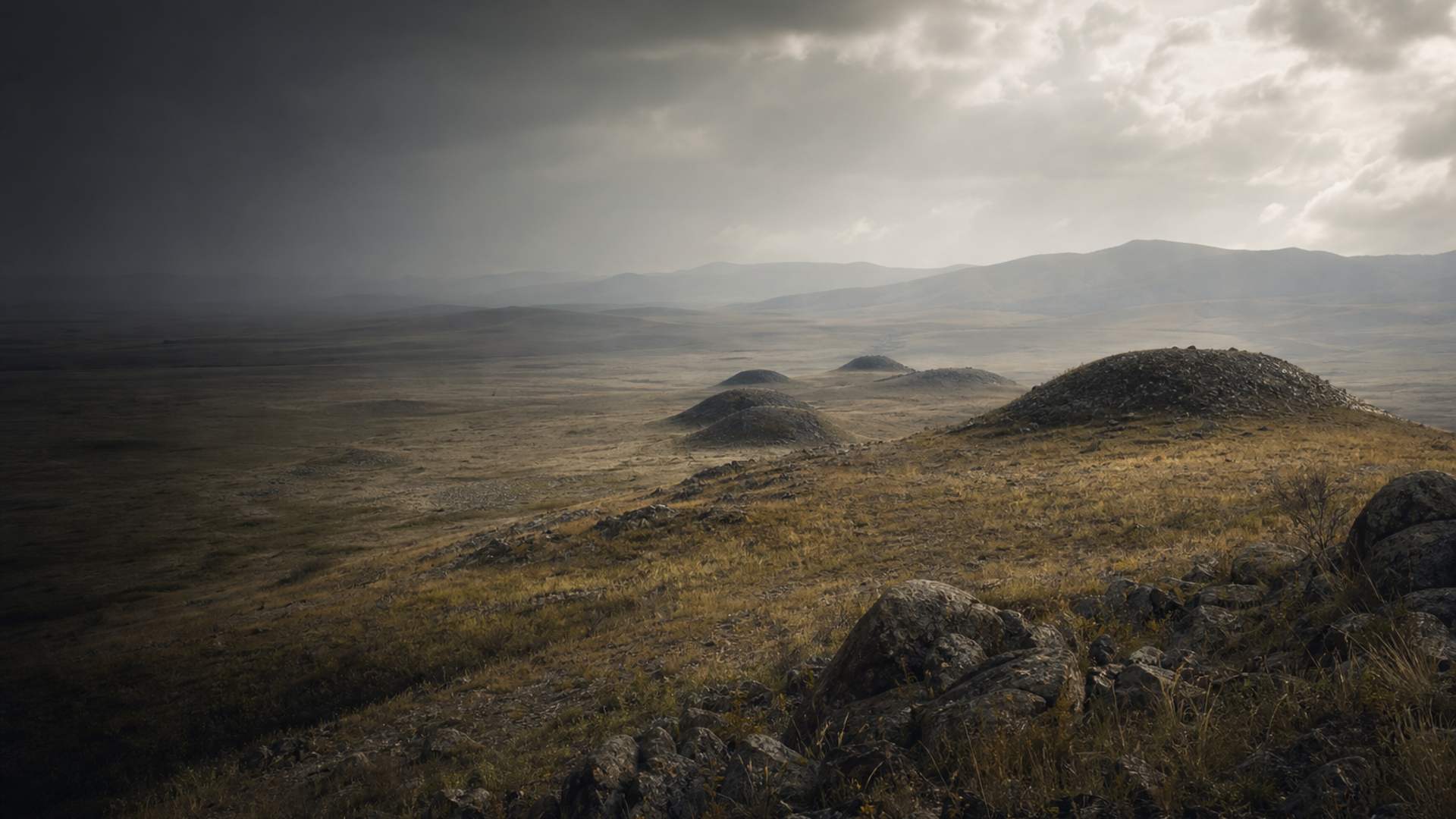
Daily existence for Early Sarmatians in the Southern Urals unfolded as a cinematic interplay of horse, horizon, and tent. Archaeological assemblages—bits of bridles, horse harness hardware, weapons, and occasional imported goods—point to a mobile pastoral economy centered on seasonal herding and mounted warfare. Funerary arrangements suggest social differentiation: some kurgans contain richer grave goods and horse burials, indicating leaders or warrior elites, while simpler graves imply lower-status riders or households.
Skeletal remains from the sampled burials sometimes preserve indicators of strenuous mobility: robust limb bones, healed trauma, and dental wear patterns consistent with a diet of animal products and coarse cereals. Spatial clustering of mounds near river corridors suggests semi-permanent occupation foci used repeatedly by kin groups or seasonal camps.
Gender roles in burial practice show variability—women are sometimes interred with jewelry and ritual objects, men with weapons and horse gear—but archaeological data indicates fluidity and complexity rather than rigid codification. Trade and contact remain visible: exotic metalwork or nonlocal goods in some kurgans point to connections that extended beyond the Urals, tying these communities into broader steppe networks.
Archaeological evidence paints an evocative picture of a mobile society that balanced pastoral subsistence, martial display, and long-distance ties; genetic data provides a separate, complementary line of evidence on who these people were biologically.