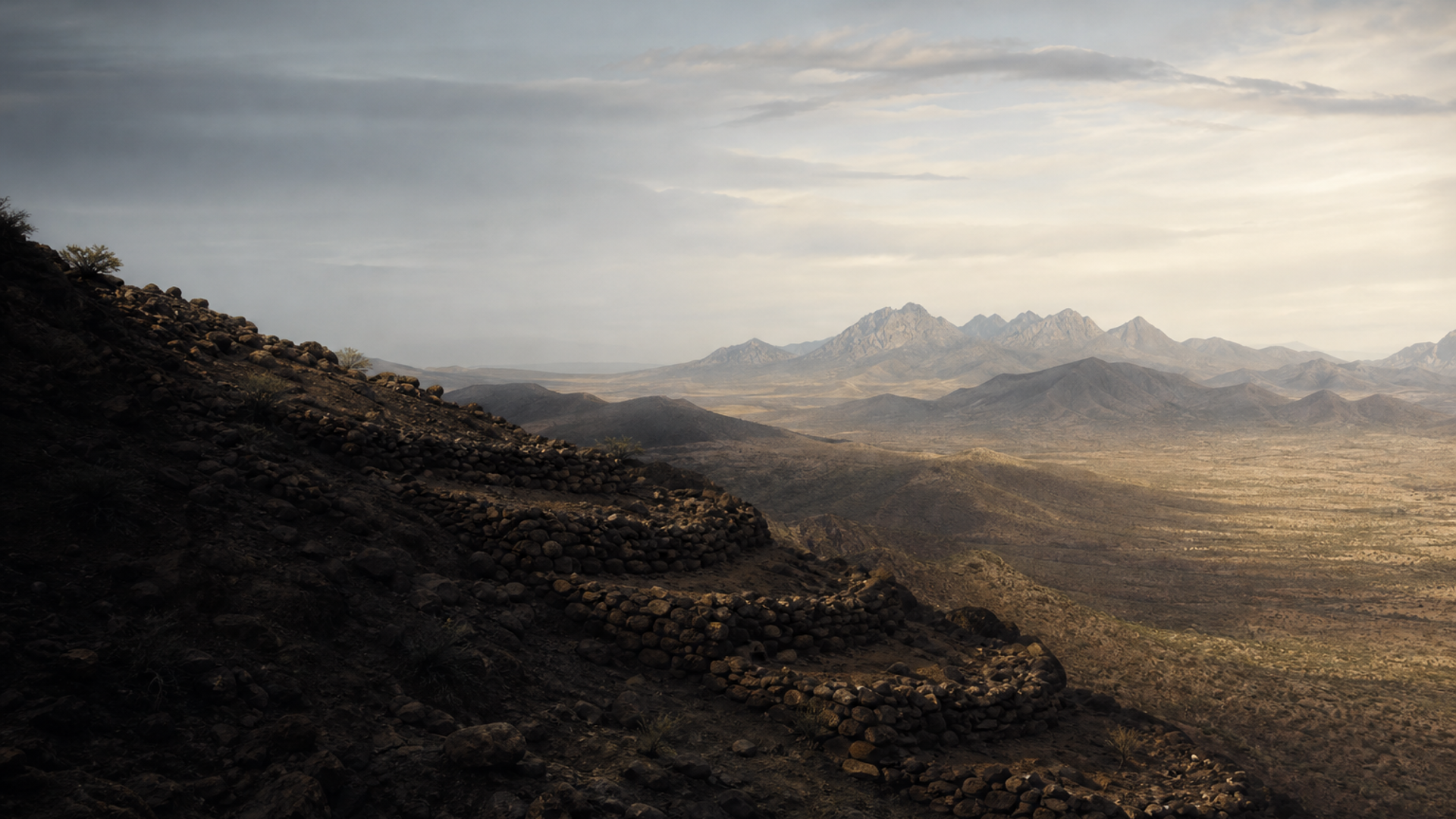
Ancient DNA from seven individuals excavated at La Playa (Cerro Trincheras, Terraza B2, B4, B7, B8) provides a rare molecular window into Trincheras populations between 1200 and 1450 CE. Of these seven, five carry Y-chromosome haplogroup Q, a lineage widely observed among Indigenous American paternal lineages. Mitochondrial diversity in the set includes haplogroups C (2 individuals), A2c (1), B2 (1), D (1) and a single H lineage.
The predominance of Y-DNA Q aligns with broad regional patterns in the Americas and supports continuity of paternal lineages in northwest Mexico. Maternal haplogroups A2, B2, C and D are part of the canonical set of Native American founder lineages; their presence here is consistent with Indigenous maternal ancestry.
The single mtDNA H is unexpected in this context. Its presence is intriguing but must be treated with caution: contamination, post-contact admixture, or hitherto underrecognized maternal diversity are all possible explanations. Crucially, the sample count is small (n=7): with fewer than ten individuals, any population-level inference is preliminary. Archaeogenetic interpretations should be integrated with archaeological context and expanded through larger, ethically conducted sampling to robustly resolve patterns of ancestry, mobility, and admixture.