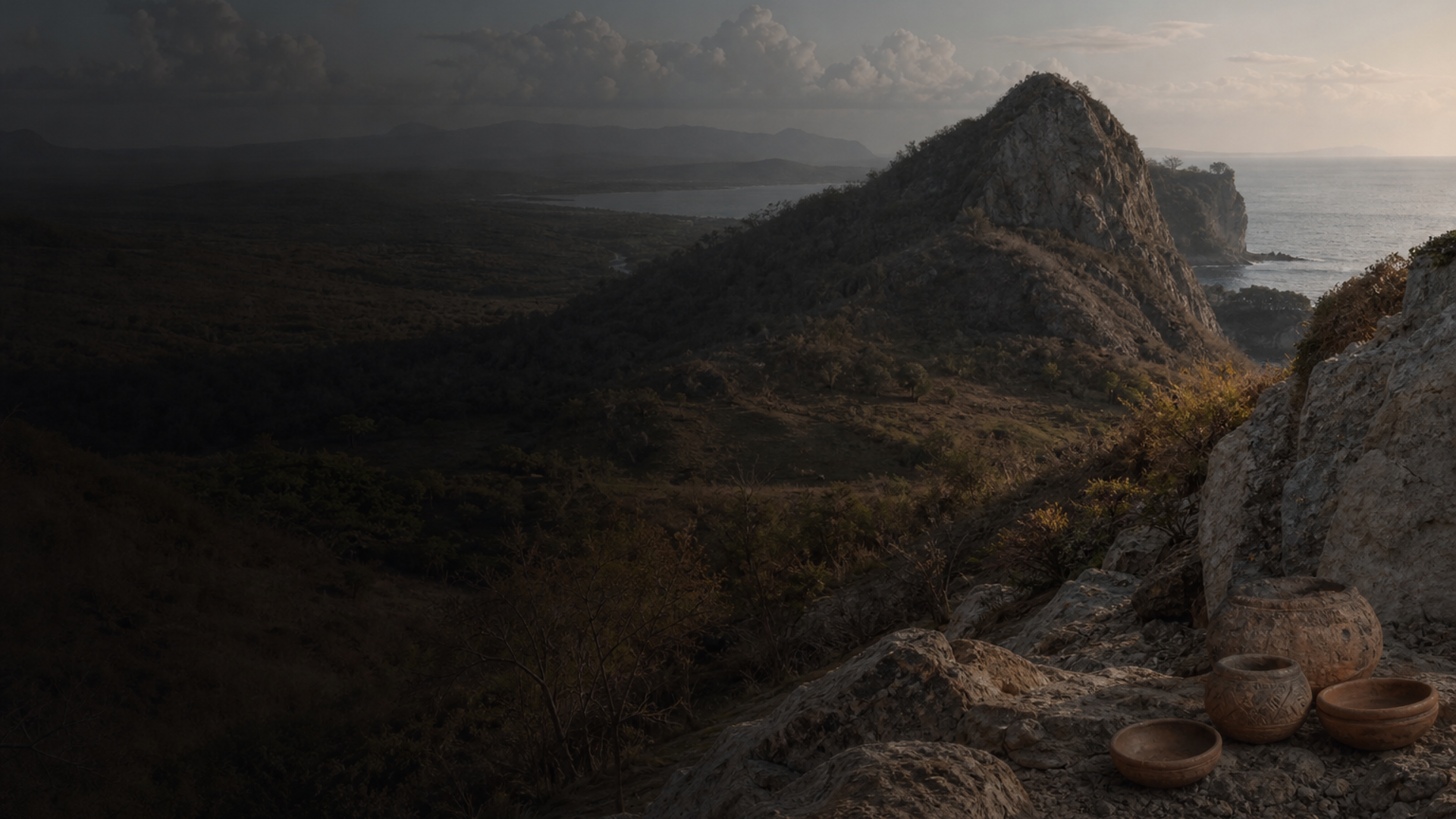
Life at La Union would have been defined by the rhythms of the sea and the cultivated garden. Archaeological remains in late Ceramic contexts across Hispaniola point to a mixed subsistence of root crops (cassava and other tubers), small-scale horticulture, and intensive use of coastal and estuarine resources — fish, shellfish, and reef organisms. Pottery vessels, often decorated, served for cooking, storage, and social display; their forms and wear patterns speak to everyday tasks and communal feasting.
Settlement features suggest small to medium-sized coastal villages connected by canoe routes and exchange. Limited evidence from related sites indicates craft specialization in pottery and shell working, and trade in exotic raw materials across islands. Social life was likely organized around kin groups with ritual practices embedded in daily domestic spaces. Burial and mortuary expressions can be diverse regionally; at La Union the bioarchaeological record is small, so interpretations about social structure, status differentiation, or ritual are cautious and provisional.
Archaeology gives texture to daily life: the curve of a pot rim, the midden containing clam shells, and the layout of homes. These fragments, joined with DNA, begin to animate the lived experience of La Union's inhabitants.