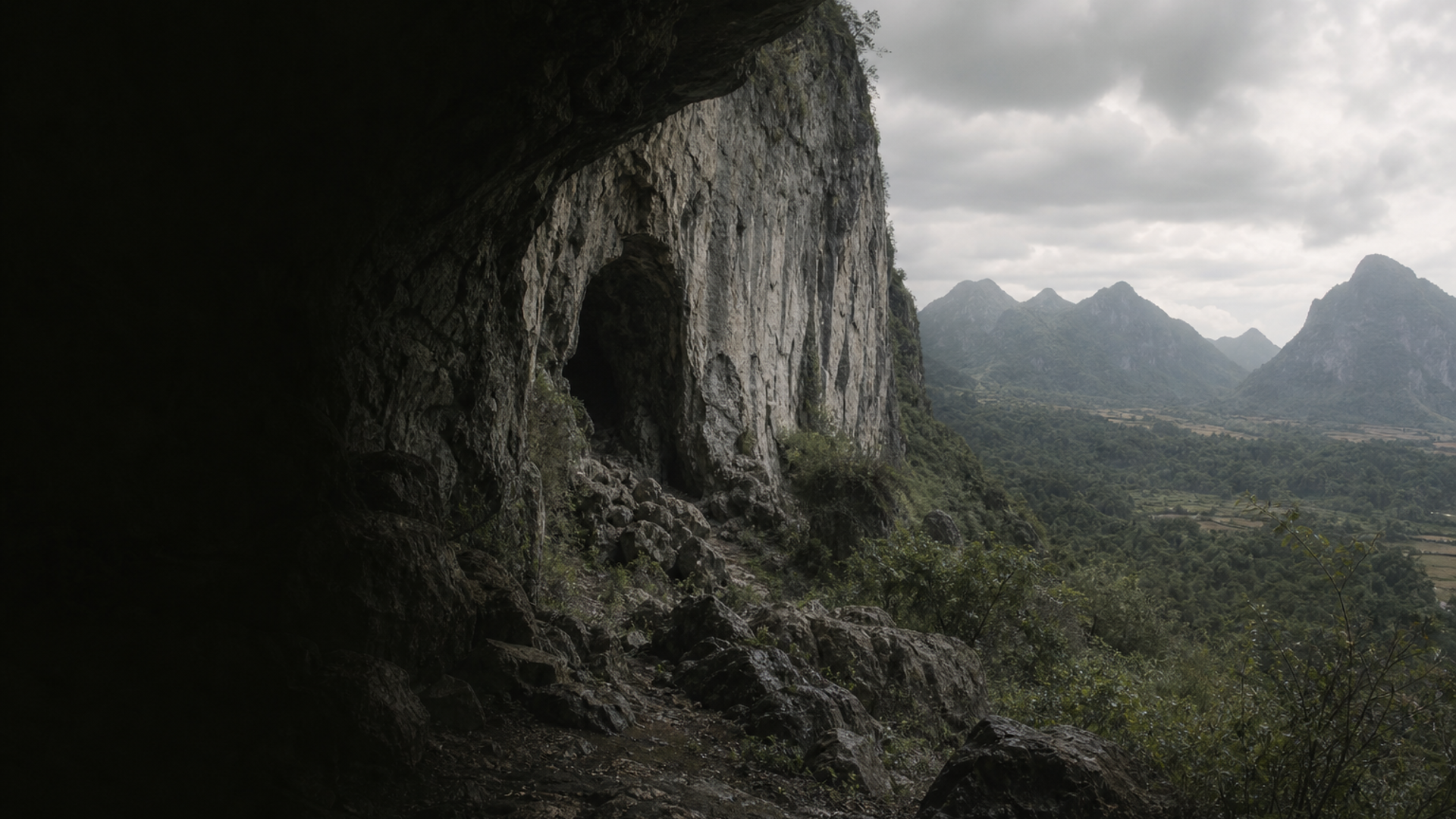
Life in Guangxi during the late 5th to mid-7th centuries unfolded in a humid subtropical environment of rivers, terraces, and limestone caves. Archaeological research across Lingnan suggests subsistence based on wet-rice agriculture, riverine fishing, foraging, and regional craft production. Karst caves such as Lada could serve as temporary shelters, ritual spaces, or burial places; the specific function at Lada is inferred from the burial context rather than monumental architecture.
Social organization in this frontier landscape was likely heterogeneous: small farming communities, local chiefs, and mobile households interacting through marriage, trade, and seasonal movement. The period encompassed political disruptions and administrative reforms as Sui–Tang structures extended into southern commanderies; these processes often brought new goods, technologies, and kinship ties but did not erase longstanding local lifeways.
Archaeological indicators from nearby Guangxi sites show ceramics, iron tools, and textile production at village scales. While Lada itself has yielded only one genetic sample so far, the burial invites questions about daily health, diet, and mobility that are best addressed by stable isotope and broader archaeological sampling. Any reconstruction remains tentative until more samples and contextual data are available.