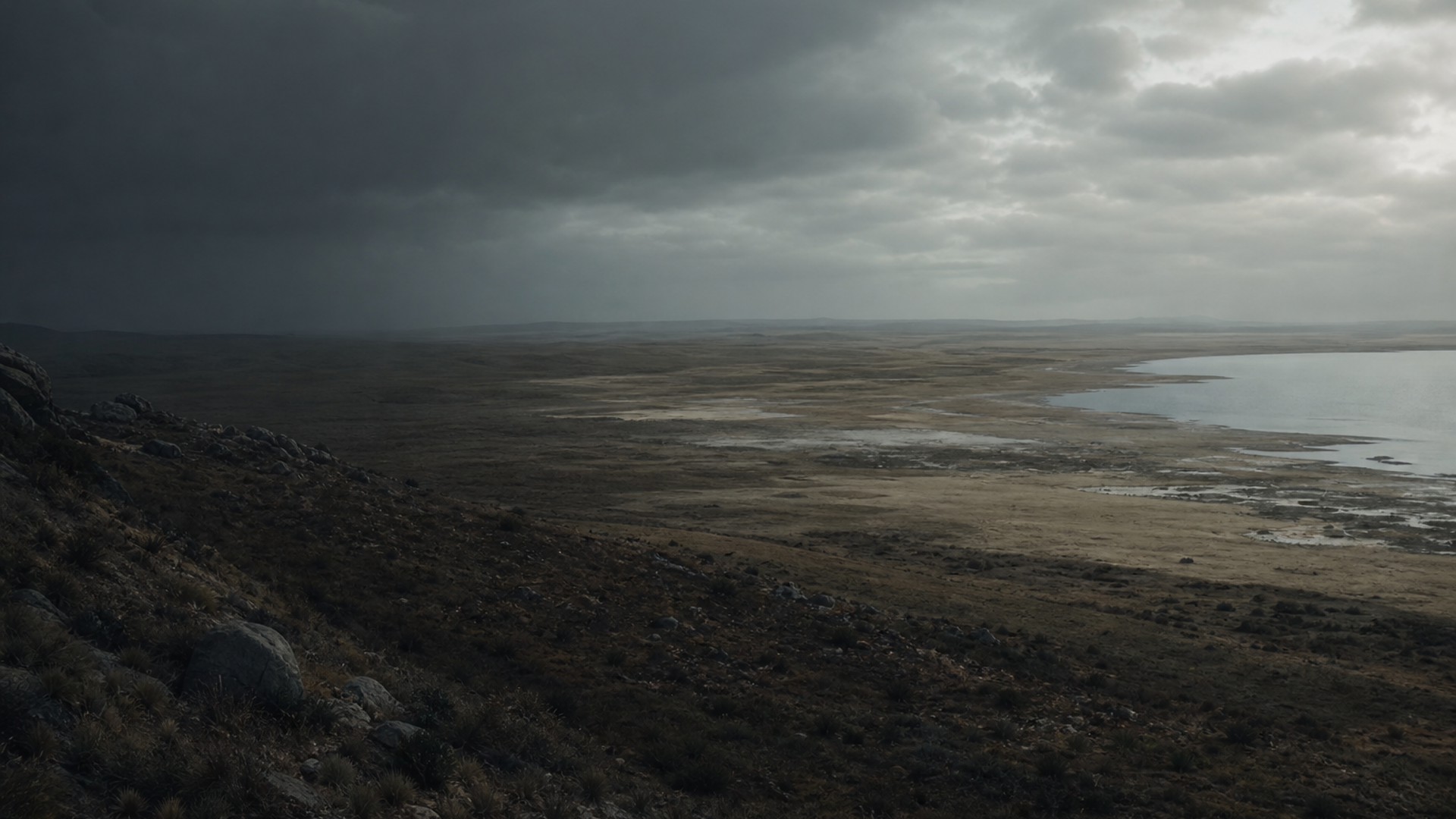
Archaeological traces paint an image of a life intimately tied to water and grassland. In the shadow of Laguna Toro's lagoon, people would have harvested aquatic plants, trapped small fish or crustaceans, and hunted pampas mammals seasonally. Stone tools recovered regionally—simple blades, scrapers and light projectile points—suggest tasks of hide processing, plant cutting, and butchery rather than large‑game specialization.
Social groups were likely small and fluid, with kin networks forming the backbone of cooperation. Burial practice at Laguna Toro appears modest; the presence of a single sampled individual could reflect a routine interment rather than an elaborate mortuary program. Craft production was probably household-level, focused on perishable technologies (basketry, cordage, wooden implements) that rarely survive archaeologically. Exchange networks, inferred from non‑local raw materials at other Late Holocene sites, imply contact over tens to perhaps hundreds of kilometers, knitting lagoons, rivers and coasts into seasonal rounds.
Archaeobotanical and zooarchaeological studies remain sparse for Laguna Toro specifically; archaeological interpretations therefore rely on regional analogies. This gap underlines how each new excavation and each ancient DNA sample can shift our understanding of daily life on the pampas.