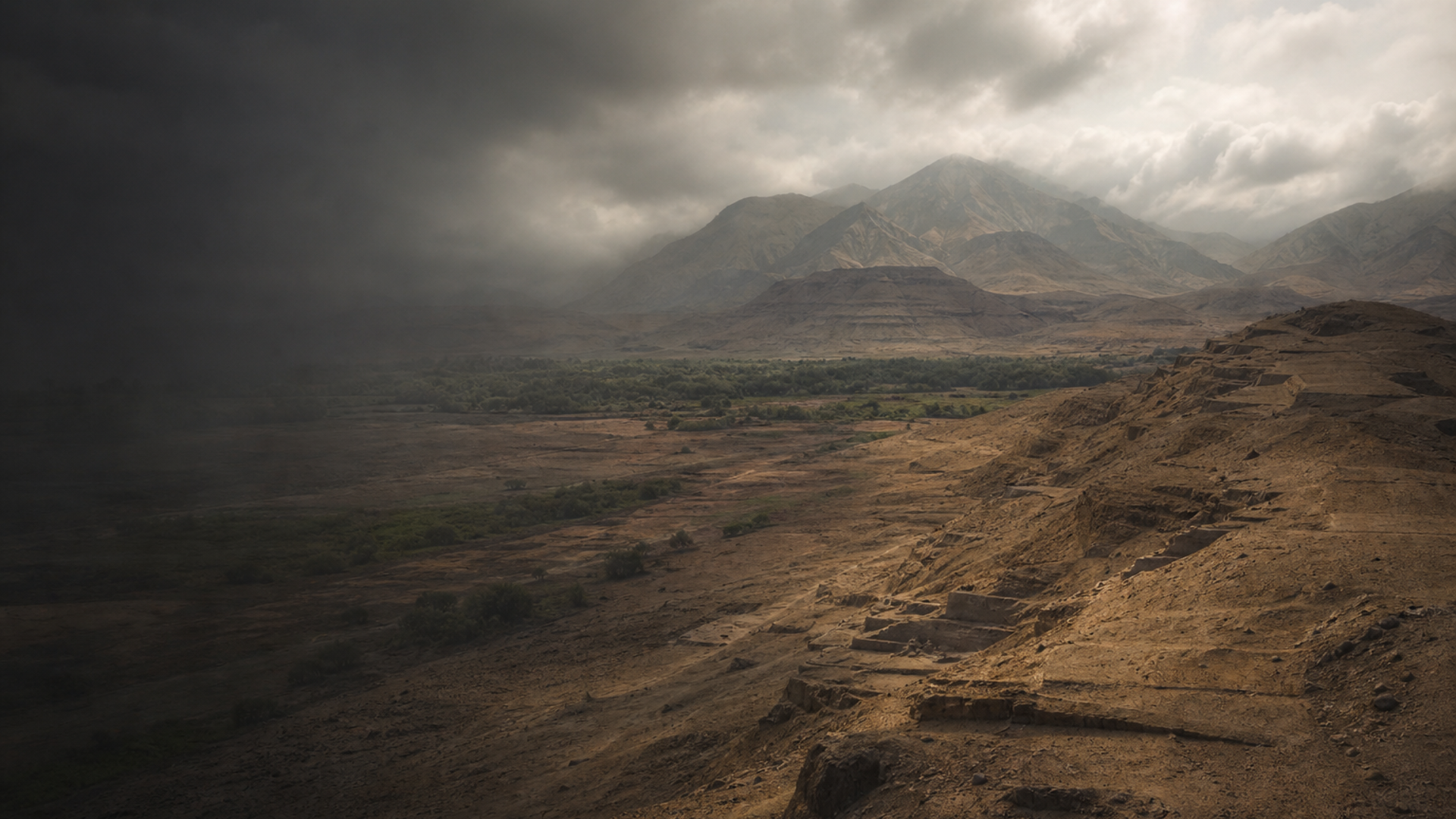
Life along the Lambayeque coast would have been shaped by a dramatic, cinematic juxtaposition of oceans, deserts, and irrigated green strips of fields. Communities clustered around canal-fed agriculture where maize, beans, squash, and cotton were staples; cotton supported textile production, and marine resources supplemented diets. Archaeological excavation at El Brujo documents craft workshops, ceramic production areas, and storage facilities that indicate organized production beyond household subsistence.
Monumental mounds (huacas) dominated the visual landscape and served as centers for ritual performance, elite burial, and possibly redistribution. Burials exhibit variability — from modest interments to richly furnished tombs — suggesting social differentiation. Iconography on ceramics and murals depicts animals, maritime scenes, and abstract motifs that likely signaled lineage, office, or religious affiliation. Funerary offerings and metal objects point to long‑distance exchange and skilled metallurgy in Lambayeque contexts.
However, direct evidence for household organization, daily diets at individual sites, and the extent of regional trade corridors remains uneven. Continued excavation and integration with isotopic and genetic studies will refine reconstructions of daily life.