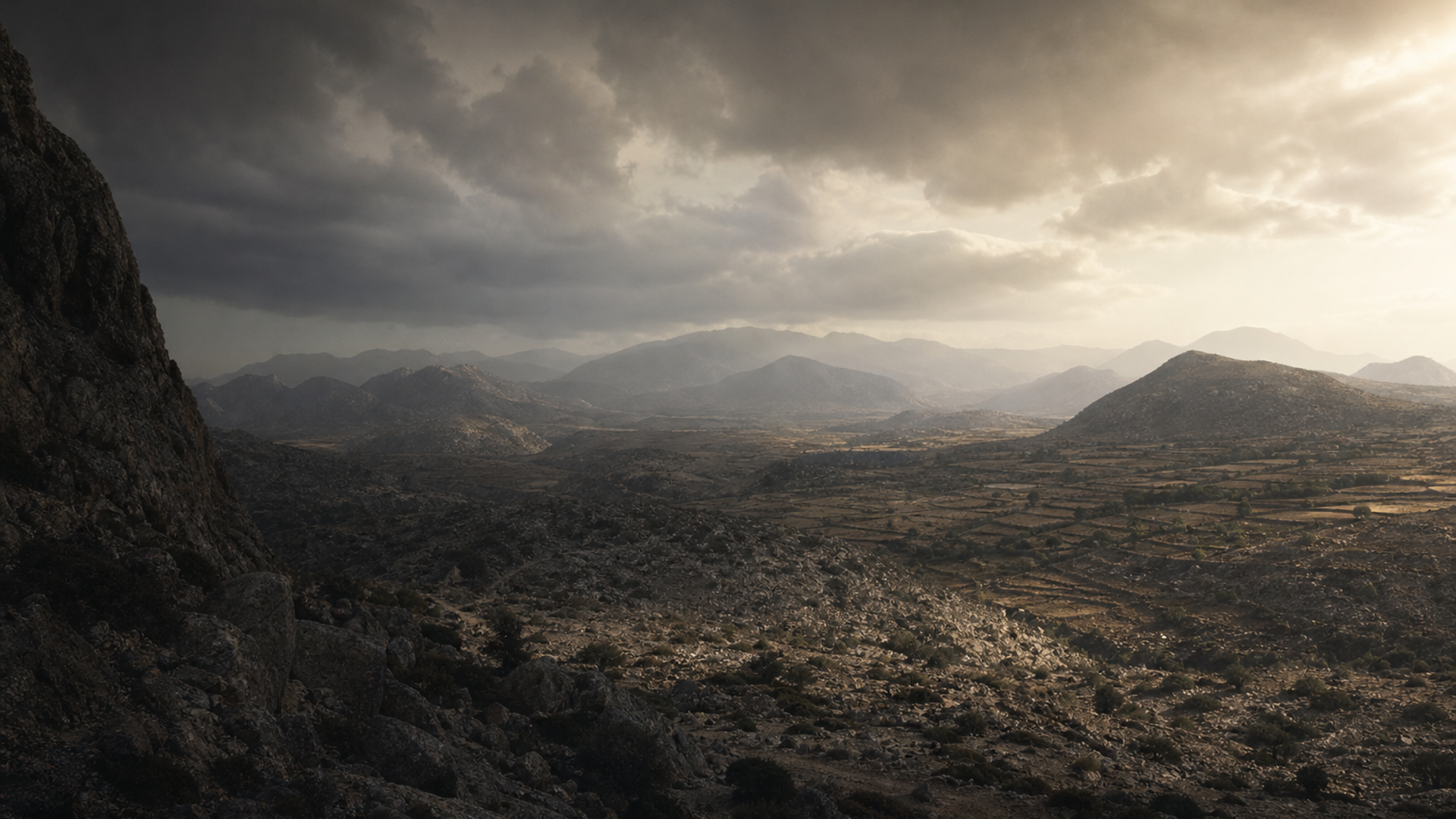
In the shadow of olive groves and terraced hills, life in Lassithi combined agricultural abundance with maritime opportunity. Archaeological remains suggest a diet based on cereals, pulses, olives, and marine resources; storage vessels, press installations, and animal bones recovered from contemporaneous Crete point to an economy anchored in both land and sea. Craft specialists — potters, metalworkers, and textile producers — left traces in kiln remains, slag, and spindle whorls. The spatial layout of settlements and the presence of elite goods imply social differentiation: households varied in size and wealth, and communal or institutional spaces may have mediated redistribution and craft control.
Ceremony and visual culture were central. Fresco fragments, carved stone libation tables, and ritual objects recovered across eastern Crete evoke public display and religious practice. Maritime trade connected Lassithi to the wider Aegean and to Anatolia, bringing exotic raw materials and stylistic influences that appear in local artefacts. Still, the archaeological record in Lassithi is patchy compared with larger palace centers: careful excavation and further aDNA sampling will sharpen our picture of everyday life and social organization.