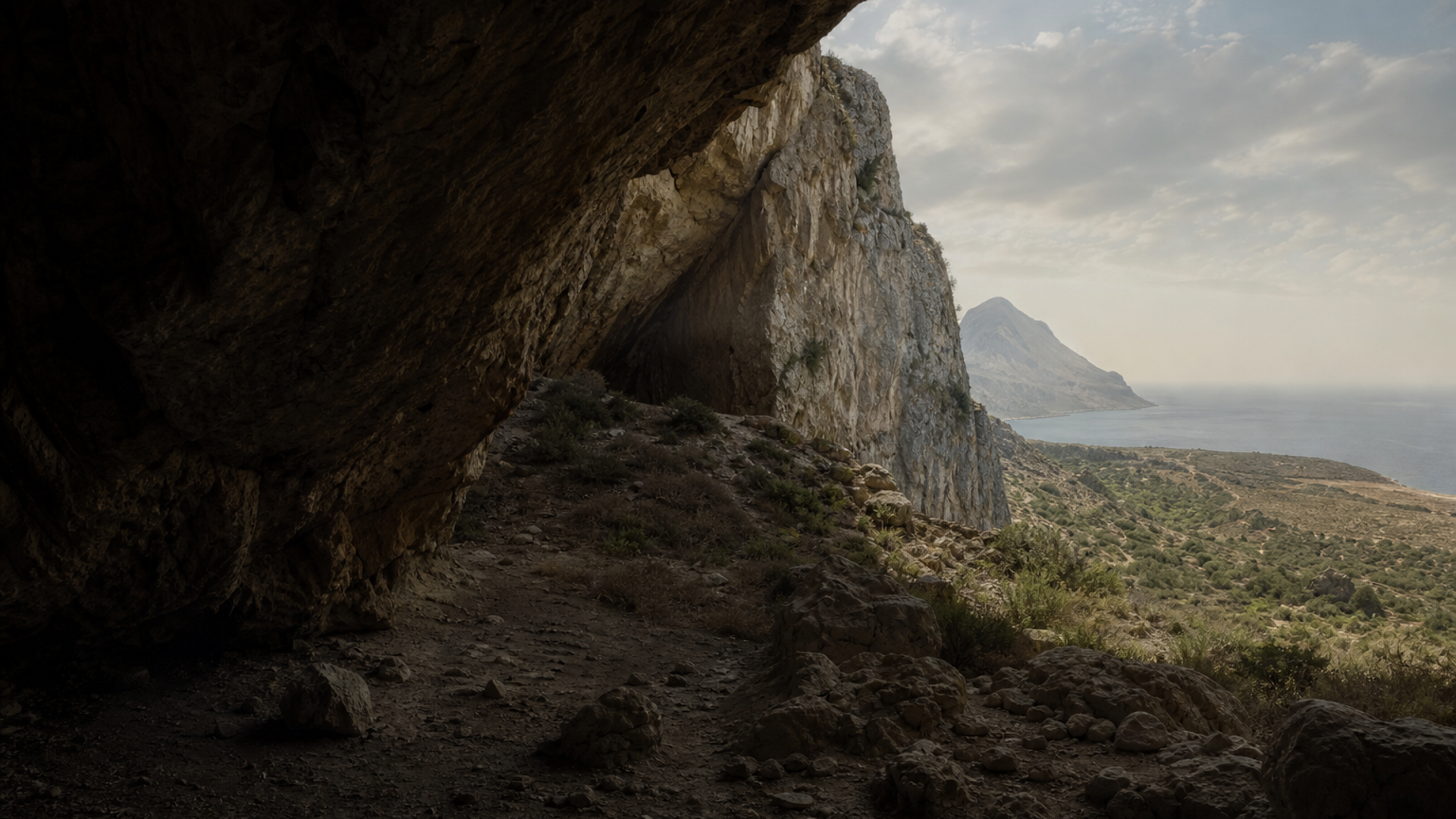
Material culture from Grotta dell'Uzzo paints a vivid picture of daily life along the Late Mesolithic Sicilian coast. Excavations reveal hearths, worked bone, fishing gear impressions, and dense shell deposits that attest to repeated seasonal camps focused on marine resources. Archaeological strata show specialized activity areas: loci of fish processing, bone tool manufacture, and refuse deposits. Small-scale hunting parties likely targeted red deer and wild boar inland, while coastal groups gathered shellfish, seabirds and migratory fish using nets and traps.
Social organization was likely flexible and kin-based, structured around seasonal rounds rather than permanent settlements. Burials in nearby contexts and mortuary treatment—although only sparingly preserved—suggest social recognitions that may have included selected burials within cave environments. Ornamentation and personal items are rare but present, hinting at identity markers and perhaps long-distance exchange of decorative materials. Environmental reconstructions show a warmer Holocene coastline with rich littoral resources that sustained modest population densities.
Interpretations must emphasize the fragmentary nature of the record: taphonomic processes, episodic excavation, and small sample sizes constrain firm conclusions. Yet the archaeological picture coheres around an image of maritime-skilled, mobile communities whose lives were choreographed by tides, seasons and the rugged contours of Sicily's shores.