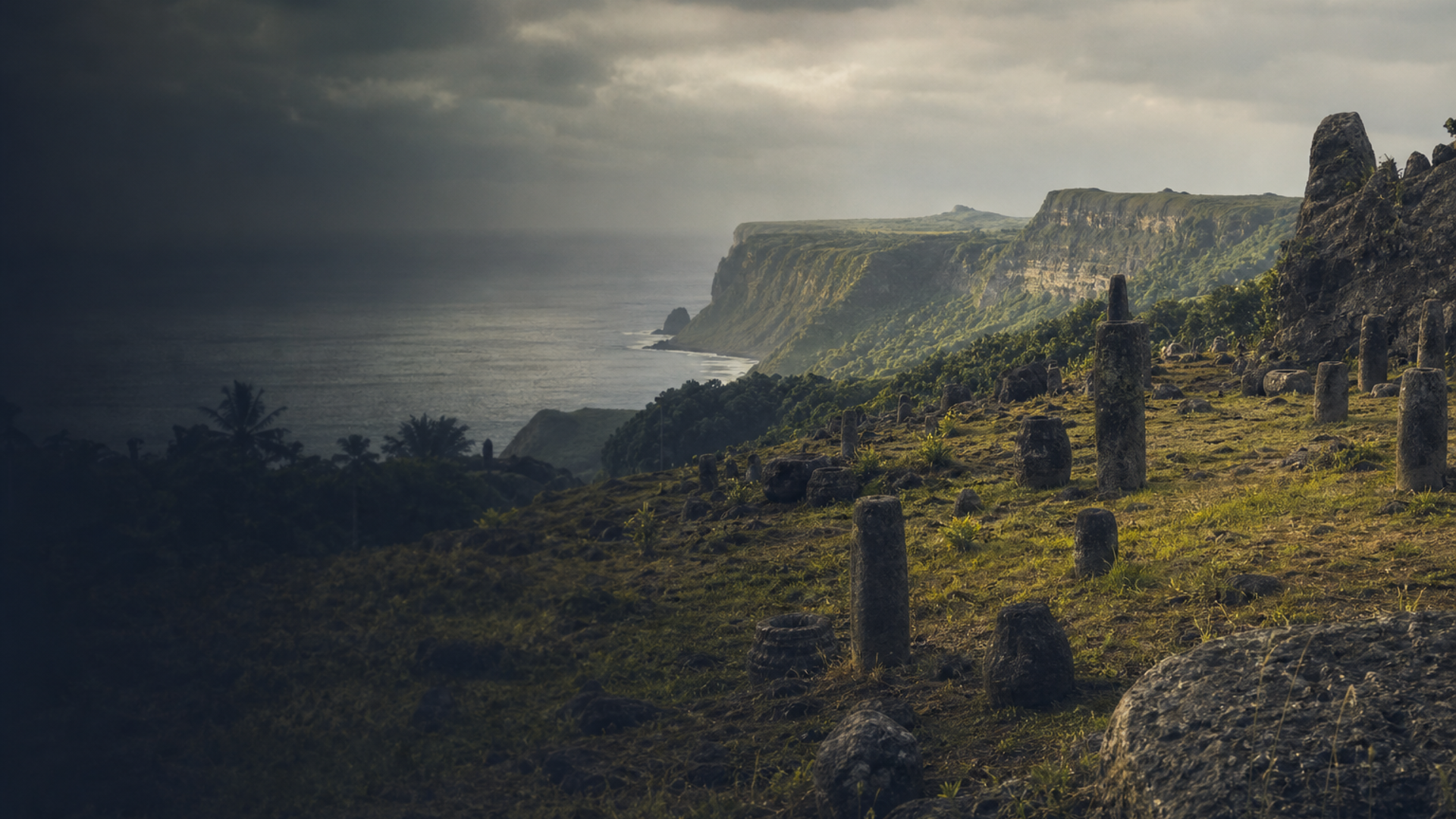
Imagine shoreline communities where paddle and reef meet stone—house platforms framed by latte, gardens tucked into volcanic soils, and cookfires smoking fish and breadfruit. Archaeological remains from coastal middens at Naton Beach reveal diets rich in reef fish, crustaceans, and terrestrial plants, with tools fashioned from local shell and stone. Domestic architecture likely combined raised living surfaces with thatch and timber, anchored by the distinctive latte pillars that declared family spaces and social standing.
Social life would have been organized around kin groups, seasonal resource rounds, and seafaring routes. Ceramic styles, adze types, and exotic traded items attest to interaction across the Marianas and beyond. Burial practices recovered at Naton Beach show both primary interments and secondary treatments, suggesting varied mortuary behavior tied to identity and status. Archaeological data indicate a resilient island economy adapted to limited land area and rich maritime resources, yet social inequalities and ritual displays—visible in the scale of latte monuments—point to complex local hierarchies developing over time.