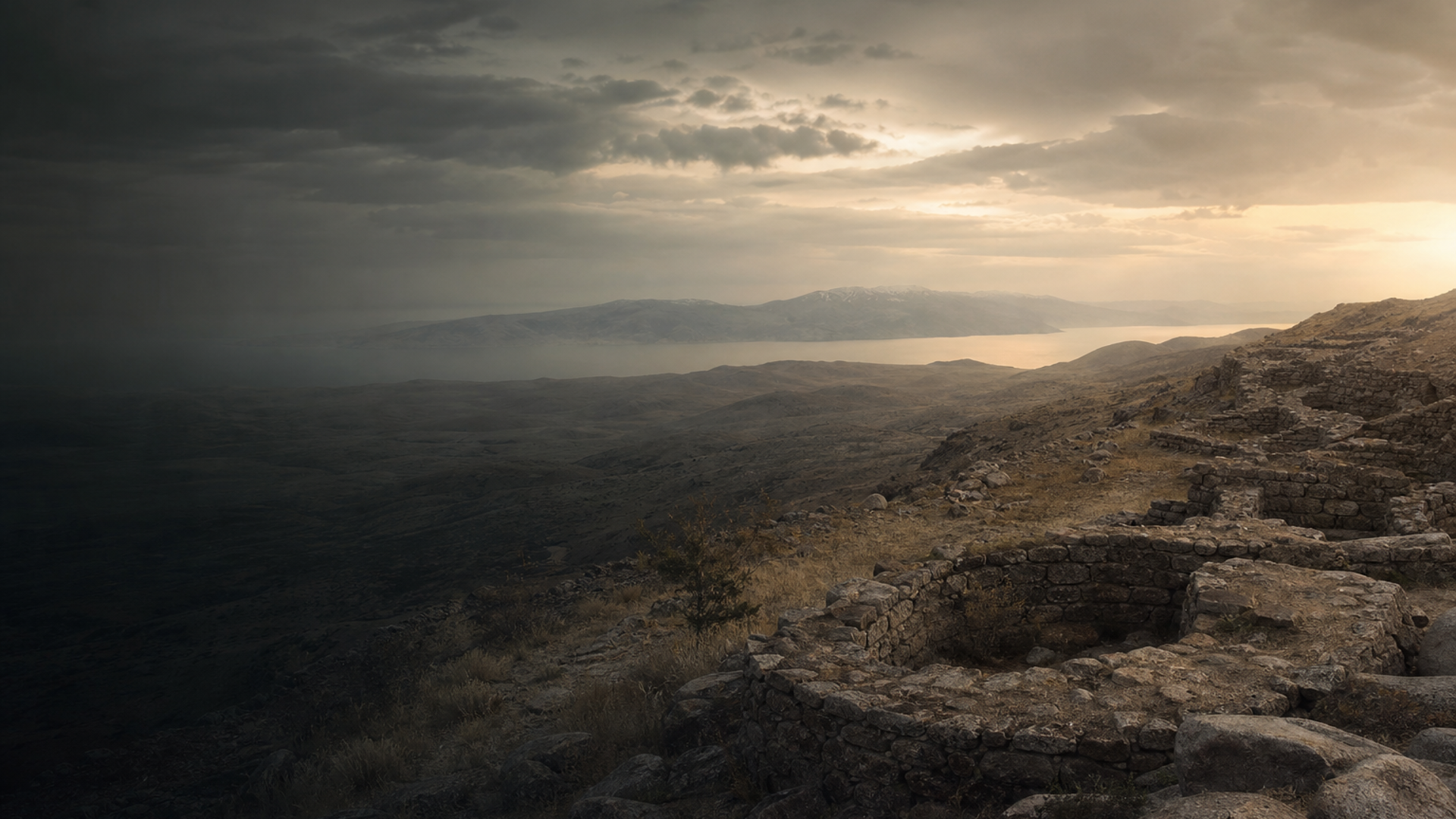
Thirteen individuals from the Lchashen cemetery provide a modest ancient DNA window into Armeniahashen population history (samples dated c.1420–1150 BCE). Maternal haplogroups observed include H (4), N (2), T2h (2), H20 (1), and W (1); three individuals either yielded different or no confident mtDNA calls. The predominance of haplogroup H—common across much of West Eurasia—suggests substantial West Eurasian maternal ancestry in this Late Bronze Age community, while the presence of N, T2h, and W points to maternal lineages that are often associated with Near Eastern and Eurasian connections.
No consistent Y-DNA pattern is reported for this sample set in the provided data, so paternal structure remains unresolved. Genome-wide patterns from the broader Bronze Age Caucasus typically show admixture between local Near Eastern farmer-descended groups and northern/steppe-derived ancestries; the Lchashen mtDNA fits comfortably within that regional mosaic, but cannot alone resolve autosomal ancestry or migration pathways.
Because the dataset comprises 13 individuals, conclusions should be framed as informative but not definitive. Limited sample size and uneven preservation mean signals may reflect local kinship, burial selection, or wider demographic trends. Future genome-wide sequencing and isotopic analyses will better clarify ancestry proportions, kinship ties within the cemetery, and mobility patterns.