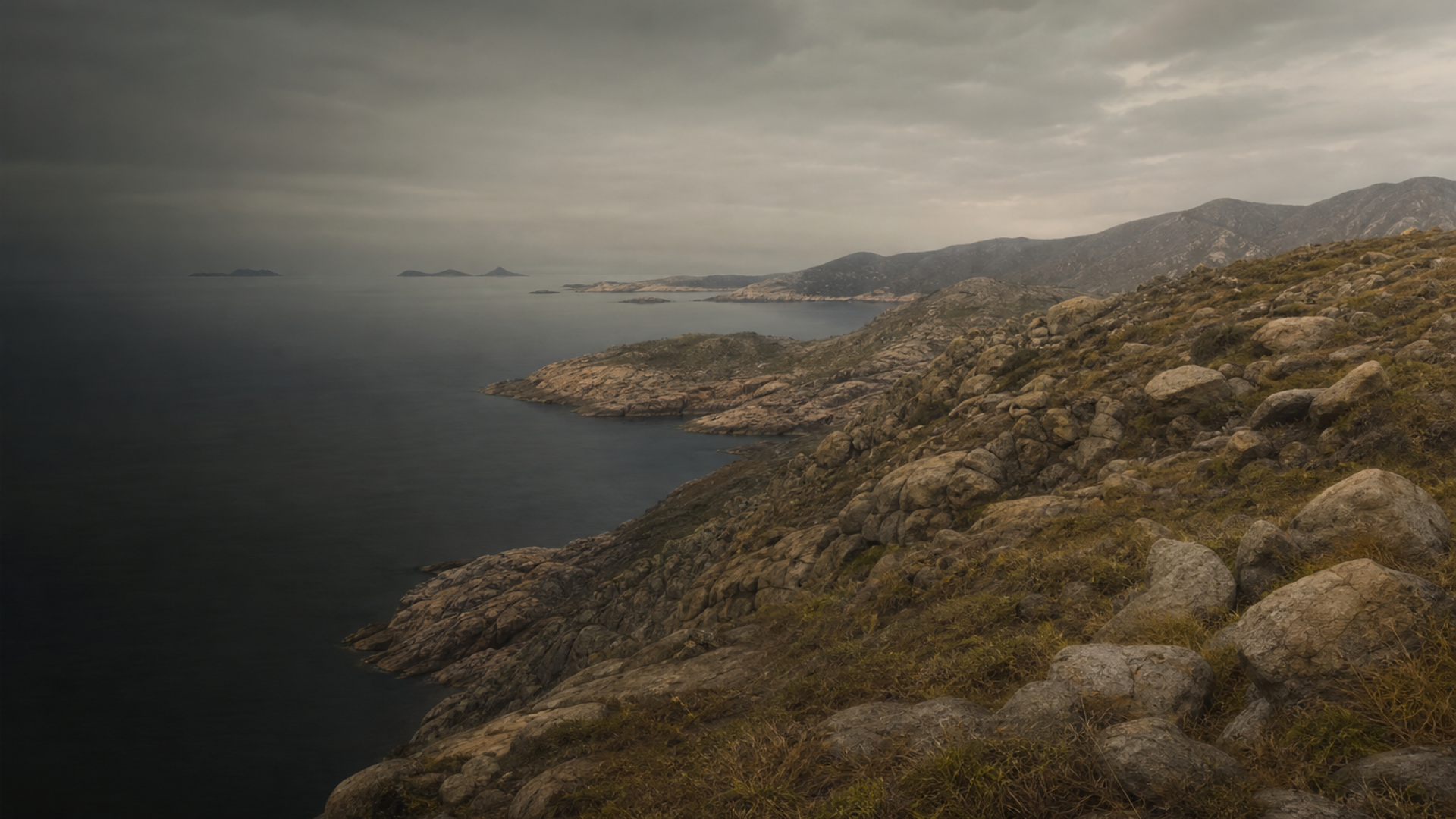
Life on Liang Island would have been shaped by salt, wind and the sea’s seasonal abundance. Archaeological data indicates diets dominated by shellfish, fish and marine mammals supplemented by coastal plants and possibly limited terrestrial resources brought from nearby mainland. Shell middens preserve a granular record of meals and tool production: shells, fish vertebrae, and fragments of worked bone and shell suggest routine processing and communal consumption.
Settlement traces are modest — ephemeral house floors or postholes are rarely preserved in exposed island soils — implying lightweight dwellings and mobile or semi-sedentary occupation. Craft activities likely took place near sheltered coves: the manufacture of shell tools, bone points, and small stone implements for fishing and processing. Social life would have revolved around cooperative marine foraging, knowledge of currents, and shared technologies for harvesting and preserving food. Trade or exchange of goods, such as distinctive shell ornaments or specific stone raw materials, may have linked Liang Islanders to neighboring coastal groups, though direct evidence remains limited.
Archaeological data indicates a society organized at the household or small-community scale rather than large, permanent villages. Environmental exposure means the archaeological picture is fragmentary; reconstructions emphasize plausible patterns rather than definitive social structures.