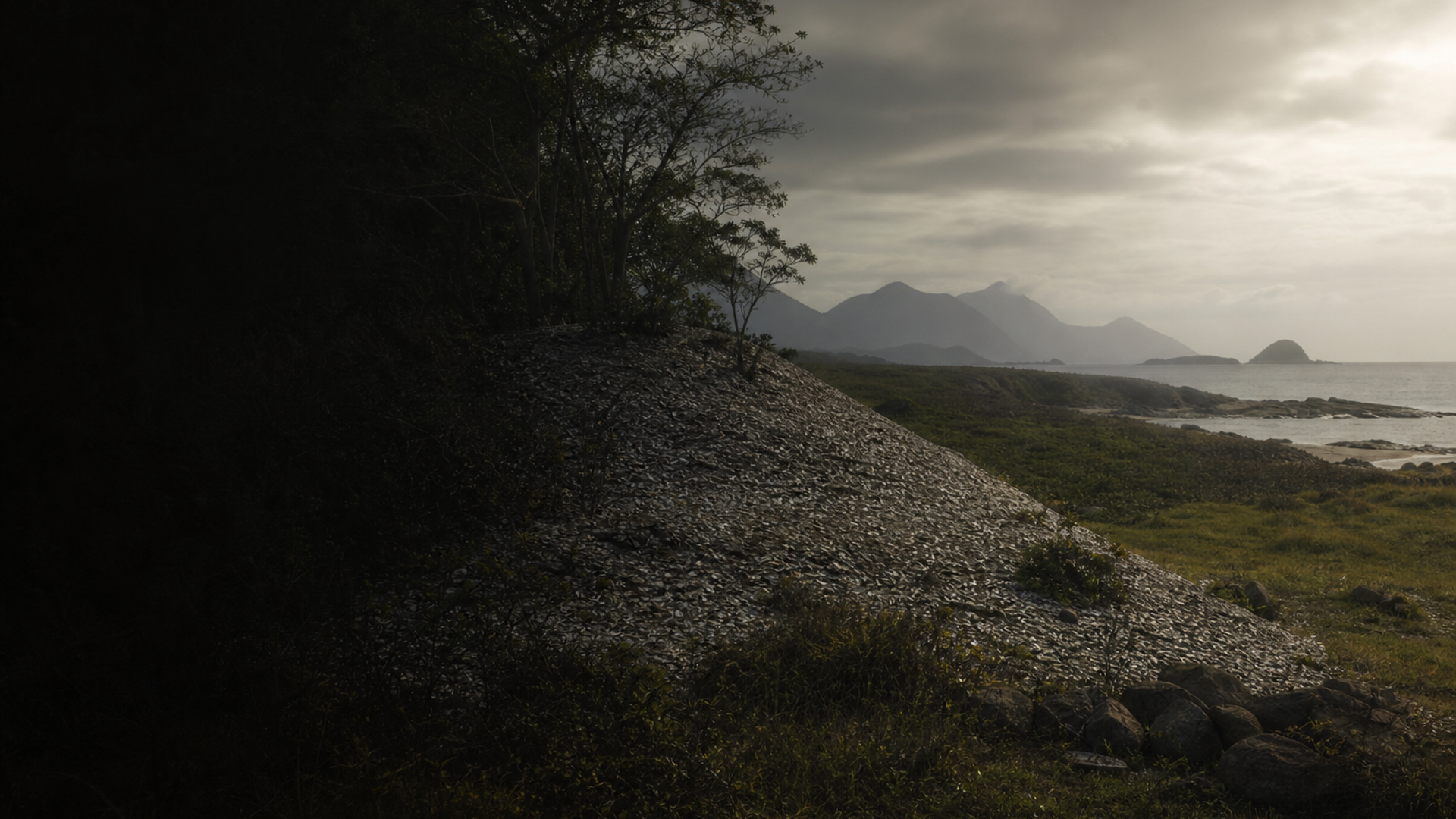
The genetic snapshot from Brazil_Limao_Sambaqui_1900BP comes from four analyzed individuals recovered at Sambaqui do Limão. mtDNA lineages observed are A (two individuals), D (one), and C1b (one), while a single Y-chromosome sample carried haplogroup Q. These haplogroups are part of the well-established suite of founding and early Indigenous American maternal and paternal lineages, widely documented across South and Central America.
Archaeogenetic data here is powerful for linking biological ancestry to coastal lifeways, but it is also sparse. With n=4, any inferences about population structure, continuity, or migration must be framed as preliminary. The presence of A, D, and C1b matrilines suggests genetic continuity with broader Indigenous populations of South America, while Y-haplogroup Q aligns with widespread Native American paternal ancestry.
Because the dated interval extends into the post-contact era (up to ca. 1650 CE), observed genetic signatures could reflect both pre-contact continuity and later demographic processes, including contact-era population movements or admixture. Archaeological context and direct dating of skeletal remains are essential to tease apart temporal layers. Future targeted sampling and genome-wide data will be necessary to test questions of local continuity, kinship, and connections to contemporary Indigenous groups. Until then, conclusions remain cautious and provisional.