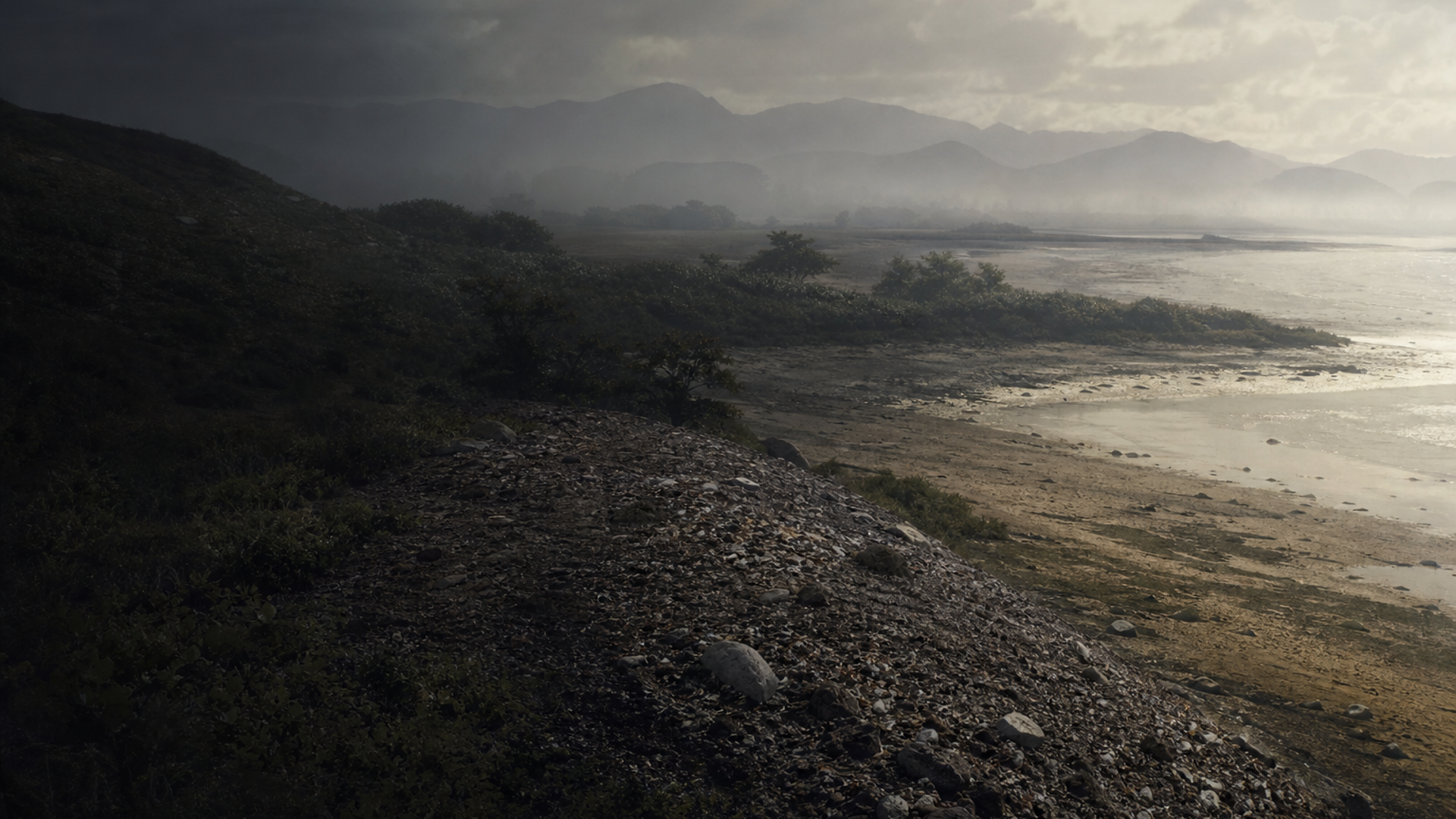
The life reconstructed from sambaqui deposits is cinematic: smoke drifting over tidal flats, fish drying on racks, and accumulations of clam, oyster and fish bone building rounded mounds that rise from the shoreline. Archaeological indicators at Limão—shell refuse layers, fragmented fish bone, and occasional worked shell—point to a mixed foraging strategy with an emphasis on rich nearshore resources. Shell middens also served social and ritual roles; funerary deposits within many sambaquis suggest these mounds were both refuse and memory banks where ancestors were interred and commemorated.
Spatial patterning at comparable sambaqui sites shows areas of hearths, tool production and burial. Grave goods are often modest—shell beads, ochre traces, simple ornaments—but their placement inside mounds confers long-term landscape presence. Craft traditions tied to shell and bone reflect skilled coastal adaptation rather than sedentary agriculture.
At Limão specifically, the archaeological record preserves a snapshot of lifeways on the eve of intensified colonial contact. The material culture implies resilient coastal economies and social practices centered on maritime cycles. Yet, with only one genetic sample analyzed, linking these cultural practices to specific lineages or kinship structures remains speculative.