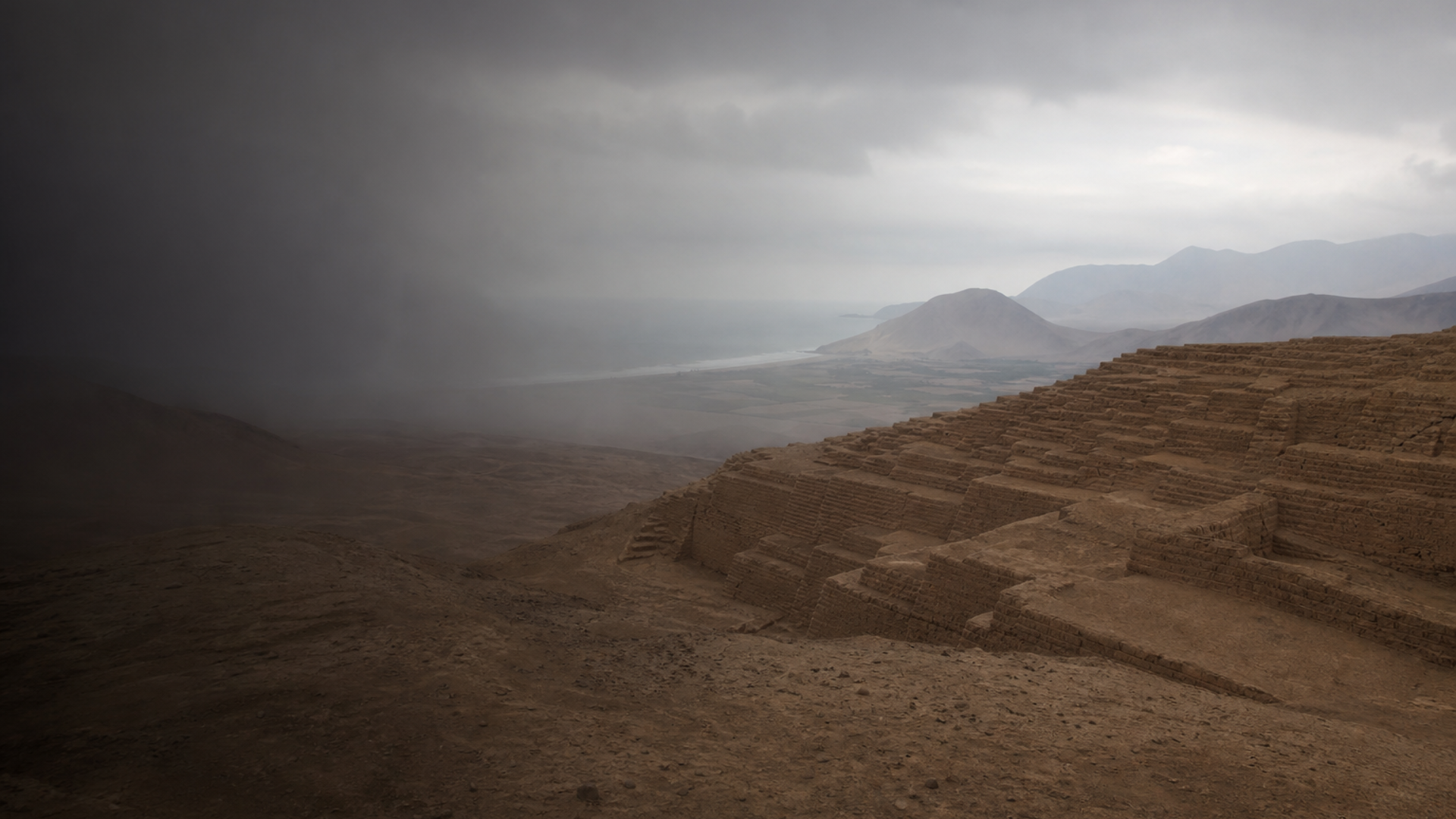
The coastal environment framed daily existence: fog-choked deserts yielded to a narrow strip of productive marine shelf, where fishing and shellfish gathering complemented irrigated horticulture. At Huaca Pucllana, the interplay of plaza space, stepped-platform mounds and surrounding residential compounds suggests a society organized around ritual centers that coordinated labor, storage and feasting. Archaeological deposits include domestic debris, craft production areas and burials placed in and around monumental architecture, indicating close ties between communal ritual and everyday life.
Material culture — pottery shapes, painted motifs and woven textiles — signals both local innovation and exchange with neighboring Early Intermediate polities. Trade in marine products, fish-salting, and specialized craft production likely supported elites who managed surplus and organized labor for construction. Osteological indicators from comparable coastal cemeteries often show diets rich in marine protein with occasional nutritional stress, hinting at seasonal variability and social differentiation in access to resources. While Huaca Pucllana offers vivid architectural evidence, direct bioarchaeological sampling here remains limited; interpretations of status, diet and mobility should be read as provisional until larger, regionally representative datasets are analyzed.