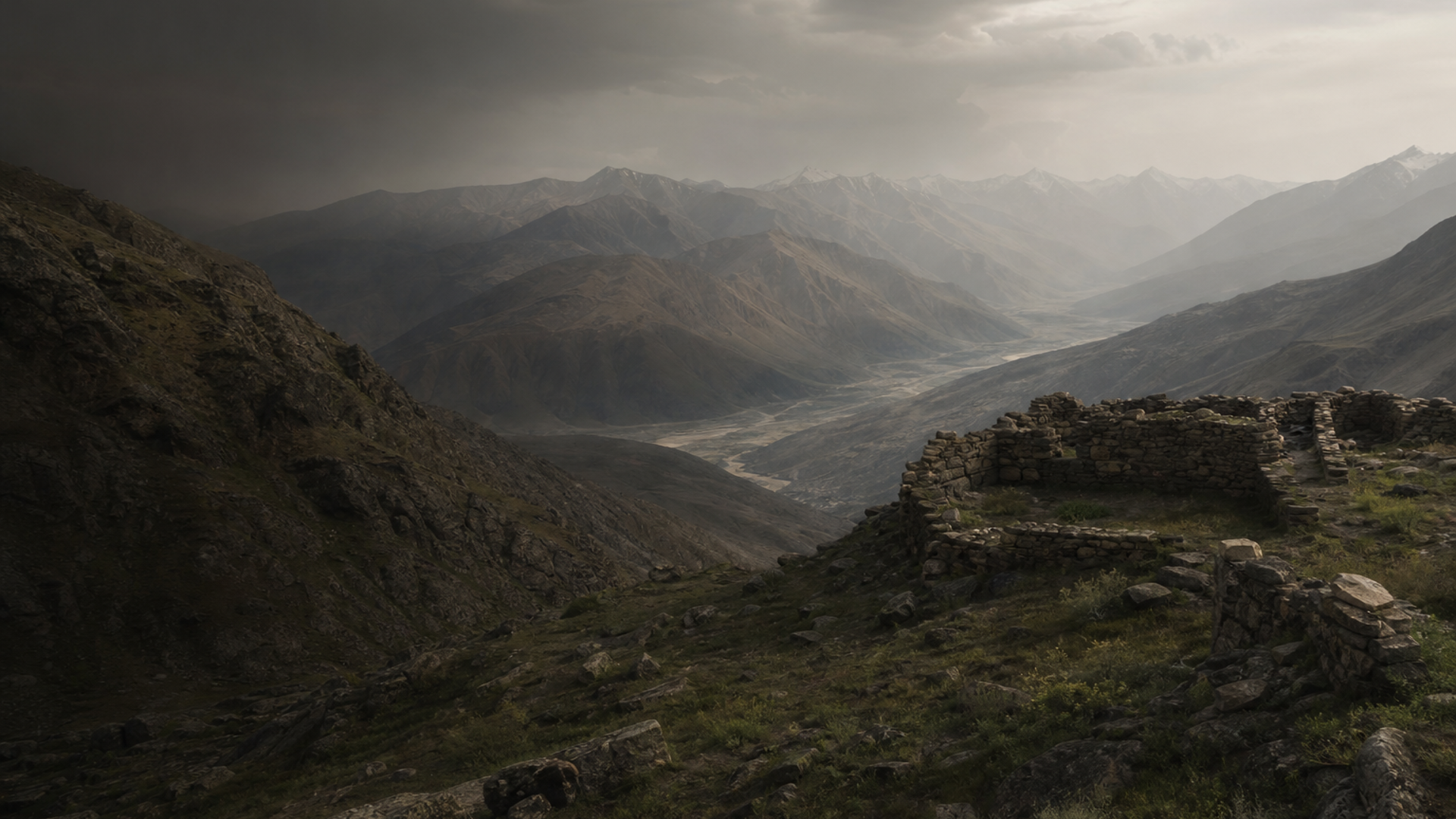
A mosaic written in DNA
Genome sampling from 38 individuals at Loebanr offers one of the clearer genetic windows into an Iron Age community in northern Pakistan. Y‑chromosome haplogroups are diverse: L (9), R (4), Q (3), J (2), and C (1). Mitochondrial lineages likewise show breadth: T (5), M5a (4), U (4), M (4), and W (4). This diversity signals multiple ancestral strands and interactions rather than a single homogeneous gene pool.
Interpretation must be cautious. Haplogroup L is common across South Asia and likely reflects deep local paternal continuity. Haplogroup R—present here but in lower numbers—has broad Eurasian distributions; without fine subclade resolution it is not possible to assign it definitively to steppe‑related or South Asian branches. Haplogroups Q and C, although minor in count, suggest episodic genetic inputs that could reflect eastern or highland connections; J may indicate western or Iranian‑linked affinities. On the maternal side, M and its sublineages (including M5a) are characteristic of South Asian maternal ancestry, while T, U, and W indicate connections that extend into West and Central Asia.
The sample size (38) is moderate: it permits detection of population structure and admixture signals but still limits fine chronological modeling. Archaeogenetic patterns here are consistent with a community rooted in local South Asian ancestry yet open to mobility and gene flow along mountain corridors. Robust conclusions about migration directionality, sex‑biased admixture, or cultural transmission will require additional autosomal sequencing, higher‑resolution Y‑ and mtDNA subclade data, and comparative datasets from contemporaneous neighboring sites.