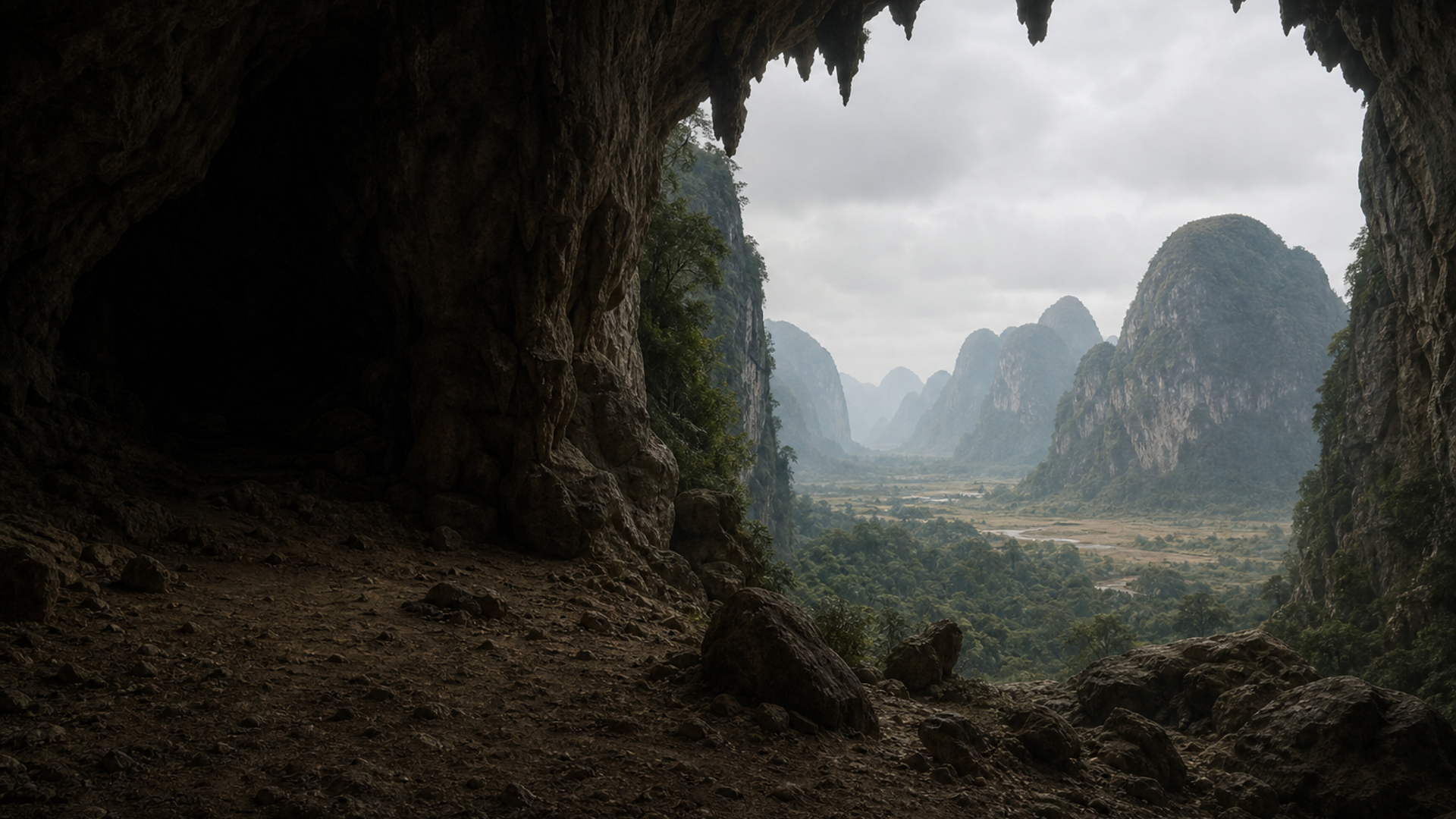
The people who used Longlin Cave lived in a world of dense forests, intermittent rivers and limestone shelters. Archaeological indicators from the region point to mixed foraging strategies: tracking game in upland forests, fishing and collecting freshwater resources, and exploiting seasonal plant foods in river valleys. Cave sites like Longlin likely functioned as episodic camps or ritual places — shelters where tool repair, food processing and social exchange intersected under a single roof of stone.
Stone flake tools, if present, would have been central to daily tasks: preparing hides, cutting plants, and butchering animals. Bone fragments and charcoal in similar sites suggest hearths and small-scale food preparation rather than large, permanent architecture. Social groups were probably small and flexible, with kin networks moving across a mosaic of microhabitats.
Because Longlin’s material record is limited, many details of social structure remain hypothetical. Nevertheless, the site evokes a cinematic image: small bands of people gathering in a cool cave mouth at dusk, exchanging stories and toolcraft as the rivers below sustained their rhythms of life.