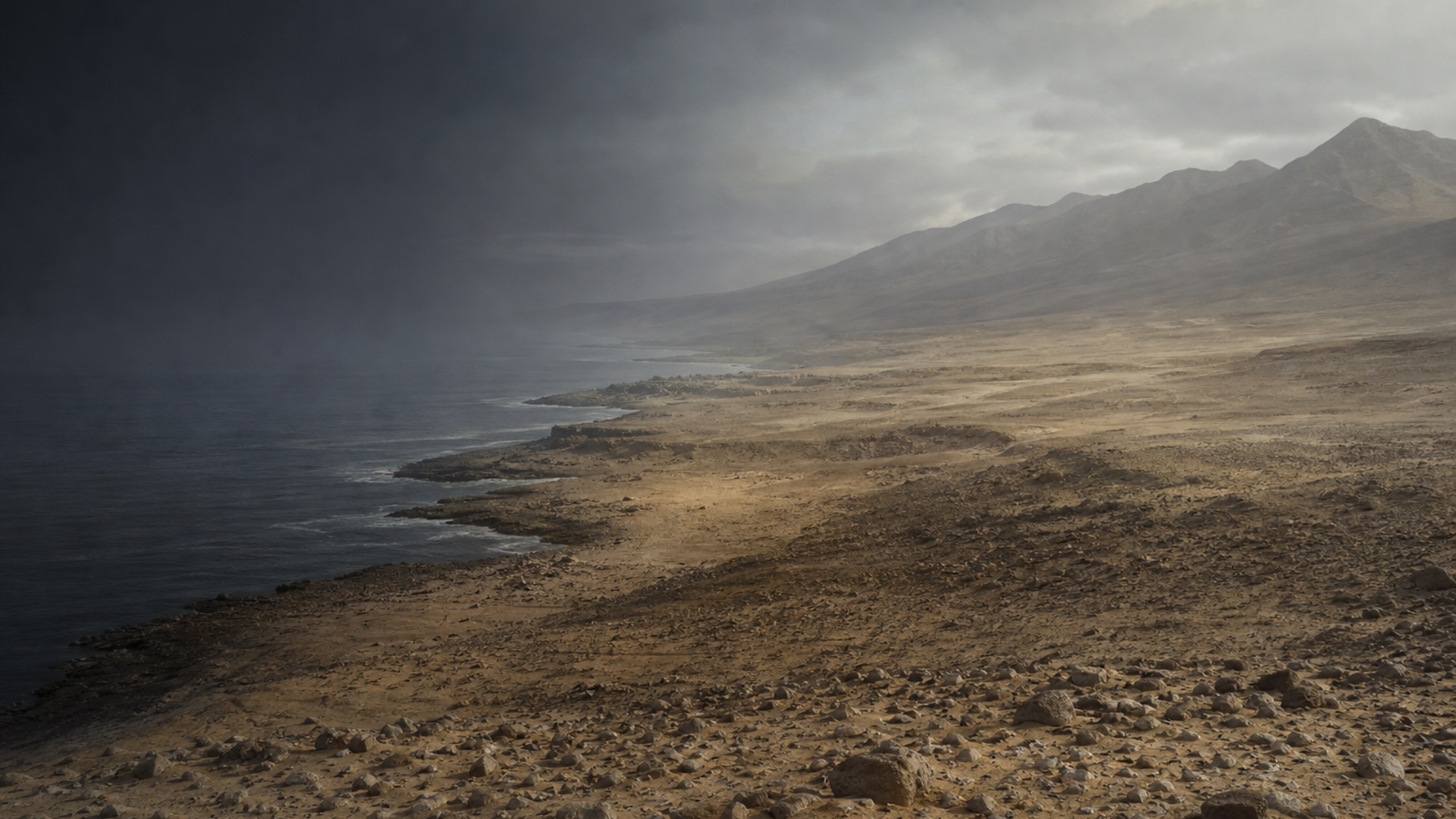
Imagine a shoreline of wind-polished pebbles and tidal pools: families moving between rocky coves and inland plant patches, harvesting shellfish, fish, and seasonally available plants. Archaeological data from the Coquimbo coast indicate lithic technology suited to a mobile foraging economy—flakes, scrapers and pointed tools—though preservation biases mean organic gear (wooden hooks, nets, basketry) rarely survives.
Social groups at Los Rieles were likely small, kin-based bands tied to local resource cycles. The coastal setting would have encouraged repeated short-term camps and foraging rounds, with people transporting curated stone tools and food residues across the landscape. Seasonal rounds may also have included forays up river valleys to access freshwater resources and game. Symbolic life—ritual deposits, mortuary behavior—remains poorly documented for this site; the single genetic individual provides a rare window into the living community but cannot reconstruct social complexity on its own.
Archaeological horizons in nearby regions record shell middens and hearth features elsewhere, suggesting shared coastal lifeways. At Los Rieles the interplay of sea-level rise and shifting shorelines affected site location and occupational intensity, leaving a cinematic yet fragmentary record of everyday survival at the dawn of the Holocene.