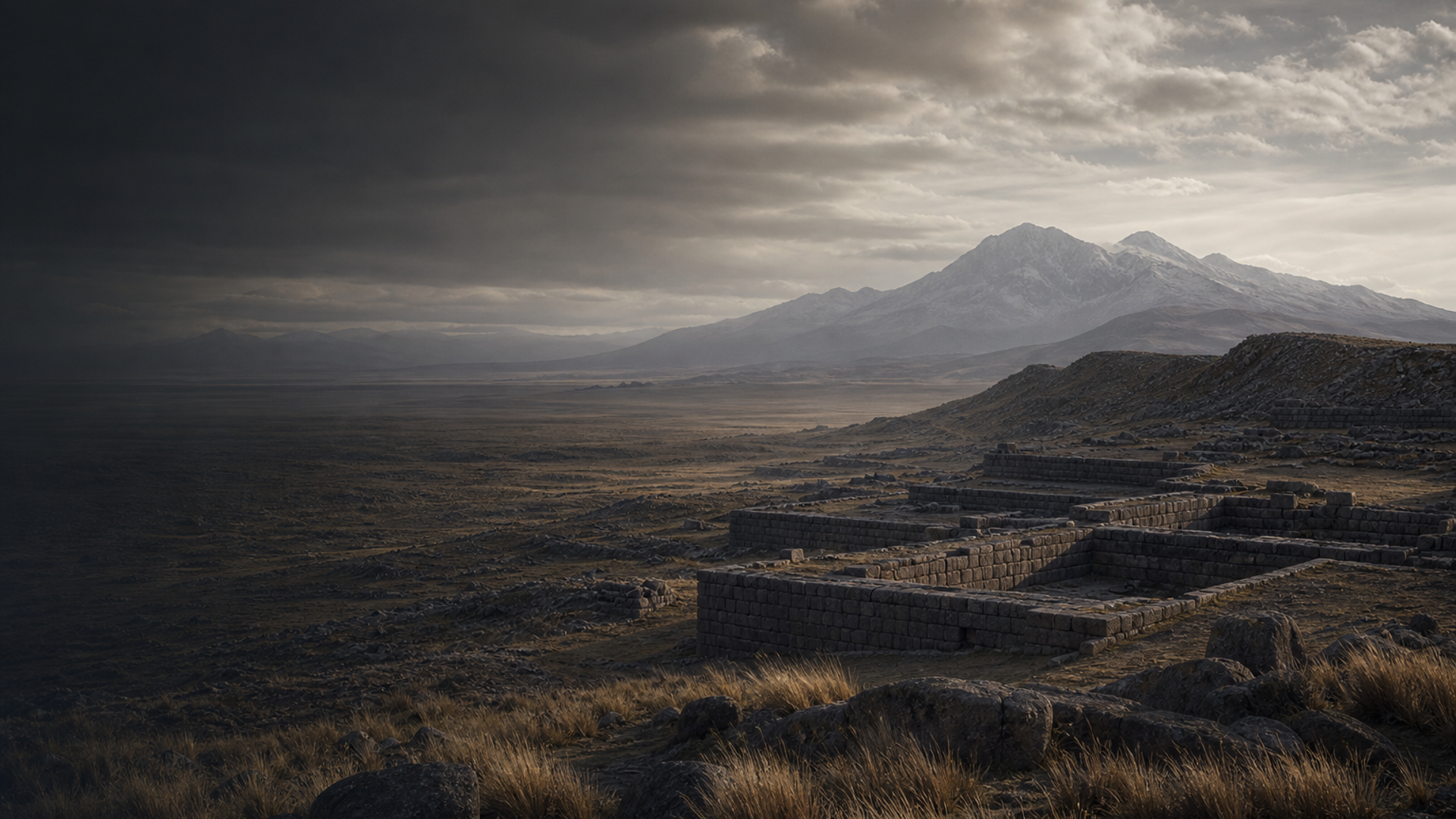
Archaeology paints a textured picture of daily life at Lukurmata: fields sculpted into the high plain, corrals for camelids, pottery vessels for storage and feasting, and burials that reflect both household and communal practices. Archaeological data indicates a mixed agropastoral economy — tuber and grain cultivation supported by engineered soils and irrigation, together with llama herding — which anchored communities through climatic fluctuation.
Material culture recovered near Lukurmata includes standard Tiwanaku ceramic styles alongside locally made wares, suggesting cultural exchange and local production coexisted. Funerary contexts reveal variation: some individuals show elaborate grave goods and bundled interments, while others have simpler burials, pointing to social differentiation. Trade routes across the altiplano carried raw materials and ideas; obsidian and pressed-metal objects found regionally attest to long-distance exchange. Ethnohistoric analogy and zooarchaeological remains suggest ritualized use of camelids and plants in both subsistence and ceremonial spheres.
However, many interpretations rest on limited excavation areas and small sample counts. The human stories implied by pottery shards and bones are compelling but incomplete; every new test or trench can alter the narrative of how Lukurmata’s inhabitants lived, worked, and related to Tiwanaku power.