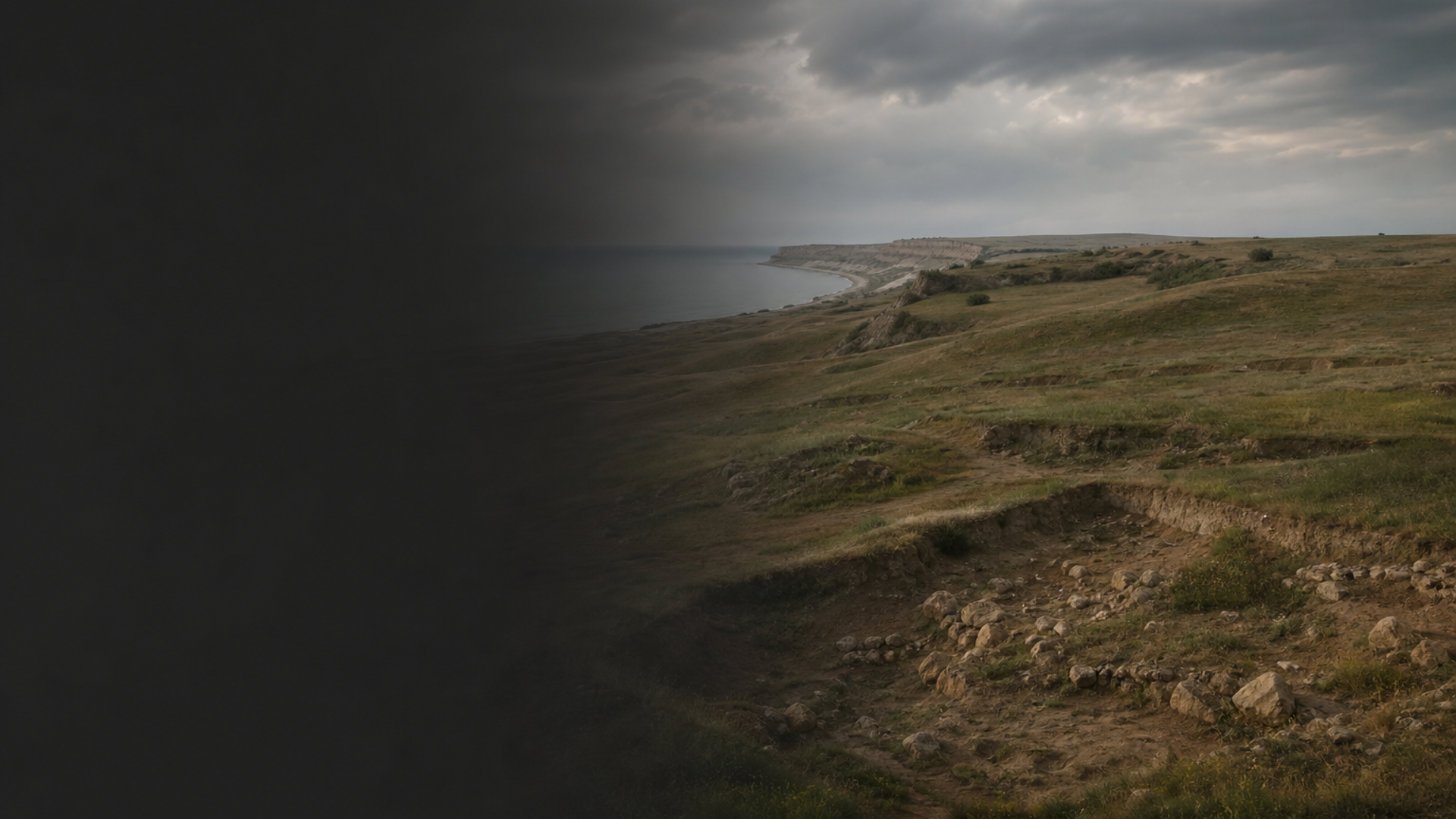
Imagine a community living where the salt-scented wind meets fertile estuaries: households at Majaky balanced fishing, cattle and ovicaprid herding, and small-scale cultivation. Archaeological data indicates coastal subsistence strategies — fish bones, shell middens, and imported ceramics suggest active maritime engagement alongside pastoral mobility. Settlement traces hint at seasonal patterns: some sites appear occupied year-round, others show episodic use linked to grazing cycles and fishing seasons.
Grave assemblages from Usatove contexts often contain pottery, metal items, and ornaments that imply craft specialization and long-distance exchange. Such grave goods, when present, can indicate status differences and networked identities — traders, herders, or coastal specialists. Household organization likely revolved around extended kin groups; social relations were expressed through burial placement and the differential presence of exotic items.
Archaeological evidence indicates that ritual and social memory were important: cemeteries and mounds at Usatove sites became focal markers on the landscape. However, preservation and excavation coverage in the Majaky area are uneven, so reconstructions of daily life must remain provisional until more systematic excavation and environmental sampling are completed.