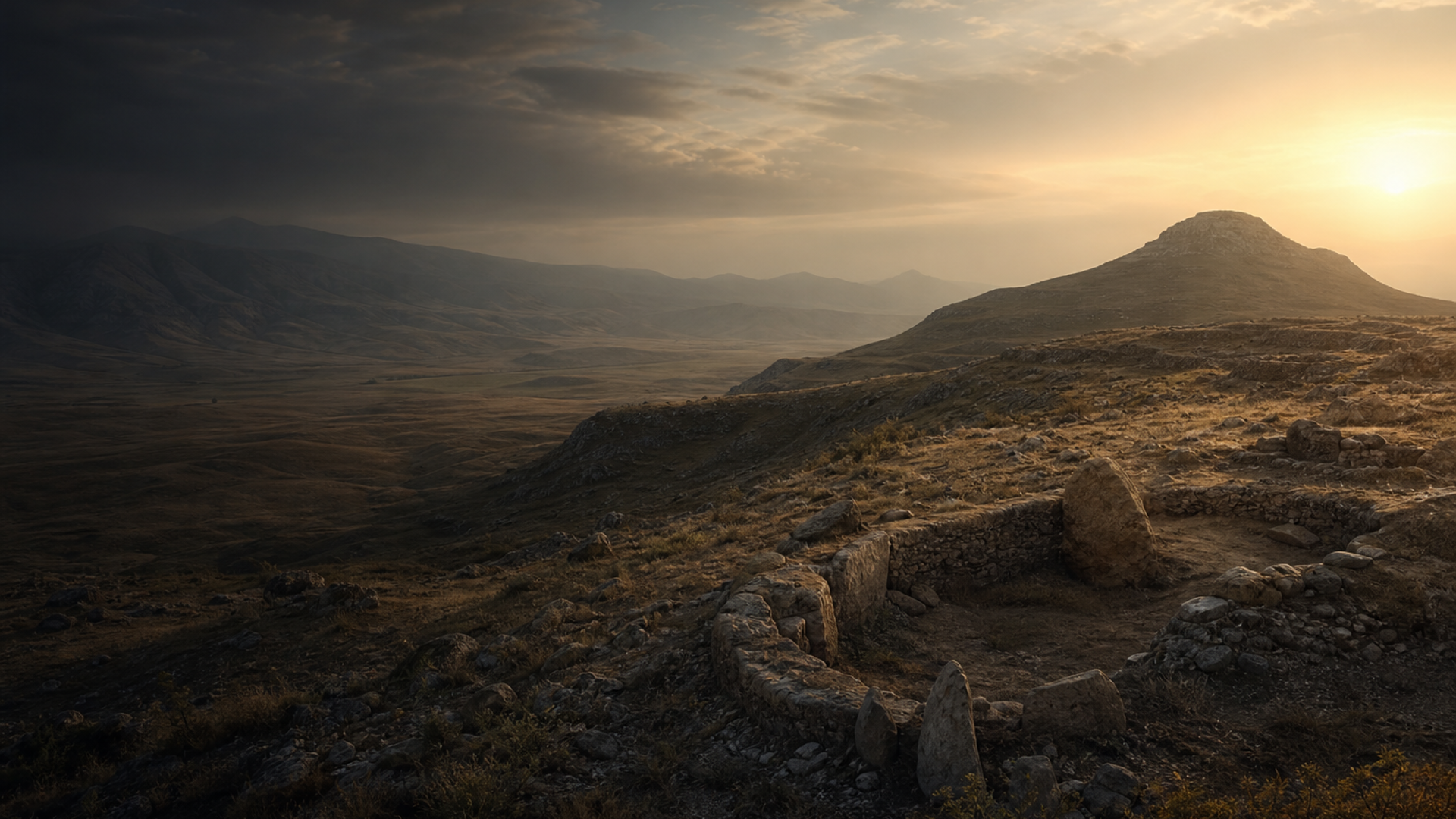
Archaeological patterns across Neolithic Armenia suggest daily life at Masis Blur would have revolved around small household compounds, craft activities, and seasonal cycles of planting and herding. Material remains typical of the region include pottery for storage and cooking, ground stone tools for processing cereals, and bone implements — though specific assemblages from Masis Blur remain sparsely published.
Communal life likely blended domestic labor, careful knowledge of local landscapes, and mobility tied to herd management. Social structures were probably organized around kin groups or extended households, with material culture reflecting practical choices as much as social identity. Ritual and symbolic behaviors, while harder to recover, can be inferred from parallels in the region: curated objects, possible burial practices, and curated lithics indicate attention to memory and lineage.
Because only a single ancient DNA sample is currently reported from Masis Blur, demographic reconstructions of family structure, sex-specific mobility, or kinship networks are not possible. Archaeological excavation focused on household floors, storage contexts, and burials — paired with more genetic sampling — would clarify everyday life and social organization at the site.