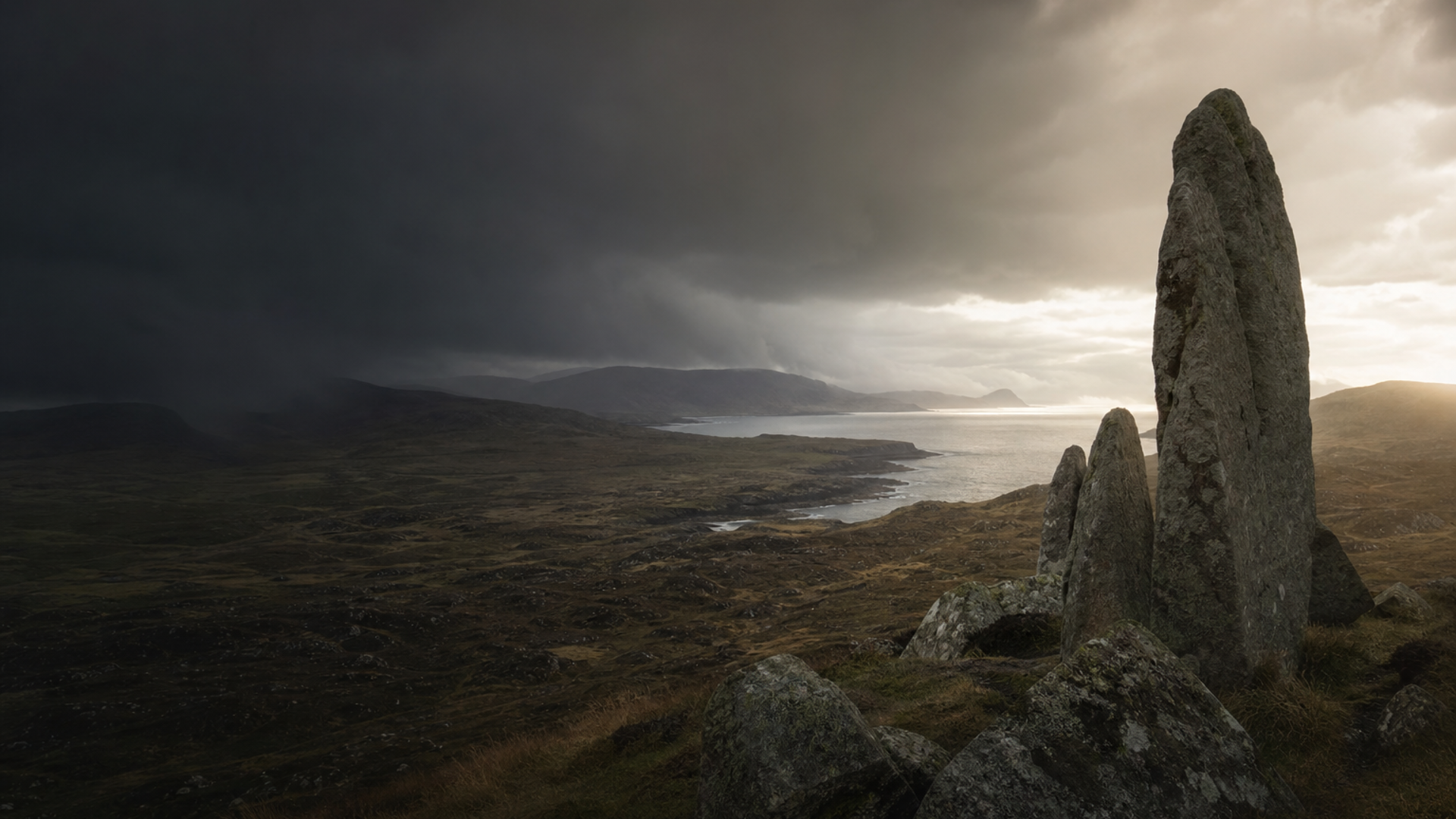
The granite light of northern Scotland would have caught on polished stone and bone tools, while communities balanced farming, pasturage, and maritime resources. Archaeological evidence from Orkney chambered cairns and surrounding settlements points to organized labor capable of moving and erecting large stones, long-distance exchange of raw materials, and ritualized burial practices that enshrined ancestral memory.
Social life likely revolved around kin groups tied to specific monuments. Monument construction implies leadership or coordinated working groups, and repeated interment within cairns suggests enduring claims to place. Middens, pottery fragments, lithics, and faunal remains recovered near sites indicate mixed subsistence: cultivated cereals and domesticated animals alongside marine and wild resources. Craft skills—stone-working, bone and antler tools, textile production inferred from impressions—would have been central to daily life and identity.
Archaeological data indicates that tombs like Midhowe functioned not only as repositories for the dead but as communal theaters where lineage, memory, and land rights were enacted. Such practices would interact with marriage, inheritance, and alliance-building, dynamics that also leave signatures in the small set of ancient genomes available for this region.