Menu
Currency
Store
Blog
Mentesh Tepe: Shulaveri-Shomutepe Echoes
Azerbaijan_MenteshTepe_BA_ShomutepeShulaveri Western Azerbaijan (Tovuz district)

Mentesh Tepe: Shulaveri-Shomutepe Echoes

A cinematic glimpse into western Azerbaijan's early Bronze Age life through archaeology and ancient DNA.

6000 CE - 4000 BCE
3 Ancient Samples
Scroll to begin
Chapter I

The Story

Understanding the Mentesh Tepe: Shulaveri-Shomutepe Echoes culture

Archaeogenetic and archaeological portrait of Mentesh Tepe (Tovuz, Azerbaijan), a Shulaveri–Shomutepe site dated c. 6000–4000 BCE. Three samples (two Y‑J) hint at Near Eastern farmer affinities; sample size is small and conclusions are preliminary.

Time Period

6000–4000 BCE

Region

Western Azerbaijan (Tovuz district)

Common Y-DNA

J (2 of 3 samples)

Common mtDNA

Not reported / limited data

Chapter II

Timeline

Key moments in the history of this culture

5500 BCE

Early village consolidation at Mentesh Tepe

Archaeological layers indicate settled farming households and emergent craft production at Mentesh Tepe, within the Shulaveri–Shomutepe cultural horizon.

Chapter III

Origins & Emergence

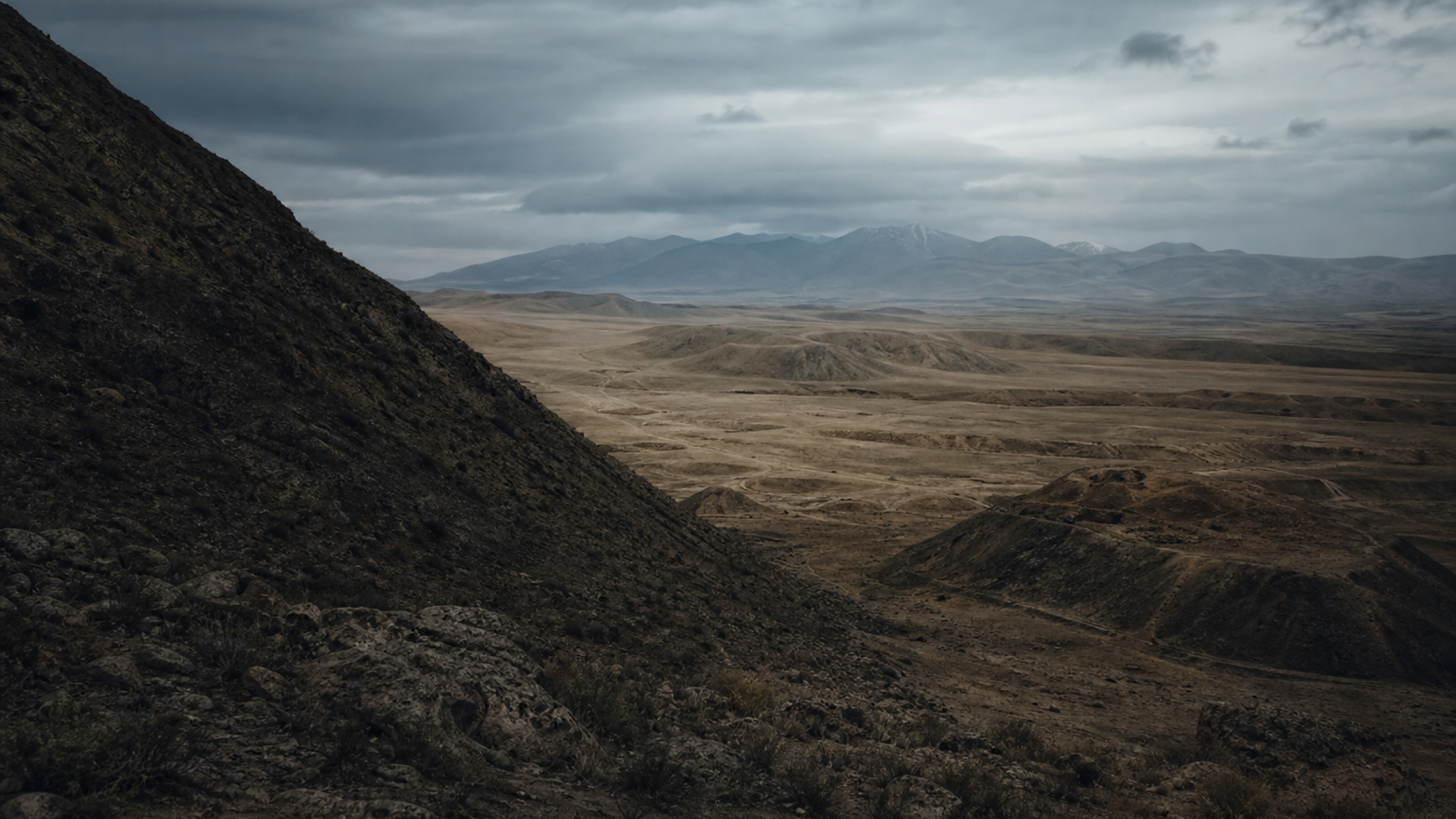
Mentesh Tepe sits like a weathered chapter on the western edge of Azerbaijan's Tovuz district, part of the broader Shulaveri–Shomutepe cultural horizon that spans the southern Caucasus in the later Neolithic to Early Bronze Age. Radiocarbon and stratigraphic evidence place occupation phases broadly between c. 6000 and 4000 BCE, a time when village life consolidated after the first waves of Near Eastern farming.

Archaeological data indicates densely clustered houses, communal hearths, and ceramics that gradually increase in sophistication—hallmarks of a community transitioning from itinerant to settled lifeways. Raw material flows, especially obsidian and later copper traces, point to long-distance connections across the Caucasus and into Anatolia.

In genetic terms, limited ancient DNA from Mentesh Tepe adds a biological dimension to these material stories. While the sample is small, the presence of Y‑chromosome haplogroup J in multiple individuals resonates with patterns seen elsewhere in the Near East and Caucasus, suggesting male-line connections to farming and pastoralist traditions spreading through the region. Archaeological data indicates continuity in settlement patterns, but the genetic signal should be treated cautiously: three samples cannot capture the full demographic complexity of millennia.

Bullets:

  • Occupation dated c. 6000–4000 BCE at Mentesh Tepe, Tovuz district.
  • Material culture aligns with Shulaveri–Shomutepe traditions across the southern Caucasus.
  • Early genetic signals hint at Near Eastern/Caucasus affinities but remain preliminary.
  • Occupation dated c. 6000–4000 BCE at Mentesh Tepe, Tovuz district
  • Material culture aligns with Shulaveri–Shomutepe traditions
  • Early genetic signals hint at Near Eastern/Caucasus affinities but remain preliminary
Chapter IV

Daily Life & Society

Step into the earthen rooms of Mentesh Tepe and you encounter a world shaped by grains, herds, and clay. Archaeological excavations have revealed compact, rectilinear mudbrick or wattle‑and‑daub houses clustered around shared courtyards. Pottery—usually hand‑made and often burnished—served for cooking, storage, and ritual; decorative motifs link these vessels to a wider Shulaveri–Shomutepe aesthetic spanning the southern Caucasus.

Archaeobotanical remains and faunal assemblages indicate a mixed economy: wheat and barley cultivation alongside managed herds of sheep, goats, and cattle. Tools for grinding, bone needles, and spindle whorls suggest textile production and household craft. Obsidian blades and worked stone point to craft specialization and long-distance exchange, while early traces of copper use foreshadow metallurgical advances of subsequent centuries.

Mortuary practices at related Shulaveri–Shomutepe sites range from simple inhumation to more structured communal deposits; at Mentesh Tepe the burial evidence is sparse, complicating reconstructions of social hierarchy. Yet the archaeological scene—sun-baked courtyards, smoke-darkened roofs, and hearth-centered communal life—evokes a community woven from shared labor, seasonal rhythms, and regional networks of exchange.

Bullets:

  • Houses: compact mudbrick/wattle structures with shared courtyards.
  • Economy: mixed farming (wheat/barley) and herding; craft specialization apparent.

  • Houses: compact mudbrick/wattle structures with shared courtyards
  • Economy: mixed farming (wheat/barley) and herding; craft specialization apparent
Chapter V

Genetic Profile

Three ancient DNA samples have been reported from Mentesh Tepe. Two male individuals carry Y‑chromosome haplogroup J; maternal (mtDNA) assignments were not reported or remain unclear in the available dataset. Because the sample count is only three, all genetic interpretations must be regarded as provisional.
Haplogroup J is widespread in the Near East and the Caucasus today and is frequently observed in ancient samples associated with early farming and later regional populations. Its presence at Mentesh Tepe is consistent with an archaeological picture of communities with ties—cultural or biological—to Anatolian and Levantine farmer traditions or long‑standing Caucasian lineages. However, the absence of comprehensive mtDNA data and autosomal profiles for these individuals prevents robust statements about ancestry proportions, sex‑biased migration, or population continuity.

Broader archaeogenetic studies across the Caucasus often reveal mixtures of Anatolian farmer‑related ancestry, local Caucasus hunter‑gatherer components, and later input from steppe groups, but whether Mentesh Tepe specifically mirrors that pattern cannot be firmly established from three samples. Future work—larger sample sizes, improved radiocarbon control, and full genome-wide data—would be required to test hypotheses about demographic change, patrilineal continuity, and the role of Mentesh Tepe in regional population dynamics.

Bullets:

  • Sample count: 3 ancient individuals (preliminary dataset).
  • Y‑DNA: haplogroup J in 2 individuals; mtDNA: not reported / limited.
  • Sample count: 3 ancient individuals (preliminary dataset)
  • Y‑DNA: haplogroup J in 2 individuals; mtDNA: not reported / limited
Chapter VI

Legacy & Modern Connections

The echoes of Mentesh Tepe ripple into the present: pottery forms, settlement layouts, and some genetic lineages persist in the Caucasus mosaic. Haplogroup J remains common in modern populations of the Near East and Caucasus, so its appearance in ancient Mentesh Tepe individuals suggests at least partial continuity of certain male‑line ancestries in the region.

Cultural practices—such as household craft traditions and crop packages—laid foundations for later Bronze Age societies in Azerbaijan and beyond. For modern ancestry seekers, Mentesh Tepe illustrates both the promise and the limits of ancient DNA: a direct window into population history, but one that requires broader sampling and careful contextualization. Limited evidence suggests connections to wider Near Eastern farmer networks, yet archaeological data indicates a distinct local trajectory within the Shulaveri–Shomutepe world. As more genomes from the southern Caucasus are published, Mentesh Tepe will be an important anchor point for mapping how early farming communities shaped the genetic and cultural landscape of the region.

Bullets:

  • Y‑line continuity: haplogroup J links to broader Near Eastern/Caucasus distributions.
  • Caution: small sample size means modern connections are suggestive, not definitive.
  • Y‑line continuity: haplogroup J links to broader Near Eastern/Caucasus distributions
  • Caution: small sample size means modern connections are suggestive, not definitive
Chapter VII

Sample Catalog

3 ancient DNA samples associated with the Mentesh Tepe: Shulaveri-Shomutepe Echoes culture

Ancient DNA samples from this era, providing genetic insights into the people who lived during this period.

3 / 3 samples
Portrait Sample Country Era Date Culture Sex Y-DNA mtDNA
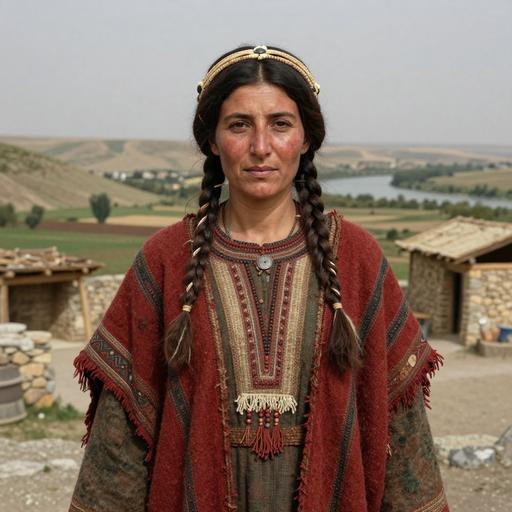
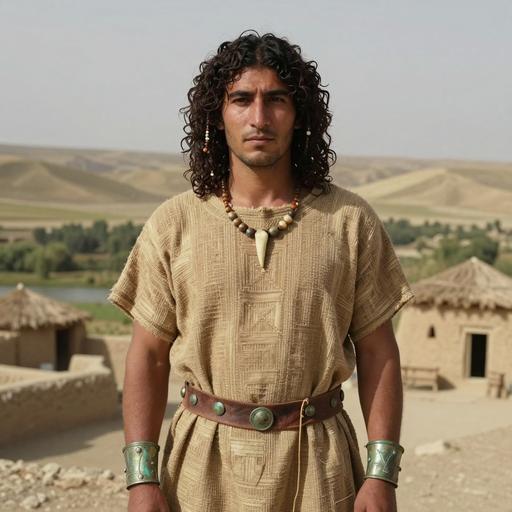
Portrait of ancient individual MT23 from Azerbaijan, dated 4000 BCE
MT23
Azerbaijan Azerbaijan_MenteshTepe_BA_ShomutepeShulaveri 4000 BCE Early Caucasian M J-Z42957 -
Portrait of ancient individual MT26 from Azerbaijan, dated 4000 BCE
MT26
Azerbaijan Azerbaijan_MenteshTepe_BA_ShomutepeShulaveri 4000 BCE Early Caucasian M J-Z2453 -
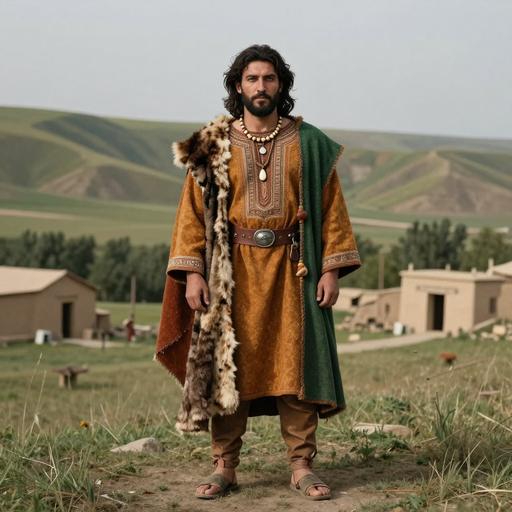
Portrait of ancient individual MT7 from Azerbaijan, dated 4000 BCE
MT7
Azerbaijan Azerbaijan_MenteshTepe_BA_ShomutepeShulaveri 4000 BCE Early Caucasian F - -
AI Powered

AI Assistant

Ask questions about the Mentesh Tepe: Shulaveri-Shomutepe Echoes culture

AI Assistant by DNAGENICS

Unlock this feature
Ask questions about the Mentesh Tepe: Shulaveri-Shomutepe Echoes culture. Our AI assistant can explain genetic findings, historical context, archaeological evidence, and modern connections.
Sample AI Analysis

The Mentesh Tepe: Shulaveri-Shomutepe Echoes culture represents a fascinating chapter in human history...

Genetic analysis reveals connections to earlier populations while showing evidence of unique adaptations and cultural innovations. The ancient DNA samples provide insights into migration patterns, social structures, and the biological relationships between ancient populations.

This is a preview of the AI analysis. Unlock the full AI Assistant to explore detailed insights about:

  • Genetic composition and ancestry
  • Migration patterns and origins
  • Daily life and cultural practices
  • Modern genetic legacy
Use code for 40% off Expires May 31