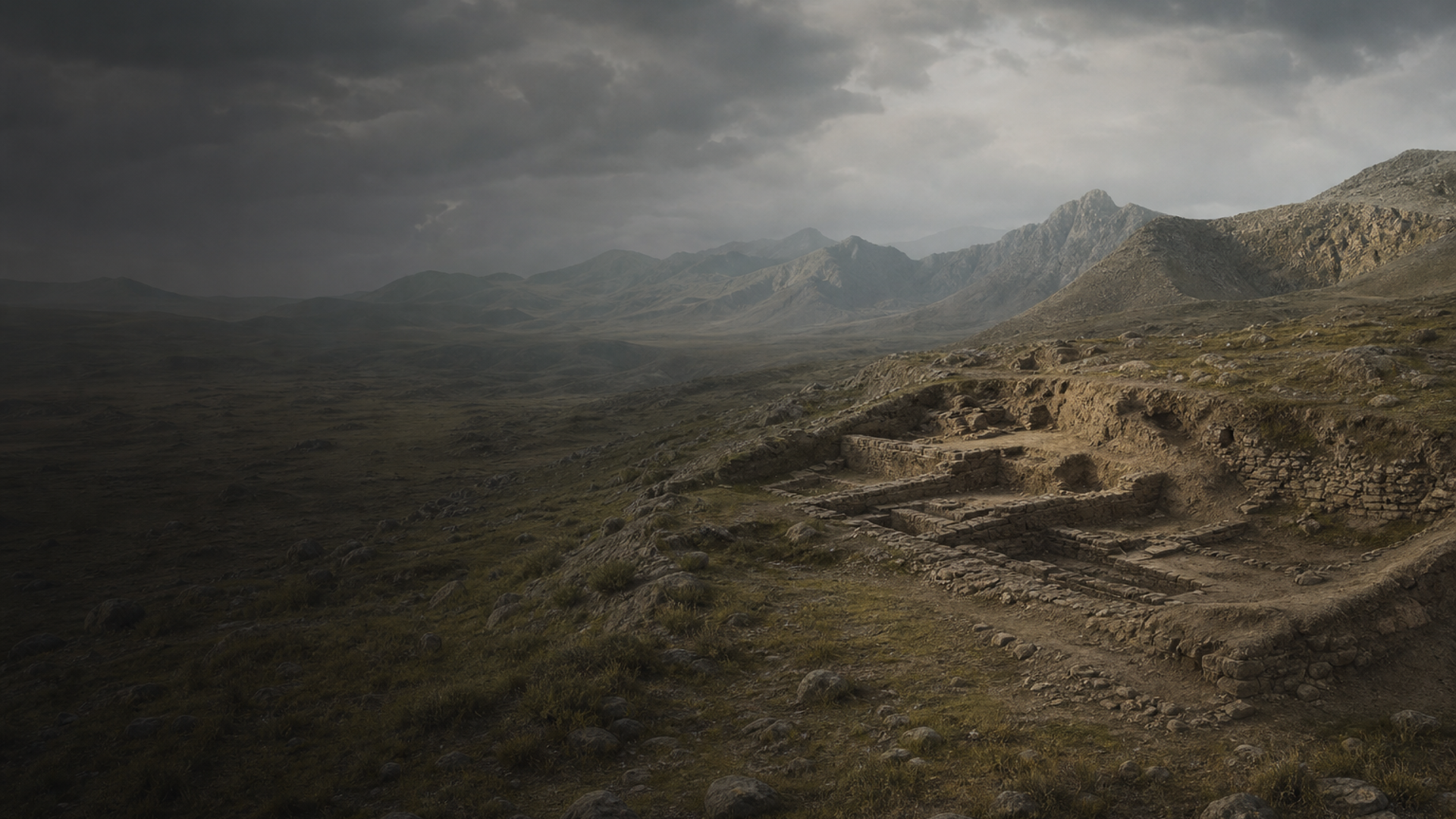
Life at Mentesh Tepe can be imagined through its material traces: compact houses, hearths, grinding stones, and pottery vessels shaped for storage and cooking. Archaeological data indicates an economy based on mixed farming — cultivated cereals and pulses, with domesticated sheep, goats and cattle — sustained by irrigated or rainfed plots on the fertile floodplains of western Azerbaijan.
Social organization likely centered on household units embedded in small, nucleated hamlets. Burials in nearby cemeteries and isolated interments show variability in treatment, hinting at differential status or evolving ritual practices, but the sample sizes and preservation limit confident reconstructions. Craft activities — pottery production, flint knapping, and possibly textile work — would have structured daily rhythms, while exchange in raw materials like obsidian connected Mentesh Tepe to distant highland and Anatolian sources.
Seasonal cycles, communal labor for irrigation or harvest, and inter‑settlement ties shaped a lived landscape where memory and technique passed between generations. Archaeological indicators create a textured, if partial, portrait of households negotiating environment and exchange amid the broader Shulaveri–Shomutepe world.