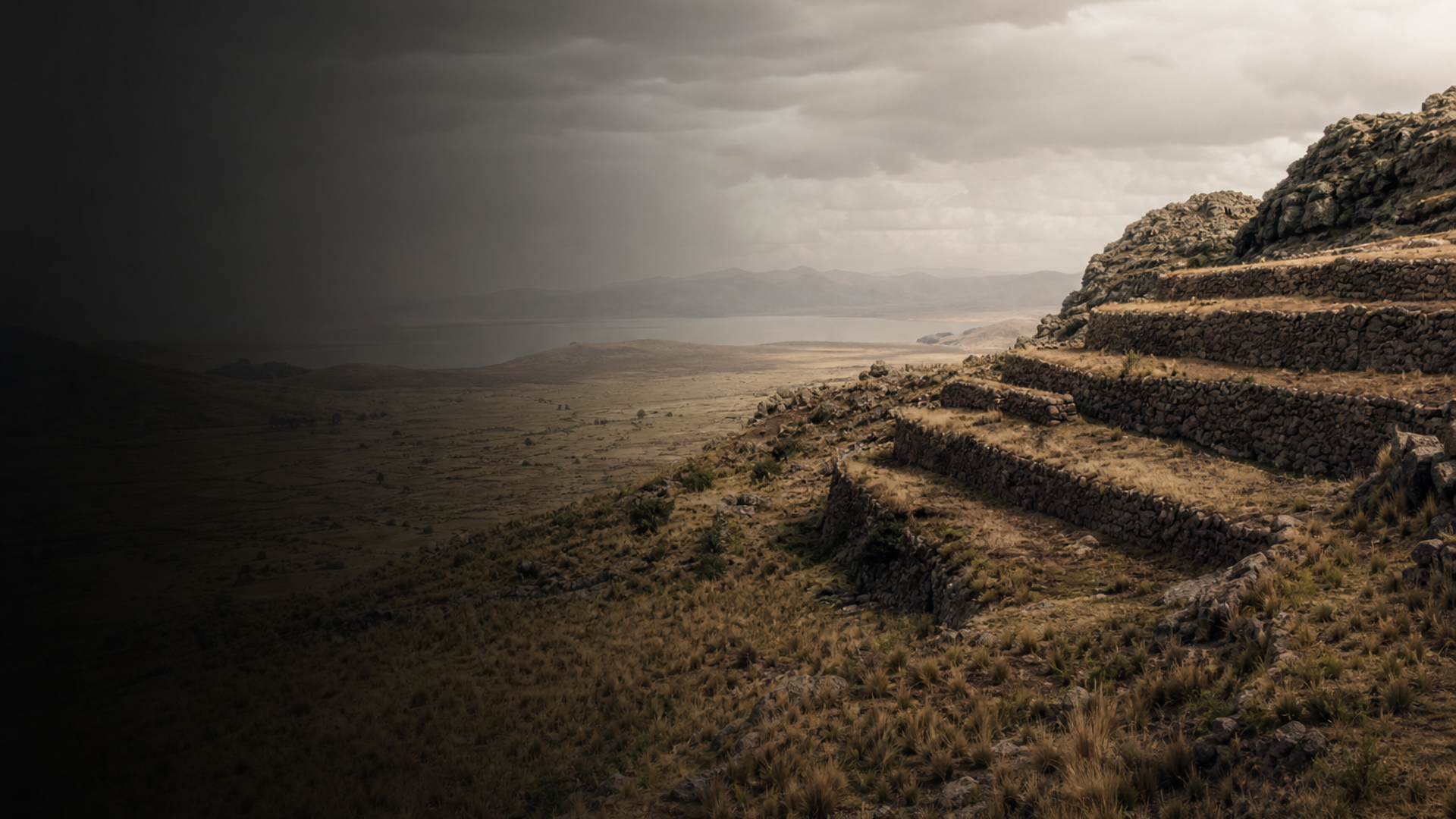
Life in the Miraflores context would have unfolded against dramatic altiplano panoramas—thin air, stoney soils, and a sky that turns rapidly from sun to storm. Archaeological indicators from the Titicaca Basin suggest economies based on a mix of highland agriculture and camelid pastoralism: quinoa and tuber cultivation on terraces and the herding of llamas and alpacas for meat, fiber, and transport. Ceramic assemblages and weaving fragments recovered in Miraflores contexts point to local craft specialization and household production, with stylistic motifs that both reflect local identities and echo broader Middle Horizon aesthetics.
Burial practices recovered at Miraflores-associated sites show variation: offerings and bundled interments indicate social differentiation and ritual care for the dead. Exchange networks across the highlands and down-valley corridors likely brought exotic goods, salts, and raw materials to Miraflores settlements, embedding them in regional circuits. Seasonal mobility—transhumance—may have structured social life, with communities moving herds to different pastures across the year.
Archaeological data indicates adaptability as a defining feature: infrastructure for water control, compact settlements, and a reliance on mixed subsistence strategies enabled people to persist in a challenging environment. Yet the exact social hierarchy, political organization, and population density of Miraflores remain incompletely known due to limited systematic excavation.