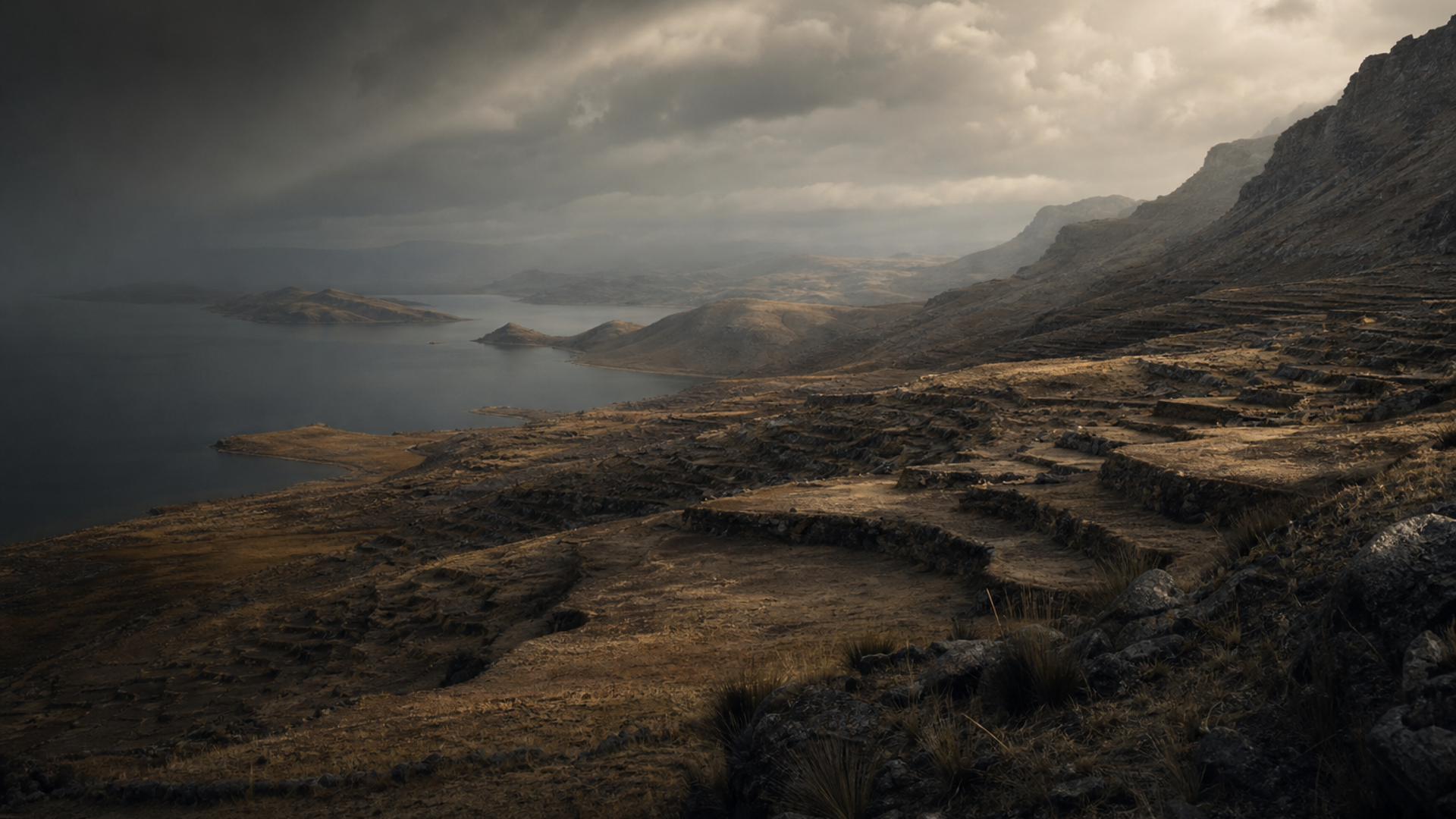
Life in the Miraflores sphere would have been shaped by altitude, seasonality and the choreography of labor across fields, pastures and workshops. Archaeological data indicates intensive highland agriculture—terracing, tuber horticulture and raised-field systems on the lakeshore—sustained populations and produced surplus for exchange. Camelid herds (llama and alpaca) provided wool, transport and meat, and their movement knitted together upland pastures and lowland corridors.
Craftspeople worked clay, textiles and metal with techniques traceable across the Lake Titicaca basin; ceramic forms and painted motifs found in Miraflores contexts echo Middle Horizon aesthetics while retaining local variants. Households likely combined domestic production with communal labor on irrigation and storage infrastructure. Mortuary deposits, where preserved, reveal social differentiation: some burials include offerings and multiple interments, suggesting family ties and ritualized remembrance. Archaeological data indicates ritual performance—plaza gatherings, offerings to water and mountain deities—played a role in social cohesion.
The cinematic silhouette of Miraflores life is one of shifting light across stone terraces and textile workshops, where seasonal cycles governed exchange and ceremony. Yet many everyday practices—dietary habits, kinship structures, craft specialization—remain incompletely known, and ongoing excavation and biomolecular study are needed to fill those gaps.