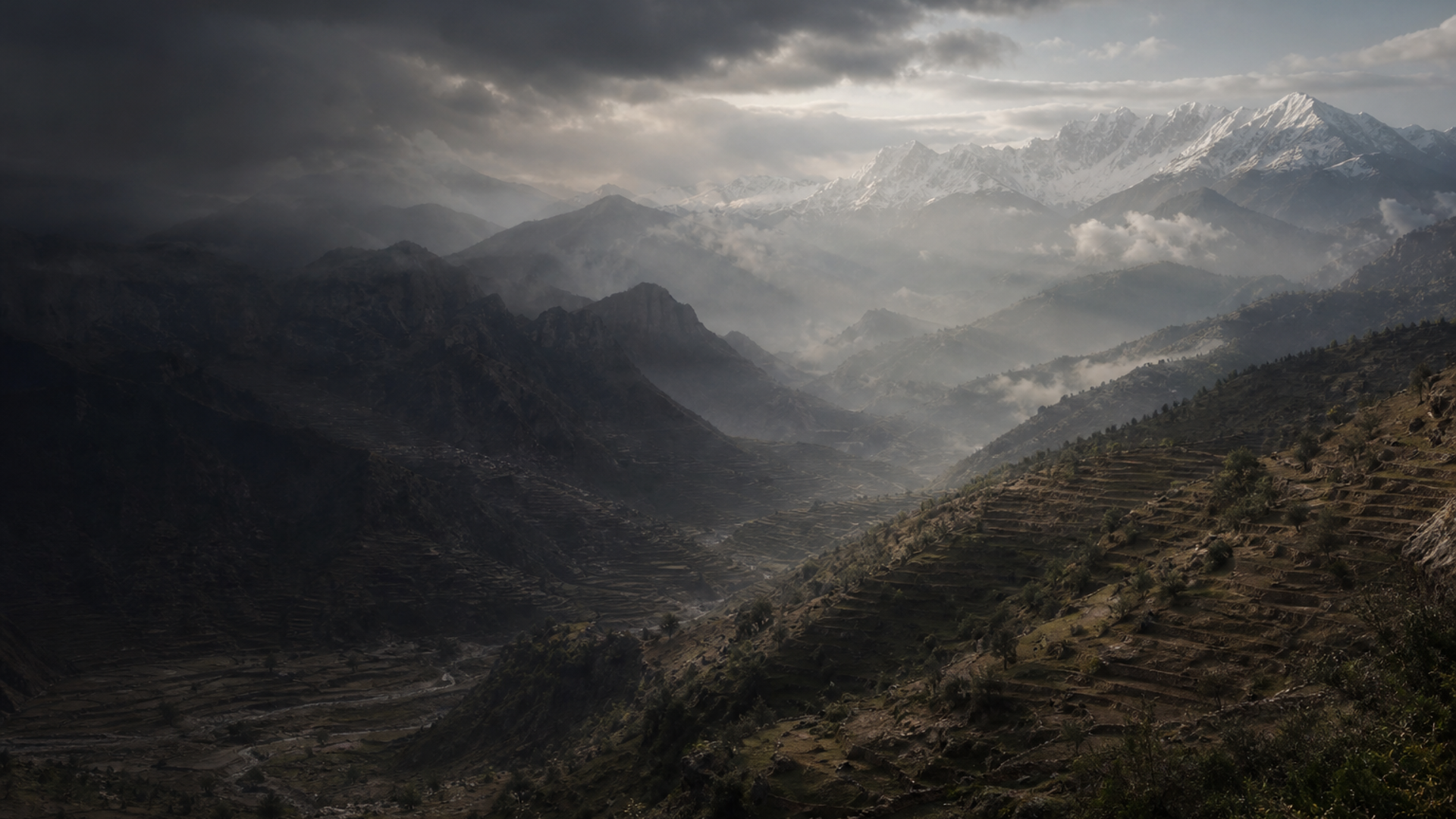
The daily world of people sampled in 2000 CE is cinematic: terraced hillsides stitched with footpaths, sunrise prayers drifting from stone shrines, and marketplaces where Nepali, Tamang, and other languages intermingle. Ethnographically and archaeologically, this landscape supports mixed livelihoods — smallholder agriculture, seasonal labor migration, and urban trades concentrated in Kathmandu. Material culture ranges from household shrines and ritual implements to agricultural tools and vernacular architecture that record centuries of adaptation to steep topography.
Archaeological indicators that illuminate everyday life include settlement patterns in valley floors, medieval and early modern temple complexes in Kathmandu, and rural built forms in Tanahun and Dang districts. These features signal long-term use of cultivation terraces and continuity in ritual landscapes, though the archaeological record for some hill communities is thin. Cultural identities (Indo-Aryan, Tamangic, Kiranti) often map onto language families and social organization, yet they are porous: intermarriage, seasonal migration and urbanization in the late 20th century altered kinship and residence patterns. In short, the social fabric of Modern Nepal visible in 2000 CE is one of resilience and mixture — an everyday life shaped by environment, ritual, and networks that span the Himalaya and plains.