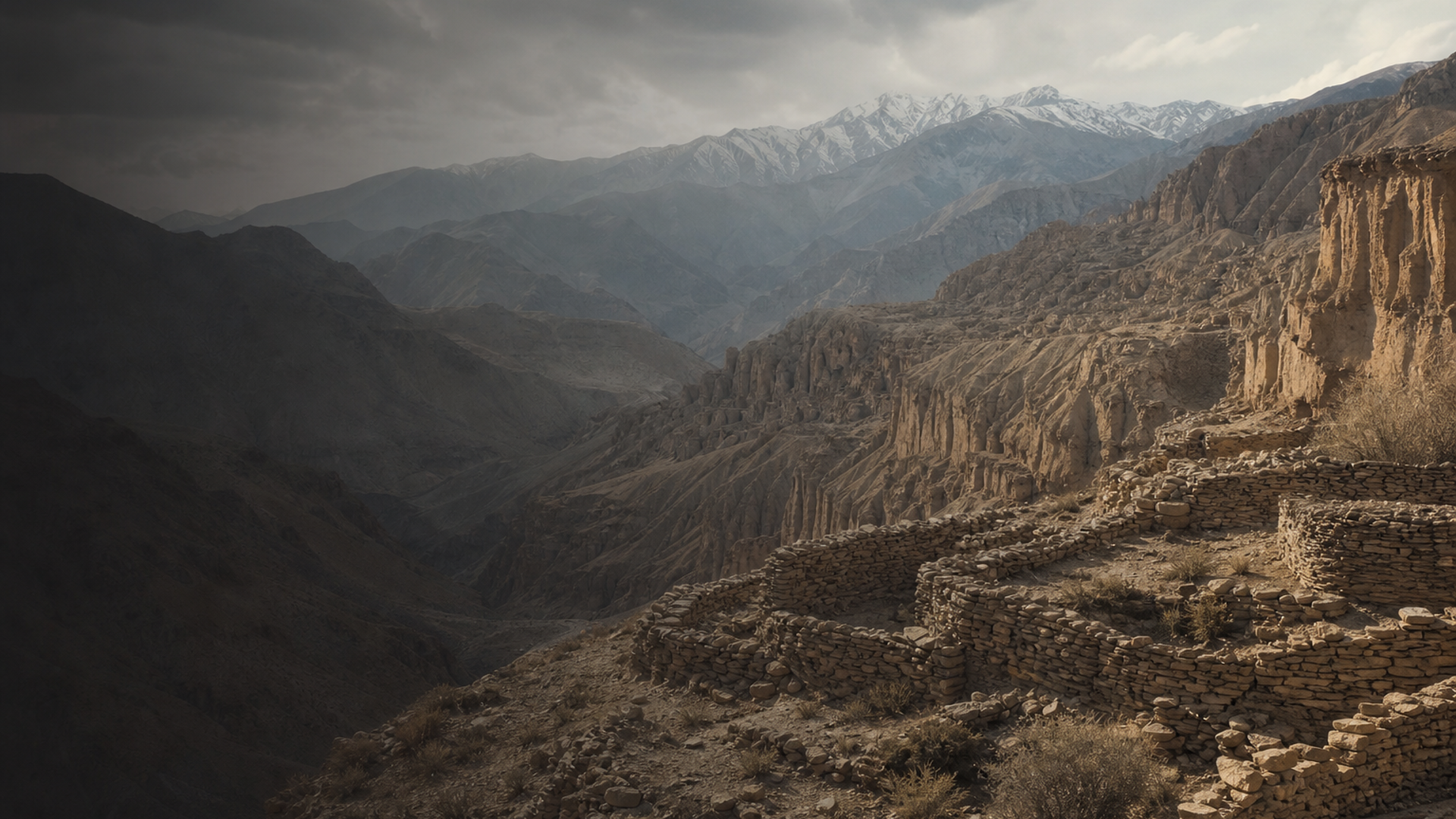
Nine ancient individuals from Mustang, Mebrak (dated to ca. 800 BCE–150 CE) provide a preliminary genetic window into these highland populations. With only nine genomes, conclusions must be cautious: sample count is low (<10), so patterns should be treated as provisional.
Observed uniparental markers show a dominant maternal signal: mitochondrial haplogroup M appears in six individuals, with haplogroup F in three. Haplogroup M is widespread across South and East Asia and is commonly associated with deep maternal lineages in Himalayan and subcontinental populations; its prominence here suggests strong maternal continuity with regional populations. Haplogroup F, present in three samples, points toward East Asian affinities that are also known across South-Central Himalayan groups.
On the paternal side, Y‑DNA haplogroup O is observed in two individuals. Haplogroup O is frequent across East and Southeast Asia and on the Tibetan Plateau in certain lineages, and its presence in Mustang may indicate male-mediated connections or gene flow from eastern regions. Because paternal lineages are represented in only two of nine samples, it is not possible to infer robust patterns of sex-biased migration.
Taken together, the uniparental data are consistent with a population that has both Himalayan/South Asian maternal continuity and detectable East Asian paternal inputs. However, with a limited dataset, larger genomic panels and more contextual sampling are required to resolve timing, directionality, and the demographic processes that shaped the genetic landscape of ancient Mustang.