Menu
Store
Blog
Lithuania (Baltic coast)

Narva of Lithuania: Coastal Neolithic Echoes

Seven ancient genomes from Donkalnis, Kretuonas 1B and Spiginas link pottery and sea to deep hunter-gatherer roots

5500 CE - 2900 BCE
Scroll to begin
Chapter I

The Story

Understanding the Narva of Lithuania: Coastal Neolithic Echoes culture

Genomes from 7 individuals (5500–2900 BCE) tied to the Narva complex in Lithuania reveal a mtDNA dominance of haplogroup U and a paternal record of I and R. Archaeology and aDNA together suggest coastal foraging traditions with deep European hunter-gatherer ancestry, though conclusions are preliminary.

Time Period

5500–2900 BCE

Region

Lithuania (Baltic coast)

Common Y-DNA

I (2), R (1)

Common mtDNA

U (6), H (1)

Chapter II

Timeline

Key moments in the history of this culture

2500 BCE

Late Narva occupation and transitions

Around 2500 BCE Narva-associated sites in Lithuania show continuity in coastal subsistence even as material influences from neighbouring groups increase, marking a transitional period in the Baltic Neolithic.

Chapter III

Origins & Emergence

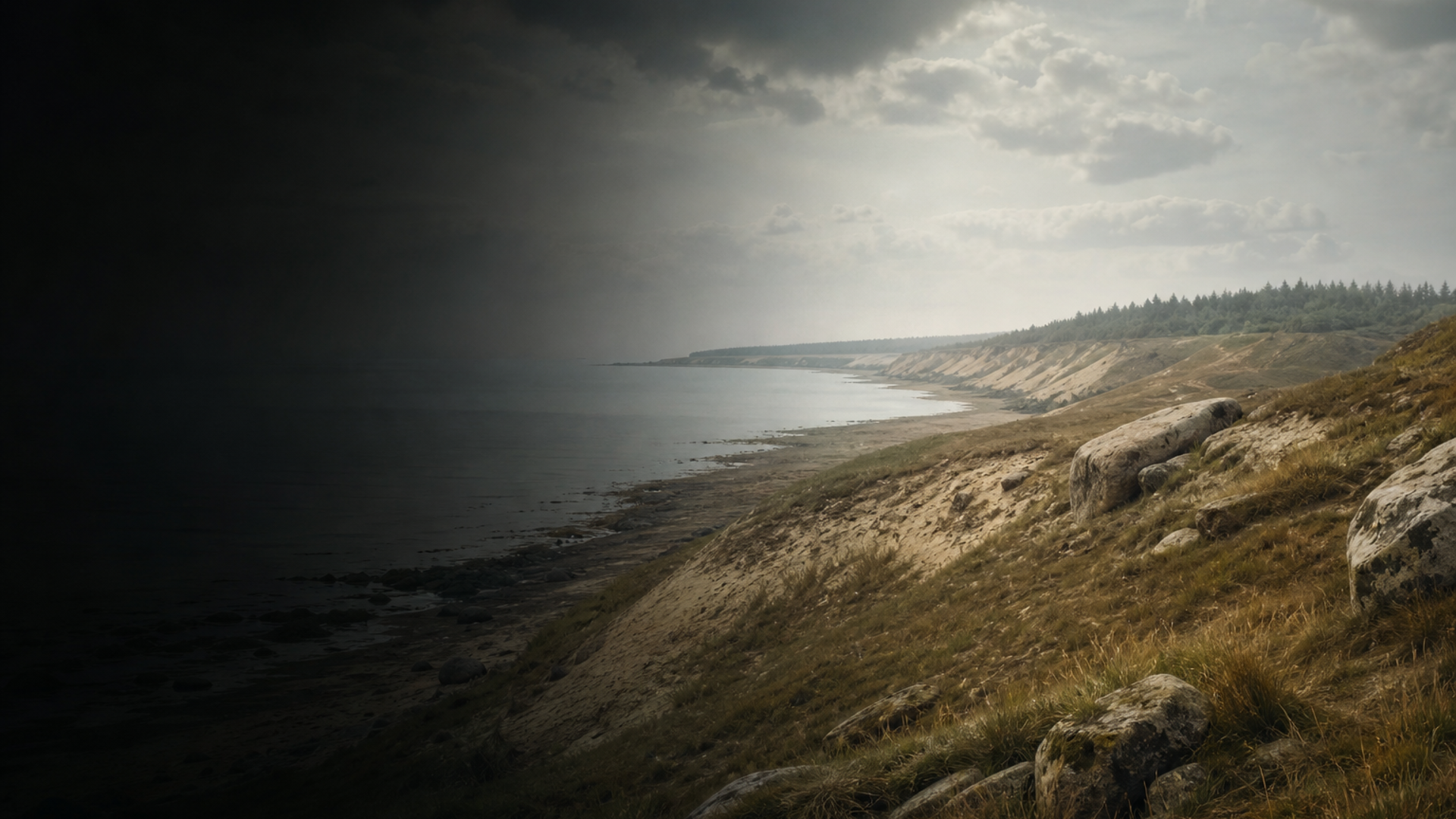
Along the stony shores and river valleys of what is now Lithuania, the Narva cultural horizon rises in the archaeological record as a slow, maritime tapestry woven between 5500 and 2900 BCE. Sites such as Donkalnis, Kretuonas 1B and Spiginas preserve pottery with simple cord impressions, hearths, flaked stone tools and rich shell middens that speak of sustained exploitation of lakes, rivers and the Baltic littoral. Archaeological data indicates the Narva phenomenon represents local hunter‑gatherer communities who adopted pottery traditions independently of full agricultural lifeways.

The skeletal and material traces show continuity with earlier eastern and western European forager traditions. Limited evidence suggests intermittent contacts with neighbouring farming groups further south and west, but the dominant material culture remains oriented to fishing, hunting and gathering. From a cinematic vantage: imagine low, smoky shelters at the water's edge, pots warmed above open flames and paths traced along reed beds — a lifeway in which continuity was as important as occasional innovation.

Because this portrait rests on a modest number of aDNA samples and uneven excavation coverage, interpretations of population interaction and cultural origins remain tentative. Archaeological context combined with genetic hints begins to map how coastal economies and deep forager ancestry shaped the emergent Baltic Neolithic world.

  • Narva cultural material at Donkalnis, Kretuonas 1B, Spiginas
  • Pottery, shell middens and flaked stone dominate assemblages
  • Local hunter-gatherer traditions with episodic external contacts
Chapter IV

Daily Life & Society

Archaeological deposits from Narva sites in Lithuania conjure a world of shoreline work and seasonal rhythms. Fish bones, waterfowl remains, and mollusc shells are common in midden layers, indicating a maritime-focused subsistence. Stone adzes, bone points and ground stone tools imply woodworking, net production and boat repair, while simple ceramic vessels point to cooking and storage practices adapted to wetland resources.

Burial evidence for Narva communities in the region is sporadic; isolated graves and fragmentary burials suggest varied mortuary behaviors rather than standardized cemeteries. Archaeological data indicates small, mobile or semi-sedentary groups tied to specific resource patches rather than densely nucleated settlements. Craft specialization appears limited but effective: locally produced ceramics and personal ornaments show recognizable stylistic traditions that tie families and neighbourhoods together.

Social organization likely revolved around kin networks and seasonal mobility, with knowledge of fishing runs, reed-gathering and hunting territories passed down through generations. Material culture and settlement patterns point to resilience and adaptability in a cool, forested Baltic environment. As with genetic data, the small number of sampled individuals cautions against overgeneralizing social structure across all Narva groups in Lithuania.

  • Maritime-focused subsistence: fish, birds, molluscs
  • Small kin-based groups with seasonal mobility
Chapter V

Genetic Profile

Seven published genomes from Donkalnis, Kretuonas 1B and Spiginas (5500–2900 BCE) provide a first glimmer of the Narva genetic landscape in Lithuania. The mitochondrial record is dominated by haplogroup U (6 of 7 samples), with a single H lineage — a pattern consistent with deep European hunter‑gatherer maternal continuity (U types frequently associate with Mesolithic and Neolithic forager groups across Europe). On the paternal side, Y‑DNA includes haplogroup I in two individuals and a single individual carrying R.

These results paint an image of largely indigenous maternal ancestry persisting into the Neolithic of the Baltic coast, while the presence of Y‑haplogroup I aligns with known European forager paternal lineages. The lone R lineage hints at additional complexity — limited gene flow from other populations, or internal diversity — but with only one R sample out of three typed males, any claim about broader penetrance would be preliminary.

Crucially, sample count is low (<10). Limited evidence suggests continuity with hunter‑gatherer genomic profiles (high U, presence of I), but finer-scale demographic processes — the degree of admixture with early farmers or later steppe groups, timing of paternal turnovers, and regional heterogeneity — remain uncertain until larger, geographically broader datasets are analyzed. Archaeogenetics and archaeology together point to a resilient local gene pool shaped by coastal lifeways, with hints of outside contact awaiting confirmation.

  • mtDNA dominated by U (6 of 7), indicating forager maternal continuity
  • Y-DNA shows I (2) and R (1); small sample size makes interpretation provisional
Chapter VI

Legacy & Modern Connections

The Narva communities of Lithuania leave a quiet but profound legacy: pottery techniques, coastal economies and forager lifeways that persisted alongside, and sometimes in tension with, incoming farming traditions. Genetic echoes — particularly the persistence of mtDNA U lineages — suggest that maternal ancestries from Mesolithic Europe contributed to the genetic foundation of later Baltic populations.

Limited evidence cautions that these seven genomes cannot define the full genetic legacy of the region. However, when archaeological traces of riverine pottery and shell middens are read alongside the aDNA signal, a consistent narrative emerges: a long‑enduring local population adapted to the Baltic edge, resilient to some cultural influences while porous to others. For modern inhabitants of the Baltic lands, these strands are part of a deep, multilayered human story — one that ongoing archaeological and genetic research continues to refine.

  • Maternal lineages (mtDNA U) suggest continuity into later Baltic populations
  • Archaeology + aDNA show resilient local populations with episodic contacts
AI Powered

AI Assistant

Ask questions about the Narva of Lithuania: Coastal Neolithic Echoes culture

AI Assistant by DNAGENICS

Unlock this feature
Ask questions about the Narva of Lithuania: Coastal Neolithic Echoes culture. Our AI assistant can explain genetic findings, historical context, archaeological evidence, and modern connections.
Sample AI Analysis

The Narva of Lithuania: Coastal Neolithic Echoes culture represents a fascinating chapter in human history...

Genetic analysis reveals connections to earlier populations while showing evidence of unique adaptations and cultural innovations. The ancient DNA samples provide insights into migration patterns, social structures, and the biological relationships between ancient populations.

This is a preview of the AI analysis. Unlock the full AI Assistant to explore detailed insights about:

  • Genetic composition and ancestry
  • Migration patterns and origins
  • Daily life and cultural practices
  • Modern genetic legacy