Menu
Currency
Store
Blog
Nordic: Coasts of Stone and Bronze
Denmark_EN_TRB_N Sweden, Denmark (Scandinavia)

Nordic: Coasts of Stone and Bronze

Genetic and archaeological echoes from Sweden and Denmark (4315–1009 BCE)

4315 CE - 1009 BCE
3 Ancient Samples
Scroll to begin
Chapter I

The Story

Understanding the Nordic: Coasts of Stone and Bronze culture

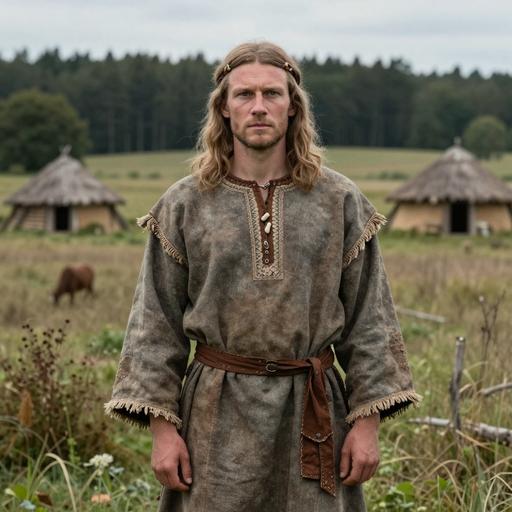
Archaeogenetic portrait of 69 individuals from Sweden and Denmark (4315–1009 BCE). Combines sites such as Strøby, Hjelmars rör, Nästegården and Firse Sten with Y- and mtDNA patterns to reveal shifting Neolithic farmer, Mesolithic hunter-gatherer, and steppe-influenced ancestries along northern coasts.

Time Period

c. 4315–1009 BCE (Neolithic–Late Bronze Age)

Region

Sweden, Denmark (Scandinavia)

Common Y-DNA

R (7), I (3), Q (1), G (1), I1 (1)

Common mtDNA

U (13), K (8), H (8), T2b (6), T (5)

Chapter II

Timeline

Key moments in the history of this culture

4315 BCE

Earliest sampled individuals

Earliest radiocarbon dates in the dataset point to individuals around 4315 BCE from Swedish contexts.

4000 BCE

Spread of Funnel Beaker traditions

Archaeological expansion of TRB pottery and farming into southern Sweden and Denmark, visible at Avlebjerg–Strøby sites.

2500 BCE

Increased steppe-related signals

Around this period northern Europe sees growing steppe-related ancestry in many regions; Y-haplogroup R appears among samples here.

1193 BCE

Firse Sten late Bronze Age sample

A dated individual from Firse Sten (~1193 BCE) anchors a Late Bronze Age presence in the Swedish sequence.

Chapter III

Origins & Emergence

Dawn on the Northern Shores

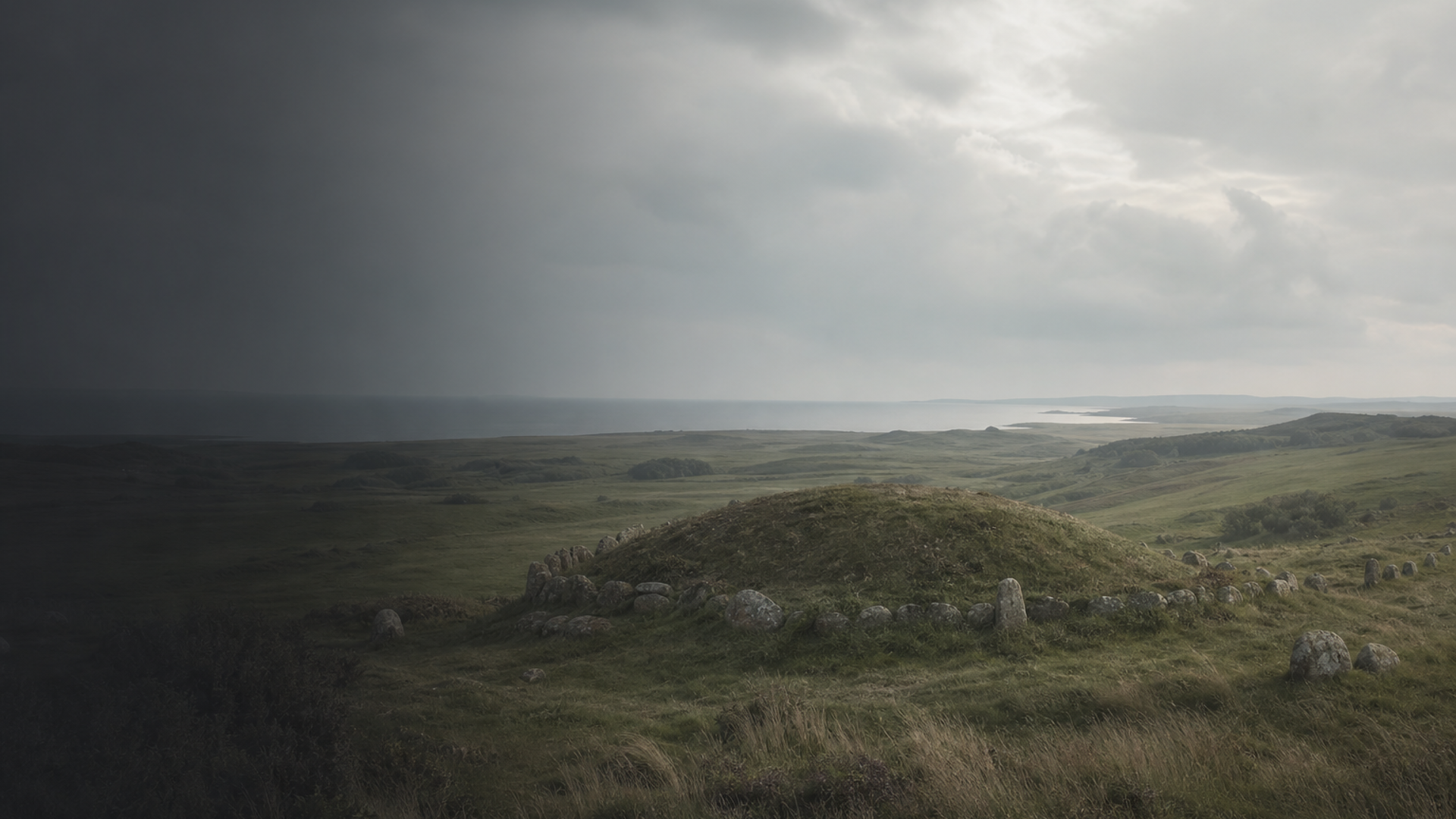
Across rocky promontories and peat bogs of southern Sweden and eastern Denmark, a tapestry of Neolithic life emerges in both pottery and bone. The 69 individuals in this dataset span 4315–1009 BCE and come from archaeological contexts including Strøby (Avlebjerg) and Borreby in Zealand, Vanløse and Sigersdal bogs, Hjelmars rör, Nästegården, Firse Sten, Frälsegården, Hunnebostrand and Ängdala in Sweden. Archaeological data indicates many of these contexts are tied to the Funnel Beaker tradition (TRB) and local variants such as the Avlebjerg-Strøby and Rossberga cultures.

Material culture—mammoth-bone flaking debris replaced by polished axes, funnel-shaped pottery, and wetland offerings—speaks to communities adapting to coastal and inland wetlands. Limited evidence suggests continuity from earlier Mesolithic coastal groups alongside the arrival of farming practices between c. 4000–3000 BCE. The later portion of the sequence (2nd–1st millennium BCE) records increasing contact across the Baltic and possible influxes of new cultural styles associated with Bronze Age mobility.

Because sampling is uneven across sites, regional emergence scenarios remain provisional. Archaeological stratigraphy at Firse Sten (with a dated sample c. 1193 BCE) and peat-bog finds at Vanløse and Sigersdal provide anchor points, but piecing together the full demographic story requires both caution and continued sampling.

  • 69 individuals dated 4315–1009 BCE across Sweden and Denmark
  • Associated with Funnel Beaker (TRB), Avlebjerg-Strøby, Rossberga traditions
  • Evidence for Neolithic farming adopting coastal and wetland economies
Chapter IV

Daily Life & Society

Lives between Sea and Mire

Life for these northern communities unfolded where sea spray met marsh. Archaeological traces—stone axes, pottery sherds, cremation and inhumation burials, and wetland votive deposits—paint a vivid picture of economies built on mixed farming, fishing, and foraging. Sites such as Nästegården and Frälsegården suggest settled farmsteads with access to arable land, while coastal sites like Hunnebostrand and Firse Sten show intensified marine resource use.

Social organization was likely local and kin-based, organized around households and seasonal networks. Long-distance exchange is visible in exotic materials and shared pottery styles across Zealand and Scania (Skåne). Funerary practices vary: some bog and wetland deposits at Vanløse and Sigersdal reflect ritual deposition traditions, while graves at Avlebjerg-Strøby contexts reveal individual burial rites that may indicate differences in status, age, or gender roles. Craft specialization appears modest but notable—stone and bone working alongside early metal objects in later phases.

Archaeobotanical and zooarchaeological data indicate a diet combining domesticated cereals and livestock with coastal fish and wild game. Limited direct evidence of social hierarchy suggests fluid social boundaries, with prestige perhaps expressed through grave goods and ritual acts rather than monumental architecture.

  • Mixed economy: farming, fishing, and wetland resource use
  • Diverse funerary practices: burial, bog deposition, and cremation
Chapter V

Genetic Profile

DNA Echoes: Farmers, Foragers, and Steppe Threads

Genetic data from 69 individuals offers a measurable window into ancestry dynamics along southern Scandinavia's coasts. Mitochondrial haplogroups are dominated by U (13), commonly associated with Mesolithic hunter-gatherers, alongside Neolithic-associated lineages such as K (8), H (8), T2b (6) and T (5). This mix suggests maternal continuity of local forager lineages alongside incoming farmer maternal ancestry—consistent with archaeological evidence of interaction between hunter-gatherers and early farmers.

On the paternal side, the presence of R (7) alongside I (3), I1 (1), Q (1) and G (1) points to heterogenous male lineages. Haplogroup R (often linked in northern Europe to steppe-derived groups) appears in multiple individuals and may signal increased steppe-related ancestry entering the region during or after the late Neolithic. However, counts are modest: R is present but not overwhelmingly dominant, and I-lineages—associated with European forager populations—remain detectable.

Genome-wide patterns inferred from contemporaneous northern European studies suggest admixture between Mesolithic, Anatolian farmer, and steppe-related ancestries. In this dataset, the mtDNA skew toward U and K/H/T family members supports a mixed maternal heritage, while Y-DNA diversity reflects episodes of male-biased movements and long-standing local lineages. Because site-level sample sizes vary and certain contexts contain few individuals, conclusions about demographic processes remain provisional and should be refined with further sampling and autosomal analyses.

  • mtDNA dominated by U, K, H, T lineages—mixed maternal ancestry
  • Y-DNA shows R presence (possible steppe link) plus local I and I1 lineages
Chapter VI

Legacy & Modern Connections

Cultural Afterlives and Genetic Threads

The combined archaeological and genetic record of these Scandinavian communities illuminates how present-day northern European diversity was shaped. Elements of material culture—pottery shapes, wetland ritual, and coastal subsistence—leave visible continuities into the later Bronze Age and beyond. Genetically, maternal haplogroups common in these ancient groups (H, K) persist in modern northern populations, while paternal lineages show more dynamic turnover across millennia.

Modern inhabitants of Sweden and Denmark carry echoes of these interactions: a palimpsest of Mesolithic forager, Neolithic farmer, and later steppe-influenced ancestries. Yet assigning direct ancestry from any single ancient individual to modern groups is fraught; demographic shifts, migrations, and population replacements over thousands of years dilute simple lineages. Limited site sampling and uneven temporal coverage mean that while the dataset of 69 individuals illuminates key patterns, it cannot capture the full regional complexity. Continued archaeological excavation paired with denser genomic sampling will refine how these coastal communities contributed to northern Europe's genetic landscape.
  • Material and genetic continuities persist into later Scandinavian populations
  • Dataset offers important signals but requires broader sampling for firm links
Chapter VII

Sample Catalog

3 ancient DNA samples associated with the Nordic: Coasts of Stone and Bronze culture

Ancient DNA samples from this era, providing genetic insights into the people who lived during this period.

3 / 3 samples
Portrait Sample Country Era Date Culture Sex Y-DNA mtDNA
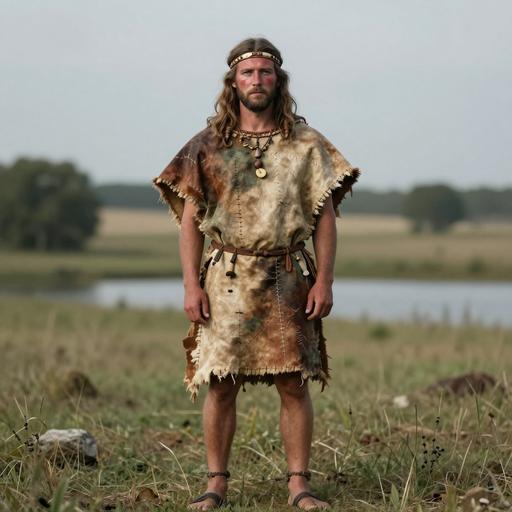
Portrait of ancient individual NEO7 from Denmark, dated 3702 BCE
NEO7
Denmark Denmark_EN_TRB_N 3702 BCE Nordic M G-L830 H
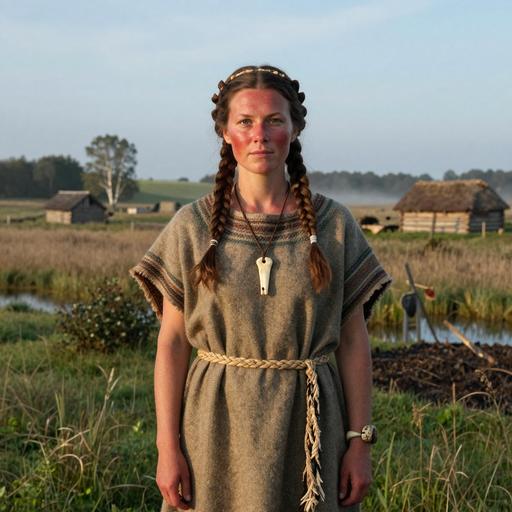
Portrait of ancient individual NEO925 from Denmark, dated 3340 BCE
NEO925
Denmark Denmark_EN_TRB_N 3340 BCE Nordic F - W1
Portrait of ancient individual NEO960 from Denmark, dated 4315 BCE
NEO960
Denmark Denmark_EN_TRB_N 4315 BCE Nordic M I U5b2a2
AI Powered

AI Assistant

Ask questions about the Nordic: Coasts of Stone and Bronze culture

AI Assistant by DNAGENICS

Unlock this feature
Ask questions about the Nordic: Coasts of Stone and Bronze culture. Our AI assistant can explain genetic findings, historical context, archaeological evidence, and modern connections.
Sample AI Analysis

The Nordic: Coasts of Stone and Bronze culture represents a fascinating chapter in human history...

Genetic analysis reveals connections to earlier populations while showing evidence of unique adaptations and cultural innovations. The ancient DNA samples provide insights into migration patterns, social structures, and the biological relationships between ancient populations.

This is a preview of the AI analysis. Unlock the full AI Assistant to explore detailed insights about:

  • Genetic composition and ancestry
  • Migration patterns and origins
  • Daily life and cultural practices
  • Modern genetic legacy
Use code for 40% off Expires May 31