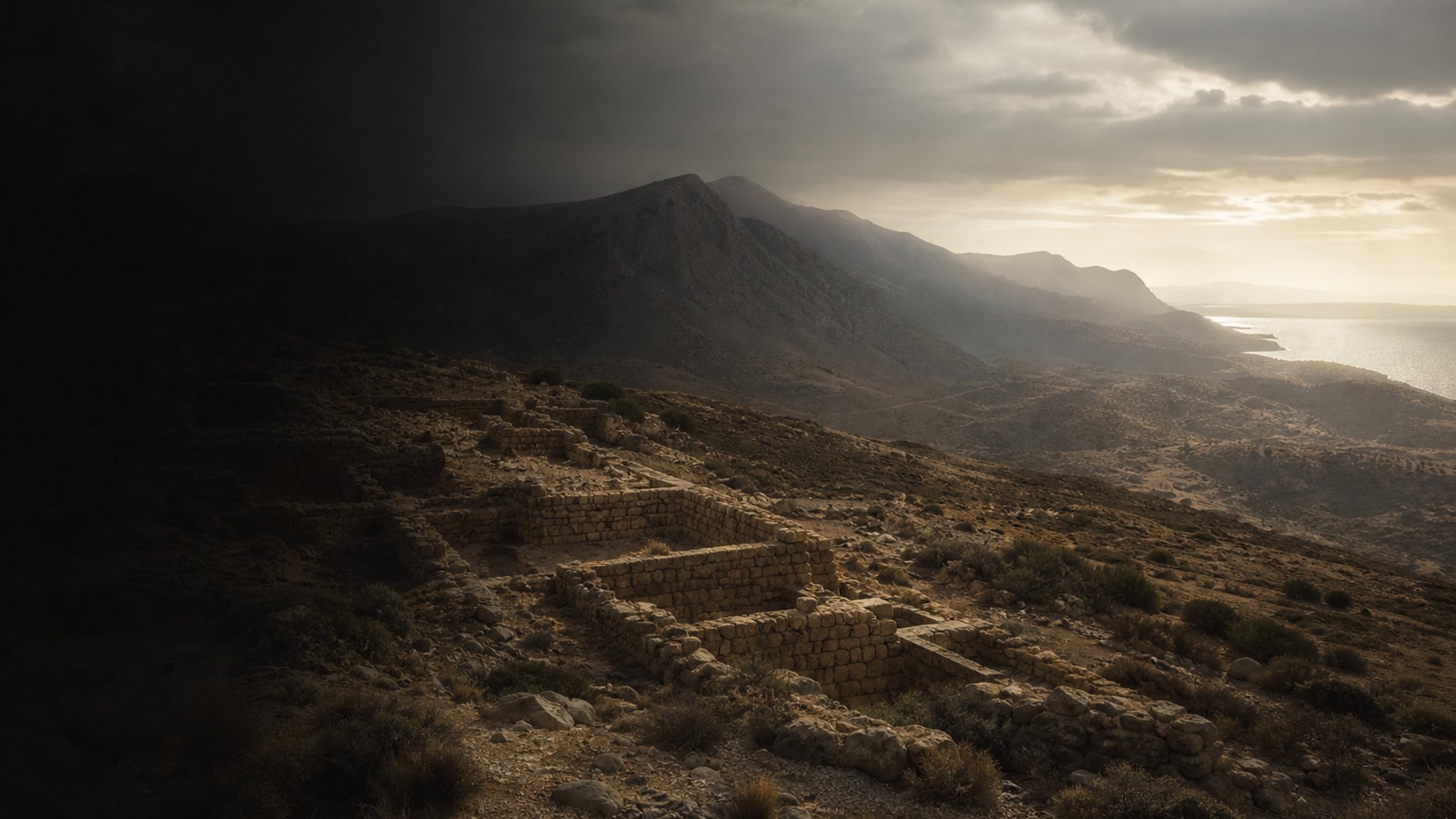
Five genome samples from Moni Odigitria provide a narrow but informative window into Minoan biological ancestry. Among the Y-DNA and mtDNA results recorded, one male carries haplogroup G, while maternal lineages are diverse: J, I5, HV, U, and K (each observed once). This pattern—limited paternal diversity and varied maternal haplogroups—is consistent with localized population structure and exogamous marriage practices, though with only five individuals such inferences remain tentative.
Archaeological and broader ancient-DNA studies of the Aegean have often pointed to a strong contribution from Anatolian-Neolithic farmer ancestry in Minoan populations, with additional inputs from eastern Mediterranean and Caucasus-related sources at varying levels. The Moni Odigitria sequences fit this broad expectation: genetic signals align with a population profile primarily rooted in earlier Neolithic farmers of the region rather than wholesale replacement by steppe-derived groups. However, because the sample count is low (<10), these findings should be treated as preliminary and hypothesis-generating rather than definitive.
Future sampling across multiple Cretan contexts, paired with isotopic and proteomic studies, will better resolve questions of mobility, kinship, and sex-biased gene flow. For now, the Odigitria genomes reveal a tapestry of maternal diversity woven onto a background of deep Anatolian-Aegean ancestry, resonant with the island’s archaeological story of continuity and connection.