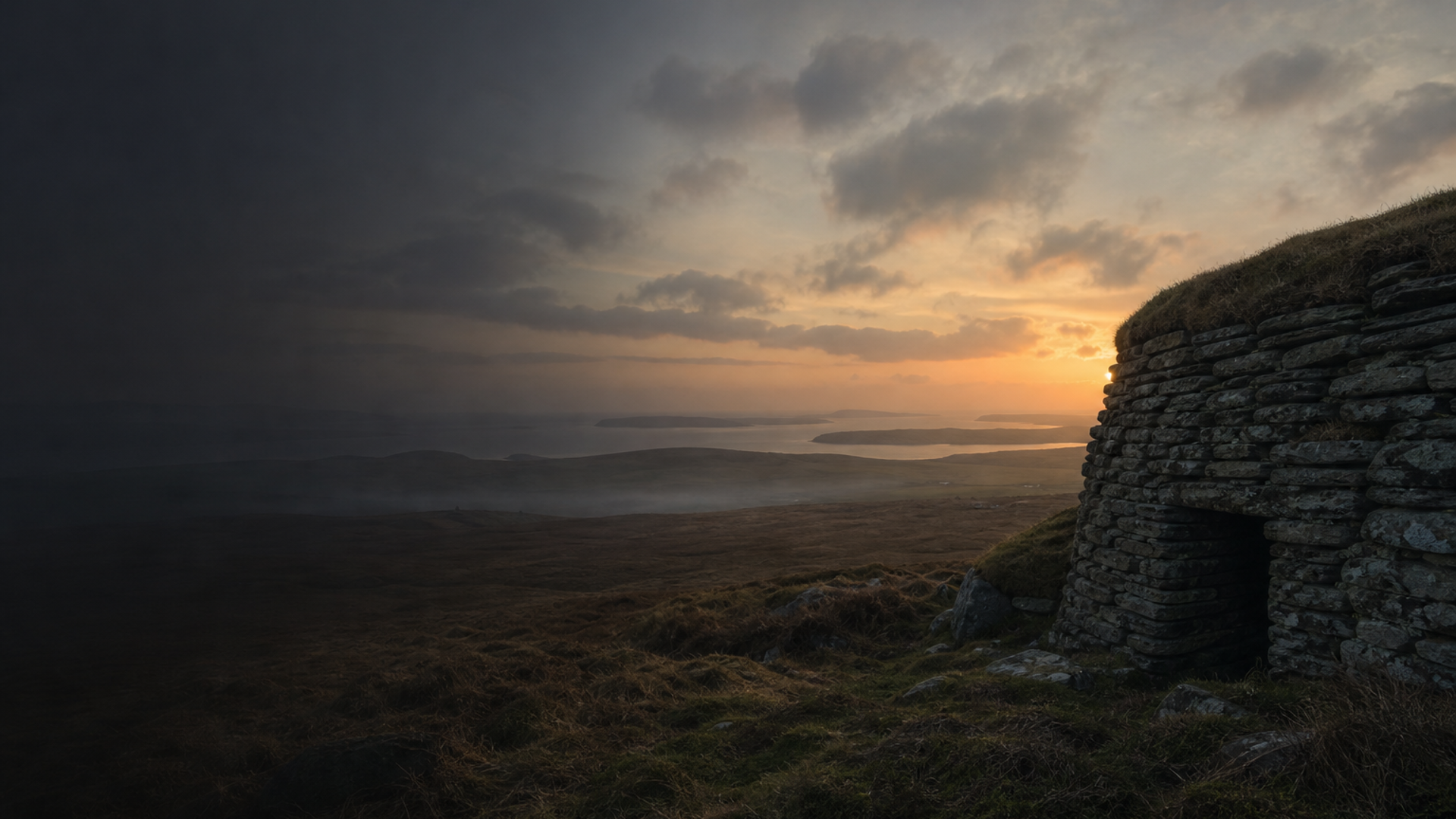
The genetic profile from 45 individuals associated with Scotland_N provides a regional snapshot of Neolithic northern Britain. Paternally, haplogroup I is common (27 of 45), a signal consistent with other northwest European and British Neolithic datasets where I (often I2 sublineages) appears as a frequent male lineage. Maternally, diversity is notable: mtDNA haplogroups K (12), U (7), J (5), H (5) and T (3) are represented, reflecting a mixture of lineages commonly found in early farming communities and local hunter-gatherer populations.
Population-genomic patterns indicate predominant ancestry related to Early European Farmers (Aegean/Anatolian-derived) combined with variable Western Hunter‑Gatherer (WHG) admixture. Archaeological clustering in Orkney suggests some regional demographic continuity: the high incidence of Y-haplogroup I may reflect local male-line persistence or founder effects in island communities, while maternal haplogroup K — frequently associated with Neolithic farmer groups — points to incoming female-mediated gene flow or founder diversity.
Interpretive cautions: although 45 samples give moderate statistical power to detect major ancestry components, geographic clustering (many samples from Orkney) can bias inferences about mainland Scotland. Substructure, kinship within tombs, and temporal changes across the 4000–2348 BCE range require denser sampling and direct radiocarbon linkage. Overall, the dataset supports a story of farmer–hunter-gatherer admixture, local demographic trajectories, and the entanglement of genes and stones in northern Neolithic lifeways.