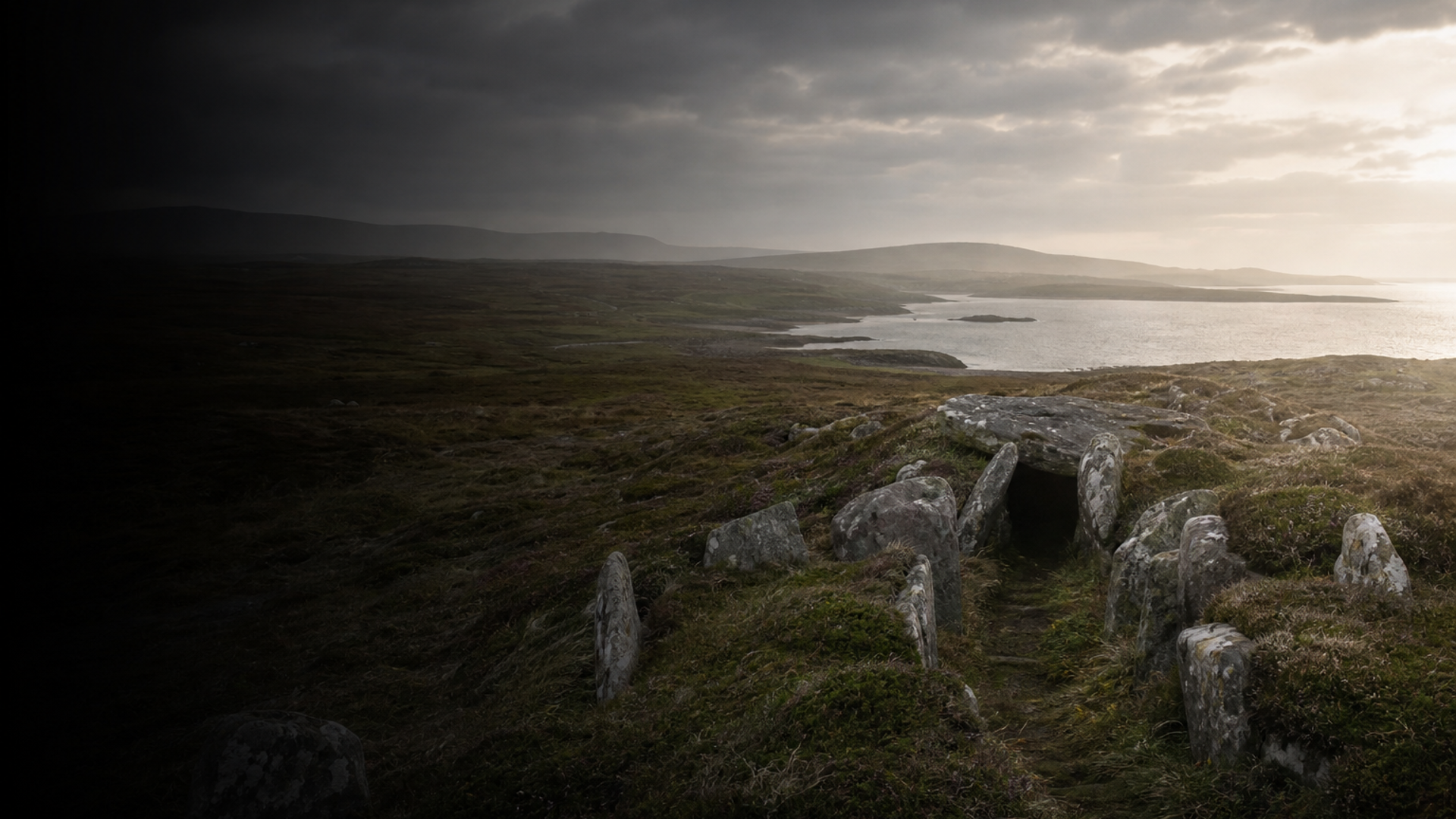
Life in Neolithic Orkney was shaped by the sea, stone, and community rituals. Archaeological remains across the islands show tightly knit settlements, monumental cairns, and material culture adapted to a maritime environment. At the Banks tomb, burial assemblages and the tomb’s setting imply sustained use by a local group whose identity was expressed through shared mortuary space. Tools, pottery fragments, and local lithics from Orkney contexts suggest economies based on mixed farming, coastal foraging, and inter-island exchange.
Social structure may have combined household-based labor with broader communal projects—building and maintaining tombs, managing grazing, and organizing seasonal resources. The genetic signal discussed below (a predominance of Y-DNA I among sampled males) could be consistent with patrilineal inheritance of land or access to tombs, though archaeological evidence for strict patriliny is limited. Funerary deposition in chambered tombs can reflect complex kinship ties, ancestor veneration, and social memory rather than simple lineage charts.
Archaeological interpretation is interpretive: stone monuments freeze certain rituals in the landscape, but they do not record everyday gestures. DNA offers glimpses into biological relationships that, when paired with finds from the Banks tomb and other Orkney sites, help reconstruct a more human portrait of Neolithic lifeways.