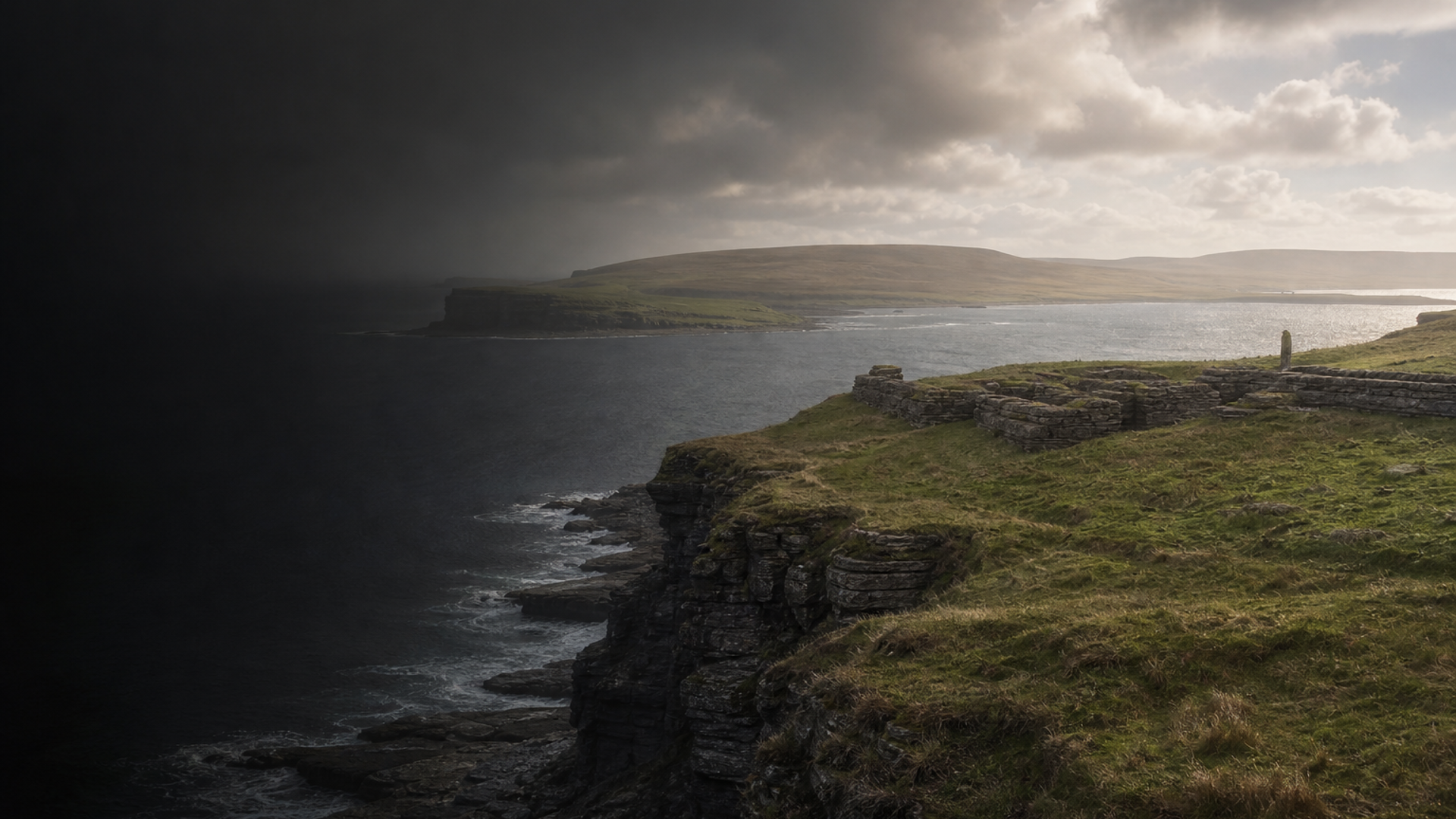
Archaeological remains from Orkney portray a maritime, deeply networked society. Fish, seals, and coastal agriculture underpinned subsistence, while sea routes connected Orkney to mainland Scotland, the Irish Sea, and Scandinavia. Houses, field systems, and midden deposits recovered across Orkney demonstrate a mixed economy of animal husbandry, cereal cultivation, and intensive marine resource use.
Material culture in Norse-period contexts often includes metalworking debris, decorative brooches, practical iron tools, and imported objects that testify to long-distance exchange. In Orkney, place-names, runic inscriptions, and church foundations hint at social transformations: conversion to Christianity, formation of Norse earldoms, and new social hierarchies. Archaeological data indicates funerary variability — from simple inhumations to richer graves — which may reflect status, kinship, or cultural affiliation.
Because only ten genetically sampled individuals inform this page, linking individual burial treatment directly to ancestry is tentative. Still, the skeletal and artifact evidence together paints a cinematic scene: rugged coasts punctuated by smoke from turf roofs, crews hauling longships, and island communities negotiating identities between Pictish heritage and Norse arrivals. Everyday life, as the archaeology shows, was pragmatic and adaptive, shaped by wind, sea, and trade.