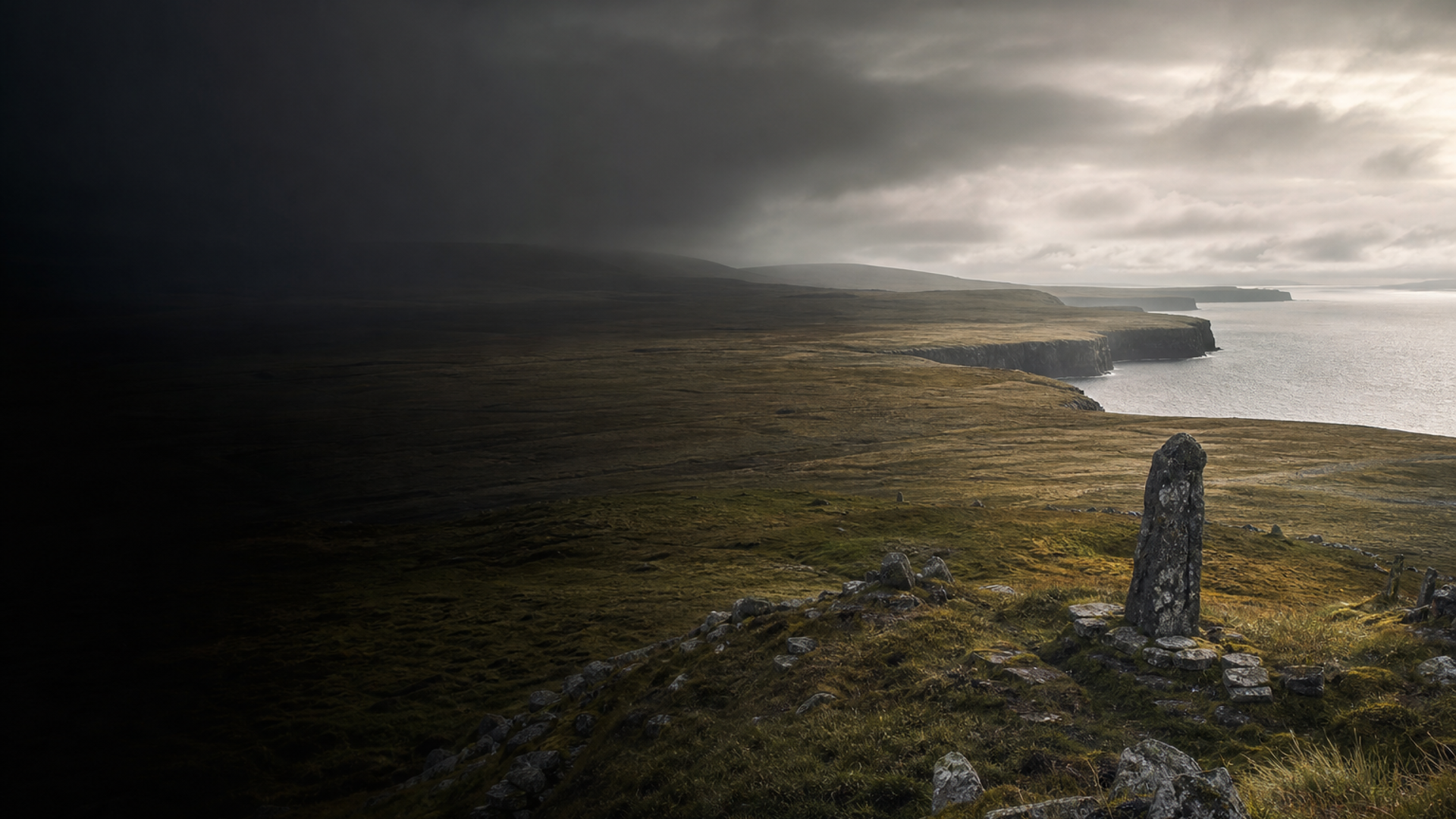
Stone houses, boat remains, and grave goods from Orkney evoke a windswept life ordered around the sea. Islanders exploited coastal fisheries, kept sheep, and maintained long-standing architectural forms that persisted into the Viking Age. Where Norse cultural markers appear—such as weapon types, dress accessories, or imported goods—they coexist with local practices, implying social negotiation rather than simple replacement.
Isotopic and contextual archaeological evidence from analogous Orkney sites points to diets rich in marine protein and to mobility across short and long distances. The islands’ strategic position made them hubs for sailors, traders, and seasonal workers, producing a social fabric stitched from local, Pictish, and Scandinavian threads. Funerary variation in grave orientation and accompanying goods at these sites suggests a community in cultural transition: some individuals are interred in forms consistent with long-standing local customs, others with markers associated with Norse traditions.
Limited funerary assemblages from the sampled sites mean reconstructions of everyday life must remain provisional.