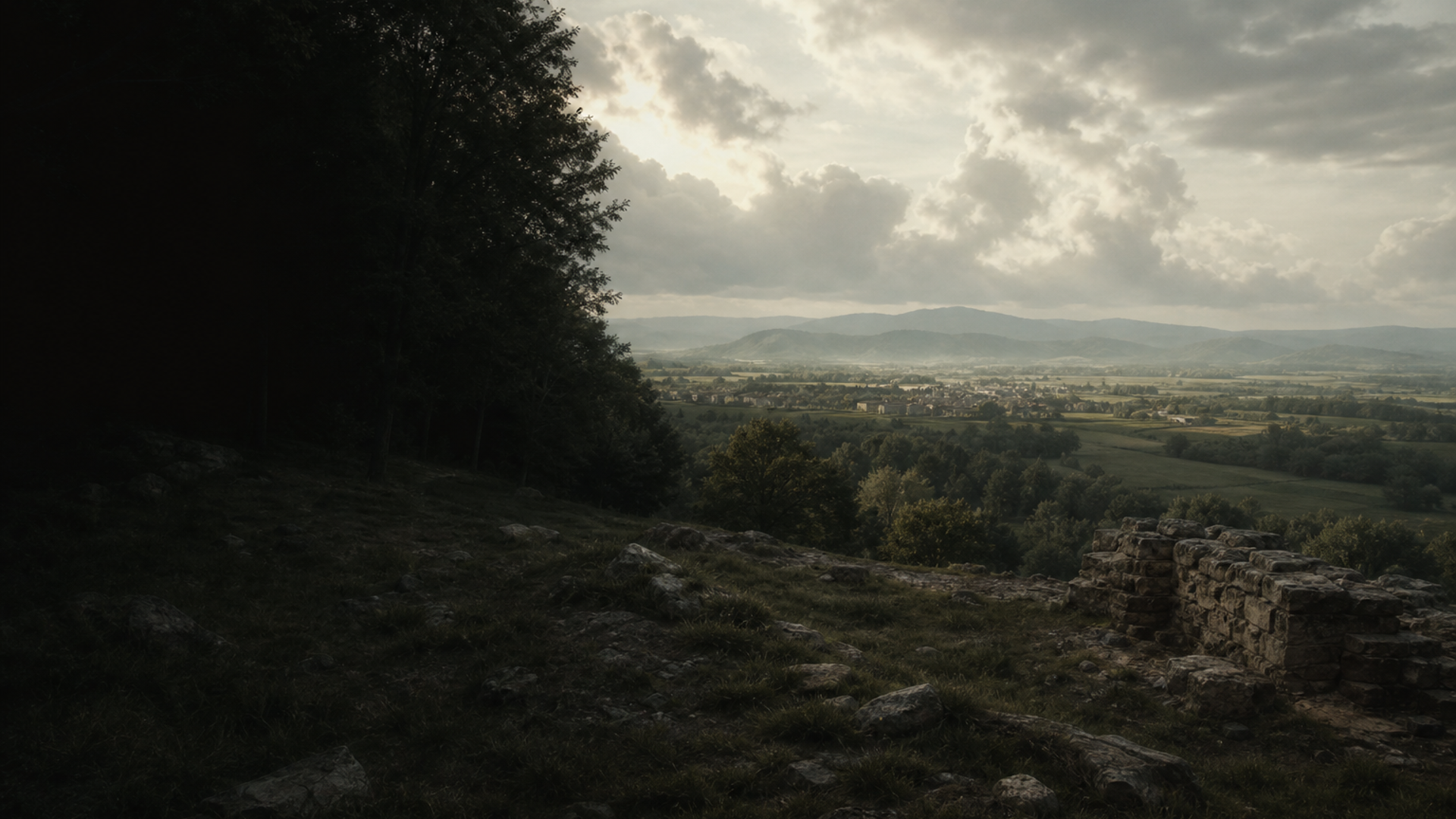
The stones and soil of Ovilava preserve traces of daily rhythms: streets and house plots once threaded with merchants, artisans, and farmers supplying both local and imperial markets. Archaeological assemblages commonly recovered in Roman provincial towns — pottery, metalwork, coinage, and building remains — suggest craft specialization, long-distance trade, and periodic influxes of goods from across the empire. Cemeteries and funerary goods indicate varied burial practices, reflecting social differentiation and changing customs from the 2nd to the 8th century CE.
In cinematic terms, Ovilava was a place of layered lives: local families cultivating fields beyond the town walls; itinerant soldiers and craftsmen bringing languages, rites, and genes; and administrative networks that tied Upper Austria to Roman law and commerce. Evidence of late antique transformation — reused masonry, altered burial rites, and shifting artifact frequencies — speaks to social reorganization as imperial power waned and new polities emerged.
Archaeology provides the stage and props; ancient DNA begins to reveal the actors' ancestries and possible kinship ties. When combined with isotopic studies and artefact provenancing, these datasets can distinguish locals from newcomers and illuminate mobility patterns — but for Ovilava the script is still being written.