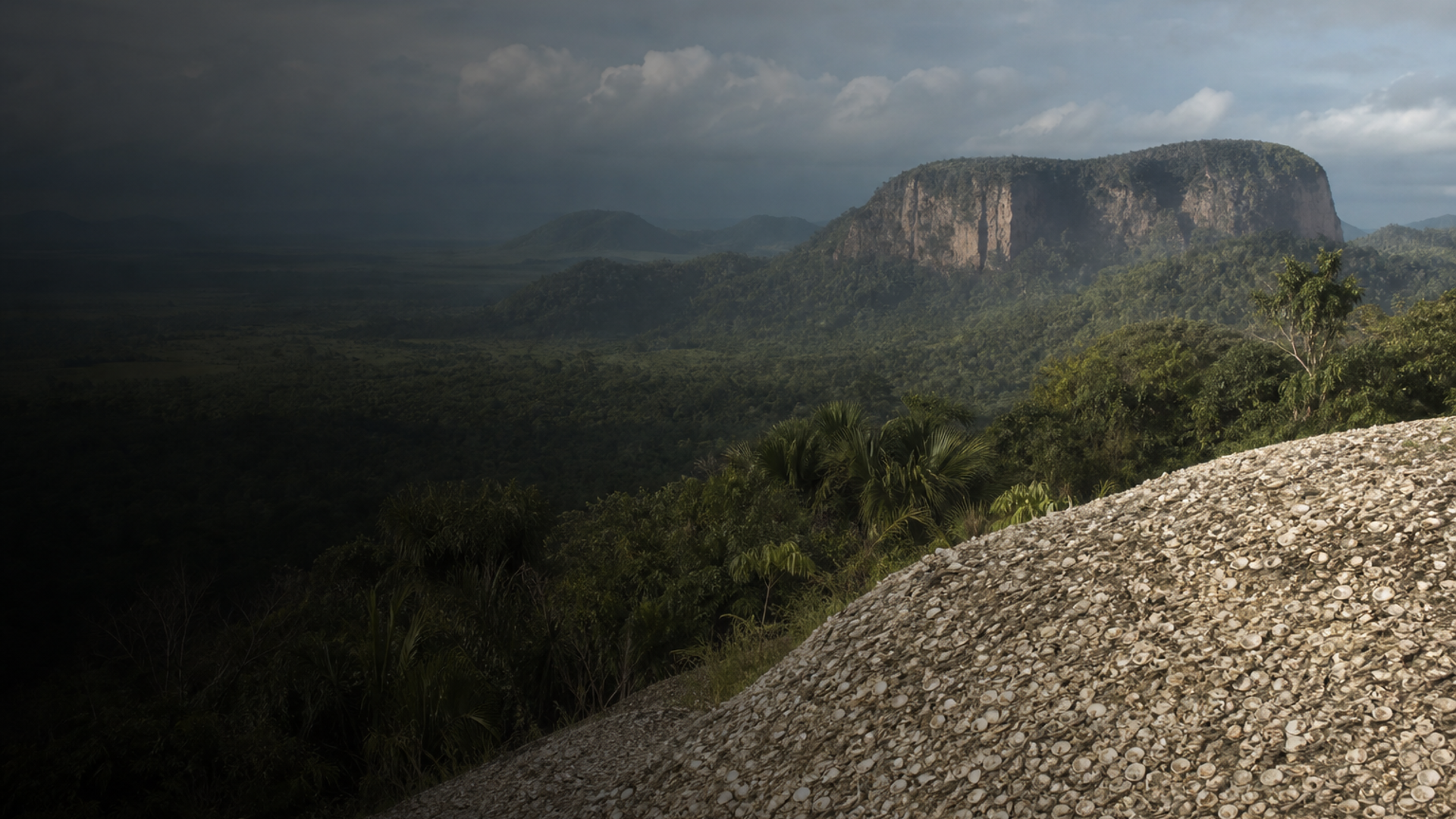
Ancient DNA from the Palmeiras-Xingu individual presents a compact but informative genetic signal: the male-associated Y-chromosome lineage is haplogroup Q, and the mitochondrial lineage is haplogroup B. Both haplogroups are widespread across Indigenous populations of the Americas — Q is a common paternal lineage among many Native American groups, and mtDNA B is one of the principal maternal founding lineages (alongside A, C, and D).
These genetic markers align broadly with expectations for pre-contact South American populations, suggesting continuity of pan-American founding lineages in Southeast Amazonia. However, this result derives from a single genetic sample. With a sample count of one, any population-level interpretation is necessarily preliminary. Archaeological data indicates local cultural distinctiveness (sambaqui-related mound-building and riverine lifeways), but whether the observed genetic profile reflects long-term regional continuity, recent gene flow, patrilocal or matrilocal residence patterns, or other demographic factors cannot be resolved without additional samples.
Where genetics can be most powerful is in complementing archaeology: future comparative ancient genomes from neighboring sambaqui sites, coastal shell mounds, and inland Amazonian locales could reveal patterns of kinship, sex-biased migration, and regional connectivity. For now, the Palmeiras-Xingu individual provides a cinematic glimpse — a single thread that, when woven into a larger dataset, may illuminate the human tapestry of late pre-contact Amazonia.