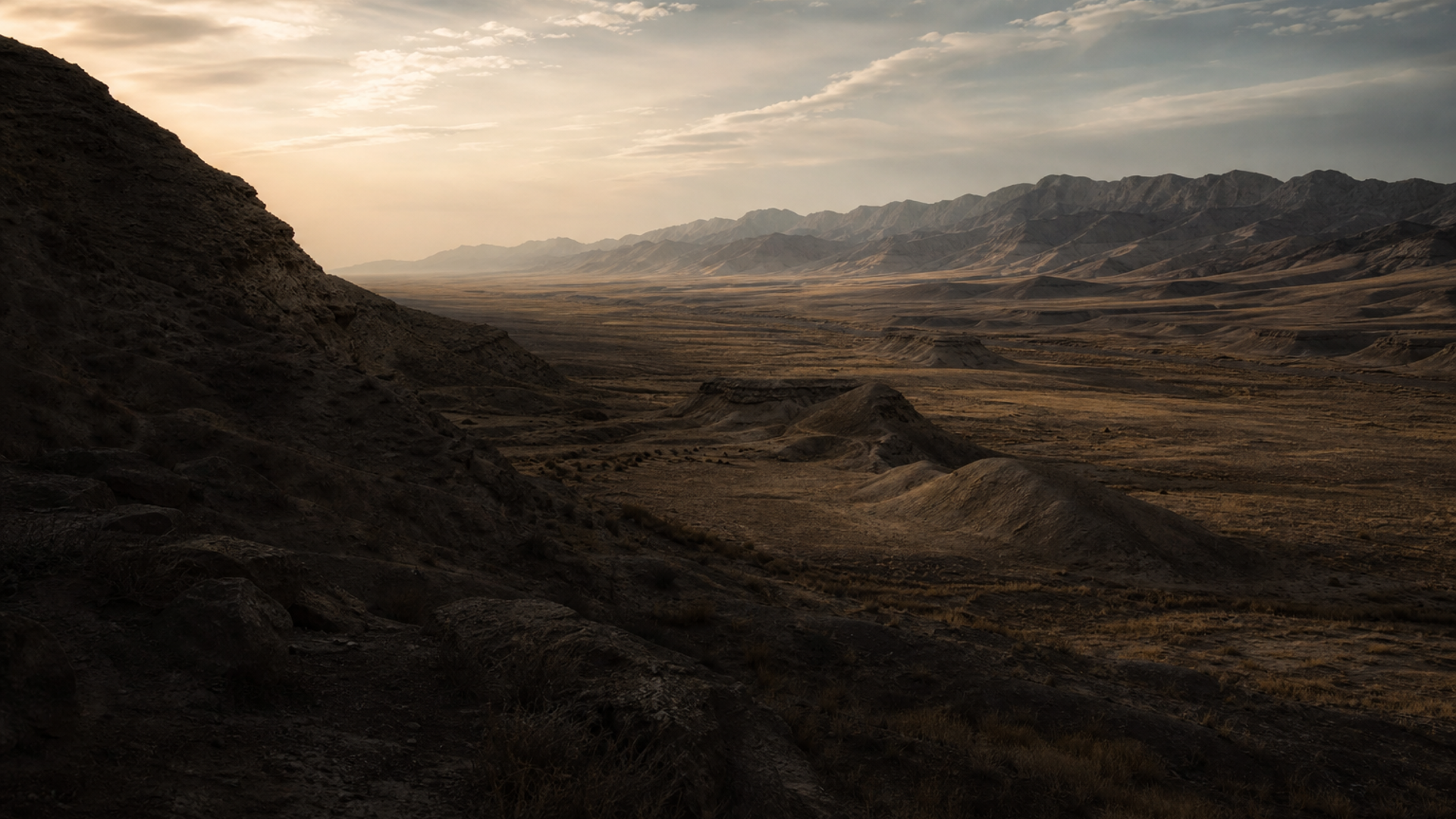
Ancient DNA from Parkhai II comprises four published mitochondrial genomes: three belong to haplogroup HV and one to haplogroup I. These maternal lineages are informative in broad strokes. Haplogroup HV is a West Eurasian mtDNA clade with deep roots across the Near East and parts of Europe; its presence at Parkhai II suggests maternal connections to a West Eurasian gene pool. MtDNA I is less common but is also distributed across Europe and western Asia, adding a further signal of western affinities.
Crucially, no Y-chromosome haplogroups are reported for these four individuals, so insights about paternal ancestry, male-mediated migration, or kinship patterns at Parkhai remain unresolved. With only four samples, statistical power is very limited — patterns observed may reflect local chance or burial bias rather than population-wide frequencies. Archaeological data indicates these individuals belong to a Chalcolithic Parkhai context, and the maternal signals are broadly consistent with mixtures documented elsewhere in Chalcolithic Central Asia that combine Near Eastern and western Eurasian elements.
Future sampling is needed to test whether mtDNA HV dominance at Parkhai II reflects a genuine demographic pattern, maternal continuity from earlier Neolithic populations, or later movement. For now, genetic conclusions must be framed as preliminary but suggestive of West Eurasian maternal impact.