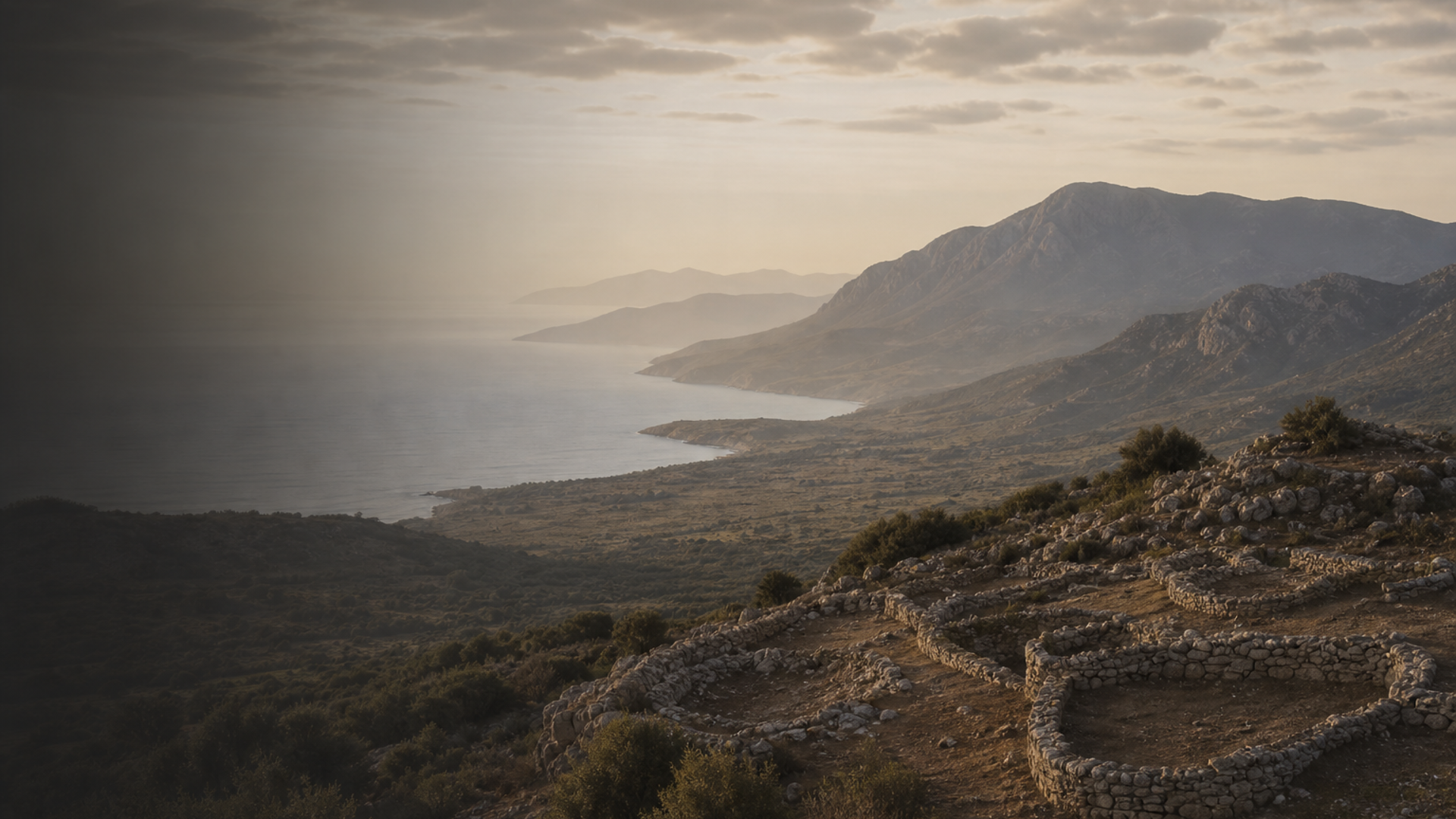
The day-to-day world of Neolithic Peloponnese inhabitants combined agriculture, coastal foraging, craft, and memory. Archaeobotanical remains from Franchthi and nearby sites show einkorn, emmer, and pulses, while faunal assemblages reflect managed herds of sheep, goats, and cattle alongside continued exploitation of fish and shellfish. People likely lived in small nucleated hamlets near arable plots, periodically using caves like Alepotrypa for mortuary practices and special activities.
Material culture paints a tactile portrait: hand-made and early wheel-made pottery, flaked and polished stone tools, bone awls, and personal beads. Franchthi’s long sequence also preserves evidence of specialized craft and long-distance contacts—most notably obsidian blades from Milos—implying exchange networks that connected coastal communities across the Aegean. Alepotrypa’s human remains and grave assemblages suggest care for the dead and possibly hierarchical or lineage-focused social structures, though direct evidence for ranked elites is sparse.
Archaeological data indicates households managed a mixed economy that blended cultivation with maritime resources. Social life was anchored in kinship, ritualized depositional acts in caves, and the slow accretion of local traditions woven with imported materials. These traces produce an intimate, cinematic view of Neolithic life—sunlit terraces of grain, the clink of obsidian, and the hush of cave chambers preserved beneath limestone.