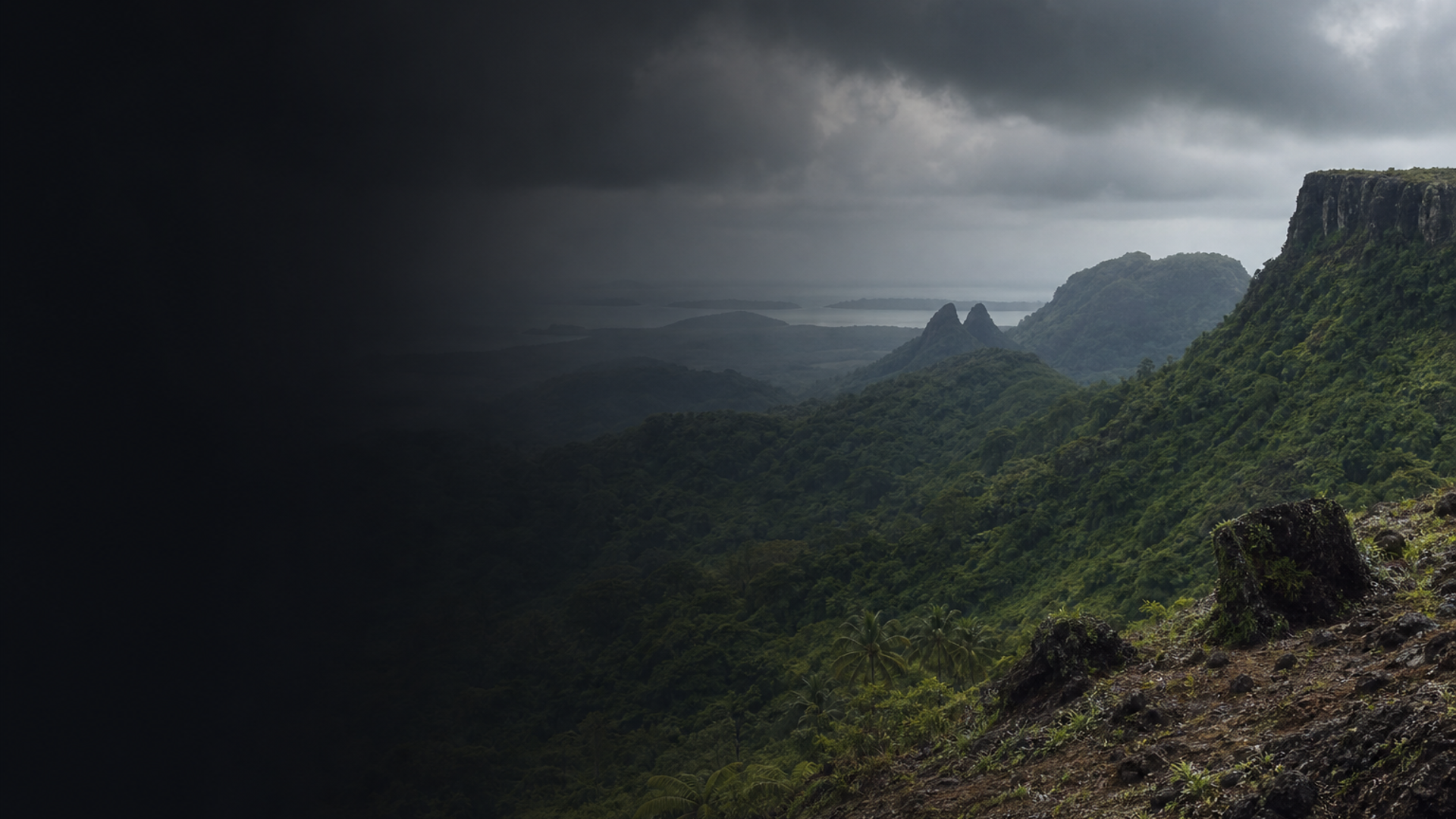
Daily life on Pohnpei would have been shaped by the island’s reef, lagoon, and fertile interior. Archaeological assemblages recover shell and coral tools, fishhooks, pottery sherds, and garden terraces—evidence of mixed fishing, horticulture (taro, breadfruit, yams), and swidden activities that sustained dense communities. The visual drama of Nan Madol—stone walls rising from the sea—implies organized labor, social stratification, and ritual performance tied to elite residences and ceremonial spaces.
Canoe building and navigation were cultural keystones. Ethnographic and archaeological data indicate long-distance voyaging maintained ties across the Carolines and beyond, exchanging goods, ideas, and possibly people. Artifacts such as delicate shell ornaments and imported stone tools point to trade links. Burial contexts, where preserved, show variation in treatment that may reflect status differences; however, preservation in the tropical environment is uneven, and many perishable items are lost to time.
Archaeology captures traces of everyday drama: hearths, food remains, adze marks, and midden deposits. These remains evoke a sensory world of salt air, starlit navigation, and rhythmic labor. But the material record is fragmentary, and archaeological interpretations must be paired with other lines of evidence, including genetics and oral tradition, to reconstruct the full texture of past life on Pohnpei.