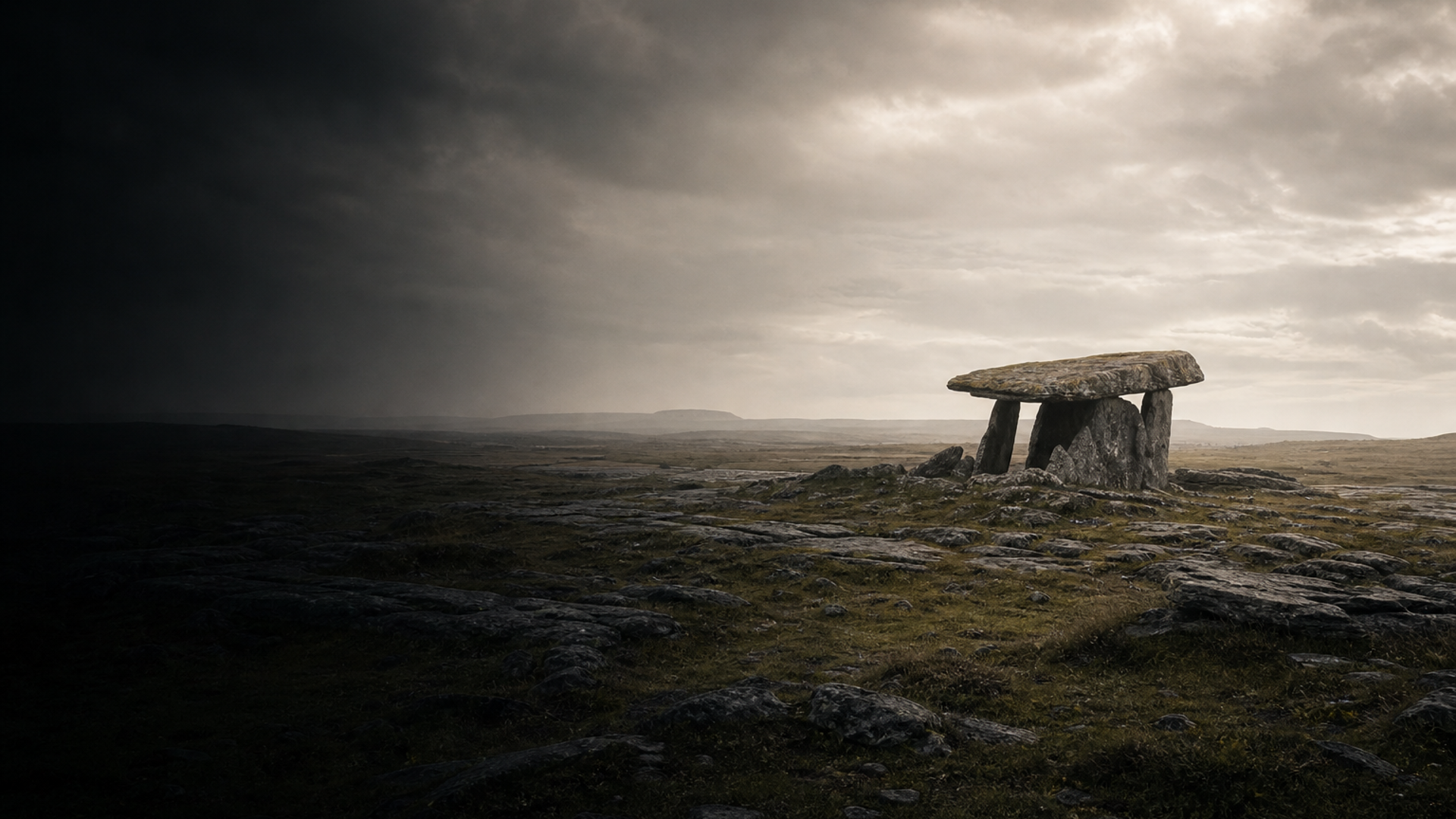
Stone walls and meadows whisper of lives organized around fields, herds, and the rhythms of a rugged coast. Archaeological remains from Early Neolithic Ireland indicate mixed farming economies: domesticated cereals and animals were cultivated alongside continued exploitation of marine and wild resources. Polished axes and grove-clearing tools appear in the material record, suggesting a landscape reshaped for cultivation and settlement.
Monuments such as portal tombs — Poulnabrone among the most dramatic — served as persistent places of remembrance. Excavations have shown that megalithic tombs were used repeatedly, often for small, curated assemblages of human remains rather than large single events. This practice implies social structures that valued ancestry and ritualized landscapes. DNA can complement bones and pottery here: genetic data reveal biological relationships, patterns of mobility, and sometimes sex-biased ancestry flows (for example, differences in maternal vs. paternal lineages). In this Poulnabrone set, with three Y-haplogroup I males and varied maternal lineages, archaeological and genetic evidence together hint at social dynamics in which male line descent or local male continuity might have played a role — though with only four samples, kinship and social organization remain open questions.